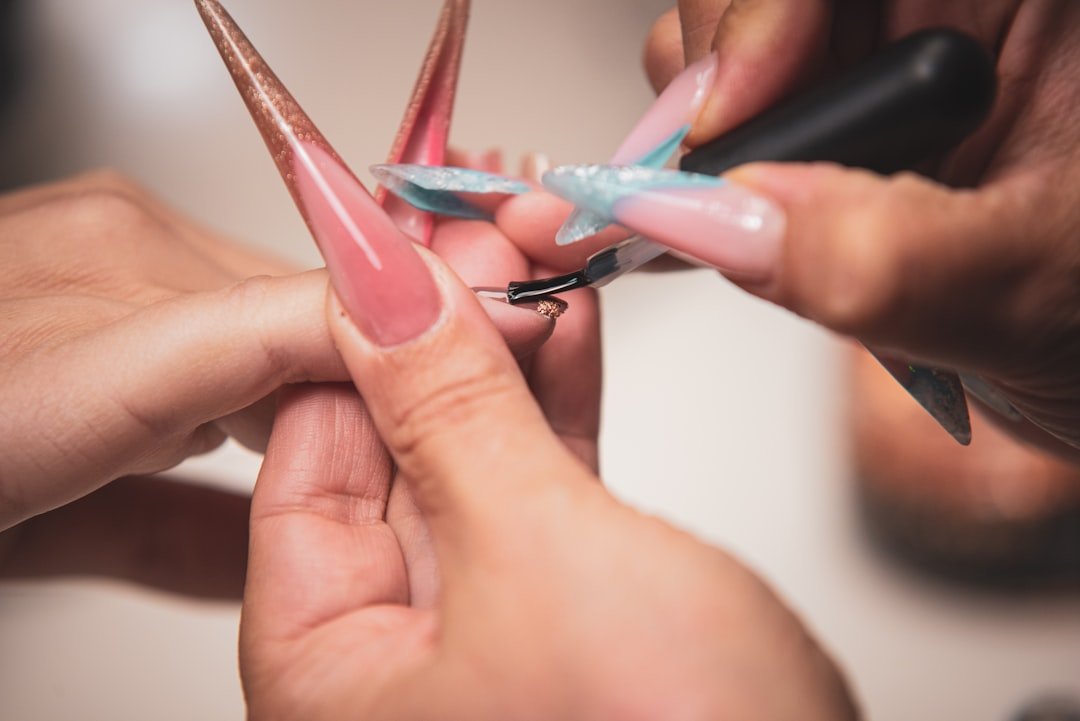
Peach jelly polish gives the nail a warm filter rather than a solid block of color. The natural nail remains visible underneath, which is exactly why the finish can look fresh—and why uneven prep shows more easily.
If you like the idea of color but do not want a heavy manicure, this is a useful middle ground between clear pink and opaque peach.
Sheer polish makes the nail plate part of the design
Ridges, staining and uneven free edges can remain visible under jelly color. That is not necessarily a problem, but it changes the finish. A gentle buff, neat cuticle line and clear base can make the translucency look intentional.
Do not over-buff thin nails just to chase a perfectly smooth surface.
Build color with thin coats
One coat looks almost like a tint. Two or three coats deepen the peach while keeping the glassy quality. Thick coats are more likely to pool at the sidewalls and lose the jelly effect.
Pause between coats so the layers do not drag.
Warm peach versus pink-peach
Yellow-leaning peach feels sunlit and warm. Pink-peach looks softer and closer to a natural flush. If a warm polish makes your hands look sallow, try a pinker version rather than giving up on the finish.
Compare the swatches in daylight and ordinary indoor light. Peach can look much warmer under yellow bulbs than it does near a window.
Choose the jelly depth before adding nail art
A one-coat peach wash and a three-coat apricot jelly can feel like completely different manicures even when they come from the same bottle. Decide how much natural nail you want visible first.
Once the transparency is right, any accent can stay small enough to support the finish instead of covering it.
Peach jelly works especially well when regrowth matters
Because the cuticle area stays translucent, the growth line is softer than it would be with an opaque peach cream. That can make the manicure easier to wear for longer if you do not want frequent touch-ups.
The trade-off is that nail-plate variation remains visible, so clean prep matters more.
Use a sample nail if undertone is uncertain
If you are choosing between a yellow-peach and pink-peach formula, test one nail in each rather than relying only on bottle color. The natural nail changes how a sheer pigment reads.
A color that looks orange in the bottle can appear surprisingly soft once it is spread into thin transparent layers.
Peach jelly and nail length create different effects
On very short nails, a sheer peach can look almost like a warm clear coat. On longer nails, the free edge shows through more strongly and the color may look more obviously translucent.
If you want a cleaner result on longer nails, a softly tinted base can reduce contrast at the free edge without turning the manicure opaque.
Gloss is part of the jelly effect
A high-shine top coat keeps the layers looking clear and glassy. Once the surface becomes dull or scratched, the same color can look cloudy even though the pigment has not changed.
Refreshing only the top coat can bring back the effect when the color underneath is still intact.
Keep the art almost weightless
A micro dot, a fine French edge or a tiny gold detail can sit over peach jelly without hiding the transparency. For more minimalist directions, see the simple nail design guide.
The charm of peach jelly is that the nail still looks like your nail. Stop adding coats when the warmth is right, not when the nail becomes completely opaque.
Peach jelly can make staining more visible
Because the finish is transparent, old dark polish stains can show through as uneven warmth. A lightly tinted base coat can help, but avoid trying to file or buff away deep staining aggressively.
Match the warmth to the look you want
A pale peach jelly reads almost like healthy bare nails. A deeper apricot version feels more like color. If you want the manicure to work with rings and clothing as a neutral, stay closer to the first end of the spectrum.
For a stronger seasonal effect, build the color with another thin coat rather than switching immediately to opaque orange.
Jelly polish rewards careful nail preparation
Because the finish is translucent, ridges, staining and uneven free edges remain more visible than they would under an opaque cream. A gentle buff only when necessary, a smoothing base coat and consistent shaping can make more difference than adding a fourth coat of color.
If your nails are naturally yellowed or stained, choose a slightly warmer or more saturated peach instead of trying to cover the discoloration with endless sheer layers. The goal of a jelly manicure is translucency, so complete concealment works against the effect.
Stop building before the color turns milky
Two thin coats often look fresher than three or four heavy ones. As layers build, some jelly formulas lose their glassy quality and begin to look like semi-opaque polish. Check the color in daylight between coats and stop when the warmth is visible but the nail plate still shows through.
If you like clean, low-detail manicures, compare this with our short natural nail guide for other finishes that work well on shorter lengths.
Sheer color makes tip wear less obvious—but not invisible
Peach jelly generally grows out gracefully because the cuticle line is soft, but free-edge wear can still dull the look. A fresh glossy top coat halfway through the manicure can restore clarity without adding more pigment. If the surface begins to look cloudy, removing and restarting usually gives a better result than stacking additional color.
Keep the cuticle area especially clean
Sheer warm polish magnifies pooling because darker pigment collects where the coat is thickest. Leave a small margin, use a well-loaded but not dripping brush and clean any overflow before top coat. The manicure will look lighter, clearer and more professional even though the color itself has not changed.
Featured image: Photo by Ondrej Supitar on Unsplash.