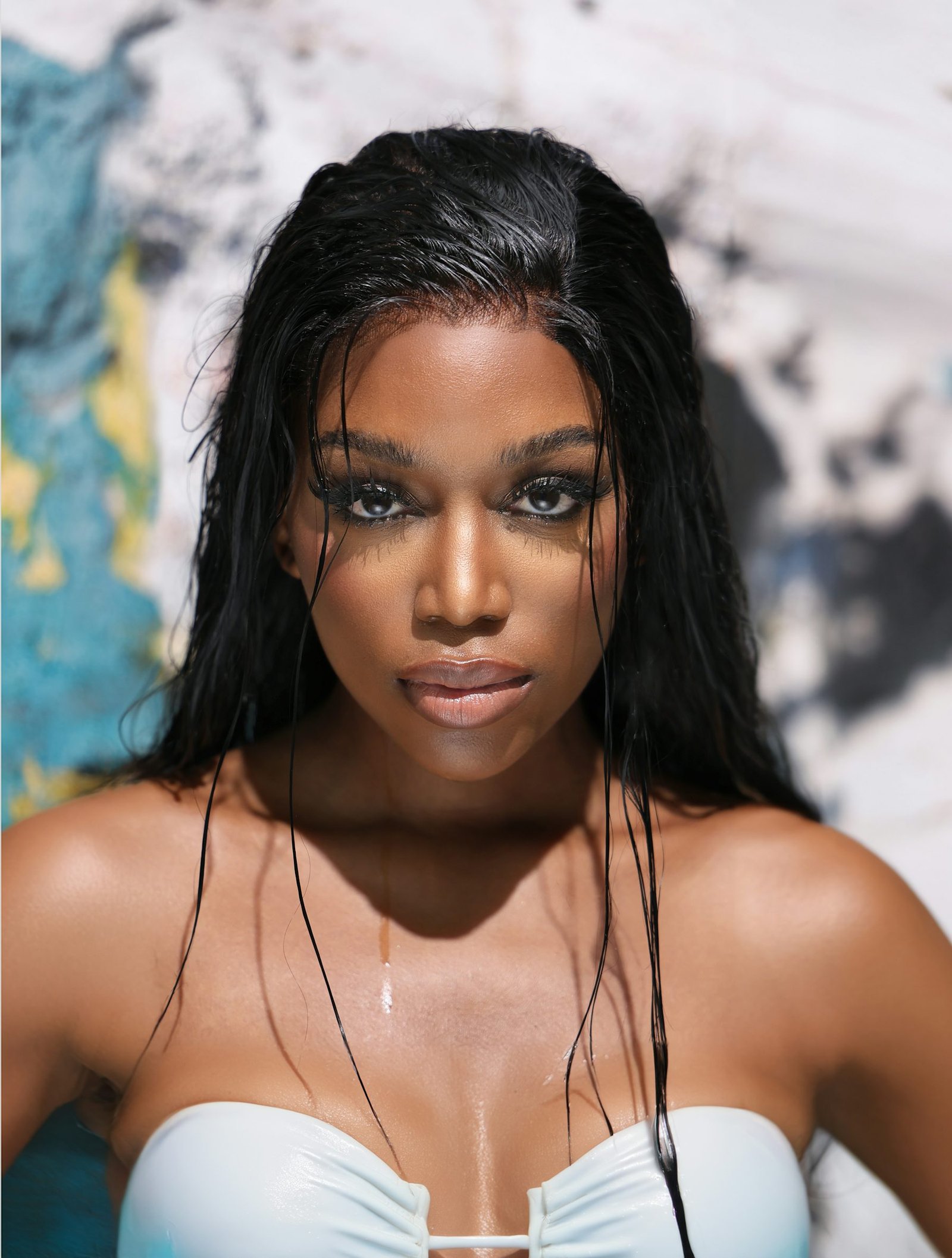
Glossy hair is back in beauty conversations, but the most useful version of the trend is not a return to hair that has been pressed into one identical finish.
Vogue’s 2026 hair trend report describes a broader move toward sleek, healthy-looking hair that still has movement and individuality. That distinction matters. Shine can belong to straight hair, soft waves, curls and coils. It does not require every strand to lie flat.
The better goal is a surface that reflects light well while the texture underneath still looks like yours.
Shine and straightness are not the same thing
Hair looks shiny when its surface reflects light relatively evenly. Straight hair often makes that reflection obvious because the strands line up in a smooth sheet, but textured hair can look glossy too.
On waves and curls, the shine may appear in smaller arcs and highlights rather than one long mirror-like reflection. On coils, definition and surface smoothness can create a rich sheen even though the hair has far more bends.
Trying to copy a straight-hair shine reference by flattening textured hair can solve the wrong problem.
The haircut affects gloss more than people expect
Dry, thinned-out ends scatter light differently from a healthy perimeter. A cut with too many disconnected pieces can also make the surface look less continuous, even when the hair itself is well conditioned.
That does not mean every glossy style needs a blunt cut. It means shape and condition work together.
If your hair never seems to look polished even after styling, check whether the ends are overdue for a trim before buying another finishing product. The StyleVeya haircut guide can help you think about shape in relation to density and texture.
Start with the condition of the hair, not the final oil
A shine spray or oil can improve the finish, but it cannot fully disguise rough, overprocessed or badly weathered hair.
The basics are less glamorous: use cleansing and conditioning that suit your scalp and hair, detangle without unnecessary breakage, avoid excessive heat, and protect the hair when using hot tools.
When the surface is already in reasonable condition, a small amount of finishing product can enhance it. When the surface is very rough, piling on oil may simply make the hair look heavy.
Fine hair usually needs less product than you think
Fine strands can become separated and limp when too much serum or oil is applied. For this hair type, gloss often looks better when it comes from smooth drying and a very light finishing layer rather than several rich products.
Apply product to the mid-lengths and ends first, then use whatever remains on your hands around the surface if needed. Starting at the roots can remove volume quickly.
Wavy hair needs enough polish without losing bend
Waves can look frizzy when the pattern is brushed apart or when the hair is handled repeatedly while drying. The answer is not always more smoothing product.
Try encouraging the wave pattern first, then polish the finished shape. A light serum over the outer surface can reduce fuzz while allowing the bends to remain visible.
The aim is to make the wave look deliberate, not to turn it into straight hair with a few accidental kinks.
Curly and coily hair can be glossy without being stretched smooth
Defined clumps often reflect light better than curls that have been separated into many frizzy strands. Hydration, hold and careful drying can therefore contribute to shine as much as a finishing product.
Once the hair is dry, a small amount of oil or serum can help soften a cast and add sheen. The amount matters. Too much can make curls drop or collect dust and residue faster.
Heat can create shine—and take it away
A controlled blow-dry can smooth the cuticle and create a glossy finish. Excessive heat can eventually do the opposite by increasing dryness and damage.
Use the lowest effective temperature, keep tools moving, and avoid repeatedly passing over the same section because the result was not perfect on the first try.
Gloss should not depend on pushing the hair harder every week.
Hair color changes how shine reads
Darker and richer tones often show reflection dramatically because the contrast between highlight and base is easy to see. That is one reason deep brunettes and warm dimensional shades can look especially glossy.
Lighter hair can absolutely shine too, but porosity and previous lightening may influence how smooth the surface looks.
If you are considering a color change mainly because a reference looks expensive and glossy, first compare your starting point with the StyleVeya hair-color guide. The shine may be coming as much from condition and styling as from the shade itself.
Clarifying can help when shine products stop working
Product buildup can make hair look coated rather than luminous. If your usual products suddenly seem to sit on top of the hair, buildup may be part of the problem.
How often to clarify depends on your products, water, scalp and texture. The goal is not to strip the hair aggressively. It is to remove enough residue that your regular routine can work properly again.
Humidity changes the surface
Even a polished style can respond to humid air. Hair that absorbs moisture may swell or frizz, especially if it is porous.
This is where realistic expectations help. A little surface movement does not mean the style failed. A glossy result can still look natural rather than sealed in place.
What glossy hair should feel like
It should still move. It should not feel sticky, stiff or coated. You should be able to touch it without leaving your hands covered in product.
If the visual shine comes at the cost of hair that feels greasy or collapses immediately, the routine is probably doing too much.
Use one change at a time
If you want more shine, do not replace your shampoo, conditioner, mask, leave-in, serum and styling method in the same week. Change one variable and see whether it improves the result.
Often the difference comes from something small: less product, a cleaner final rinse, gentler drying, a trim, or applying serum after the hair is completely dry instead of before.
That approach fits the broader polished-not-overdone beauty shift: improve the finish without making the routine unnecessarily bigger.
Frequently asked questions
Does glossy hair have to be straight?
No. Waves, curls and coils can all have a glossy finish. Shine appears differently depending on the shape of the strand and how light hits it.
Why does hair oil sometimes make my hair look dull?
Too much oil can weigh strands down or sit on top of buildup, creating a coated finish rather than clear reflection.
Can damaged hair still look shiny?
Styling products can temporarily improve the appearance, but rough or damaged areas usually reflect light less evenly. Improving condition and trimming compromised ends may help more over time.
What is the easiest way to add shine without losing volume?
Use a small amount of lightweight finishing product mainly on the mid-lengths and ends, keeping heavy products away from the roots.