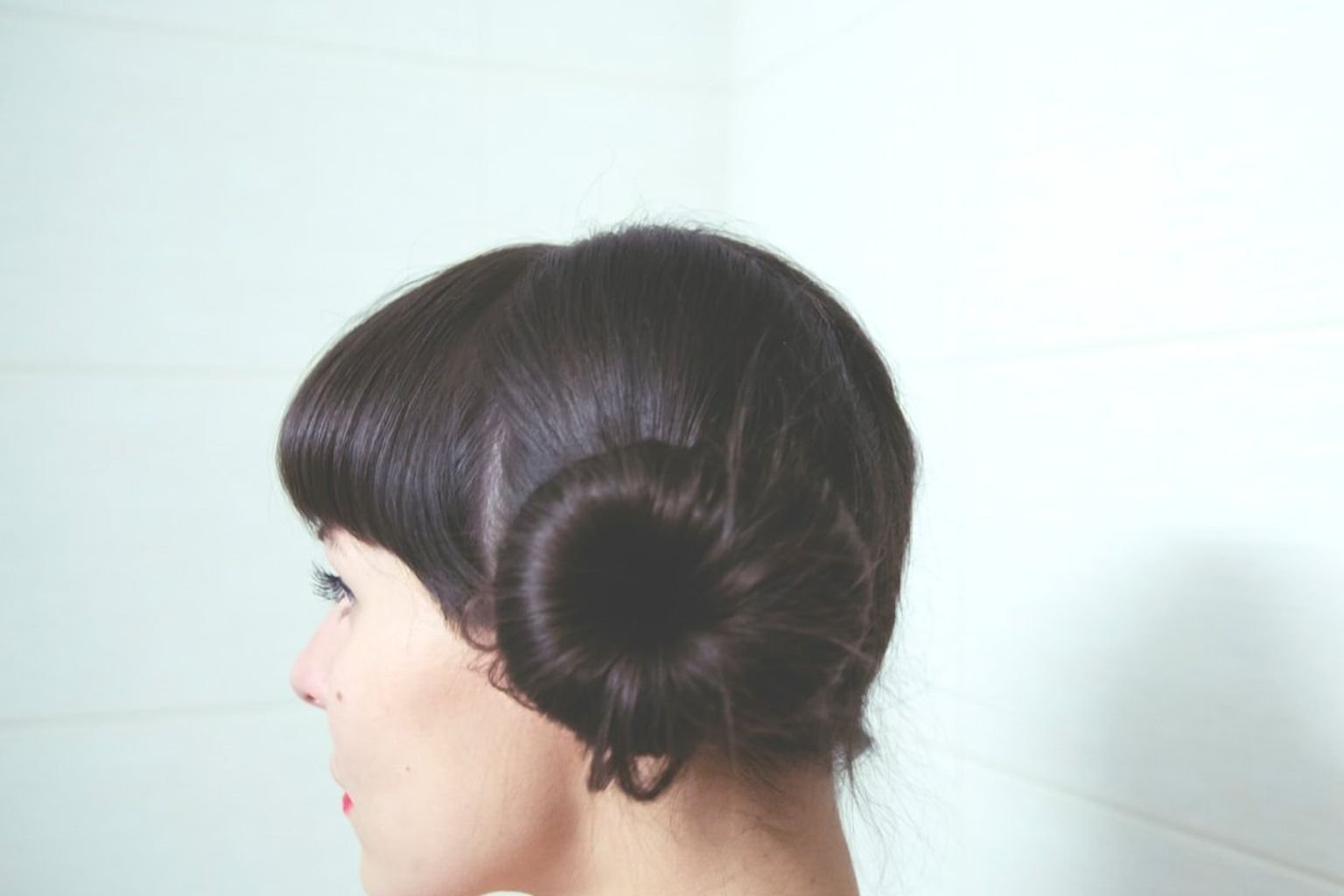
The chignon is returning in a softer form. Instead of a perfectly lacquered bun with every strand locked down, the current version keeps the silhouette polished while allowing a little movement around the hairline and through the bun itself.
The softer chignon fits a wider move toward polished updos that still allow visible movement, but the practical question is how to keep the shape secure without making the finish rigid.
The modern version is about controlled looseness
A soft chignon should not feel as though it will collapse, but it also should not look painted onto the head. The trick is to secure the structure first and soften the surface second.
That means creating a reliable ponytail or anchor before loosening pieces. Pulling everything apart before the base is secure usually creates instability rather than softness.
Low placement is the easiest place to start
A bun positioned at the nape feels less formal than a high ballerina bun and is usually easier to build on medium to long hair.
Place the ponytail where you want the center of the chignon to sit. If it is too high, the finished shape can migrate upward as you pin it.
Texture gives the pins something to hold
Very silky hair can slide out of an updo. A small amount of dry texture spray or light styling cream can add grip, but the goal is not to coat the hair heavily.
If you prefer a smoother finish, keep product closer to the lengths and bun rather than roughening the entire crown.
Do not over-tighten the first ponytail
A very tight base can create tension at the hairline and make the crown look flatter than you intended. Secure enough to hold, then assess the shape before adding more tension.
If you want lift, use your fingertips to nudge the crown upward slightly after the elastic is in place.
The bun can be twisted, looped or folded
There is no single correct chignon construction. Fine hair may look fuller when the ponytail is looped and spread slightly. Dense hair can be easier to control when divided into two sections and pinned around the base.
Choose the technique that works with your density rather than forcing the hair into a tutorial designed for someone with a completely different amount of hair.
Leave face-framing pieces only where they help
Pulling out strands everywhere can make the style look unfinished. Decide whether you actually want softness at the temples, around the ears or near the nape.
If you wear bangs or shorter layers, let those pieces guide the amount of softness rather than creating extra loose sections just because the reference photo has them.
Crown braids and chignons solve different styling goals
Both are updos, but a crown braid creates visible texture around the head while a chignon concentrates the shape at the back. If you are choosing between them, compare our airy crown-braid guide.
A center part makes the look cleaner; a side part makes it softer
Changing the part can transform the same bun. A center part gives a more graphic, deliberate front view. A soft side part tends to make the style feel more relaxed and asymmetrical.
Use the part you already wear comfortably rather than choosing one only because it appears in a trend photo.
Humidity changes how much polish is realistic
In humid weather, trying to suppress every short hair can lead to layers of product without a genuinely smoother result. A softer finish is often more practical.
Focus on the overall silhouette and secure base. A few natural flyaways are less distracting than visibly stiff hair.
What to ask for at a salon
- A low or mid-height chignon rather than a high bun.
- Softness around the hairline without loose pieces everywhere.
- A secure base that still feels comfortable.
- A finish that moves rather than a heavily sprayed shell.
Fine hair needs a smaller, better-built chignon
Fine hair can look fuller in a chignon when the structure is compact rather than spread too widely. A smaller looped bun with gentle expansion at the edges often looks more substantial than trying to imitate a large dense bun from a reference photo.
Use the shape of the bun to create fullness rather than loading the hair with heavy product. Too much cream or oil can make fine hair collapse and separate.
Dense hair may need two sections instead of one
Very thick hair can create a bulky center if the entire ponytail is twisted into one rope. Dividing the ponytail into two sections and wrapping them in opposite directions can distribute the volume more evenly.
This also gives you more anchor points for pins, which can make the finished chignon feel more secure without pulling the base tighter.
Short layers need targeted control
If face-framing pieces or shorter layers fall out around the sides, decide which ones add softness and which ones actually disrupt the shape. Pin only the awkward sections instead of spraying the entire hairline stiff.
A small amount of lightweight cream can smooth one problem area while leaving the rest of the style flexible.
Comfort is part of a successful updo
A chignon that feels secure should not create a headache or continuous tension at the temples. If the style hurts, the anchor may be too tight or the weight may be concentrated in one point.
Redistribute pins, lower the bun slightly, or loosen the base rather than assuming discomfort is the price of hold.
Practice the parting and front shape before the event
If you are wearing the chignon for a wedding, work event or formal occasion, test the front view ahead of time. The bun itself may be easy, while the center part, side sweep or loose pieces take more adjustment than expected.
A short trial helps you decide how much softness you actually like before you are working under time pressure.
Use the Style Finder when the issue is the haircut, not the updo
If short layers constantly fall out of every updo, the limitation may come from the haircut rather than your technique. The StyleVeya Style Finder can help compare cuts with your tie-back and styling needs in mind.
Frequently asked questions
Can shoulder-length hair wear a chignon?
Often, yes. Shorter layers may need pins, and the bun may be smaller, but collarbone-length hair can usually create a low version.
How do I stop a chignon from falling?
Build a secure anchor first, use crossed pins or grips where needed, and avoid loosening the structure before it is stable.
Does a soft chignon have to be messy?
No. Softness and messiness are different. The outline can be clean while the surface remains flexible and natural.