
Thick long hair can feel luxurious and exhausting at the same time. The goal of the haircut is usually not to make it look thin; it is to redistribute weight so the hair moves, dries more easily and does not form one heavy block.
Long layers can help, but the most useful work often happens inside the haircut where bulk can be removed without destroying the perimeter. Compare Long Layered Haircuts for more general layer placement ideas.
Keep the outside line strong while removing hidden weight
A full perimeter keeps long thick hair looking intentional. Internal shaping can reduce the amount of hair sitting behind the ears, through the back or under the top layer.
This approach is often more controlled than aggressively thinning the visible surface.
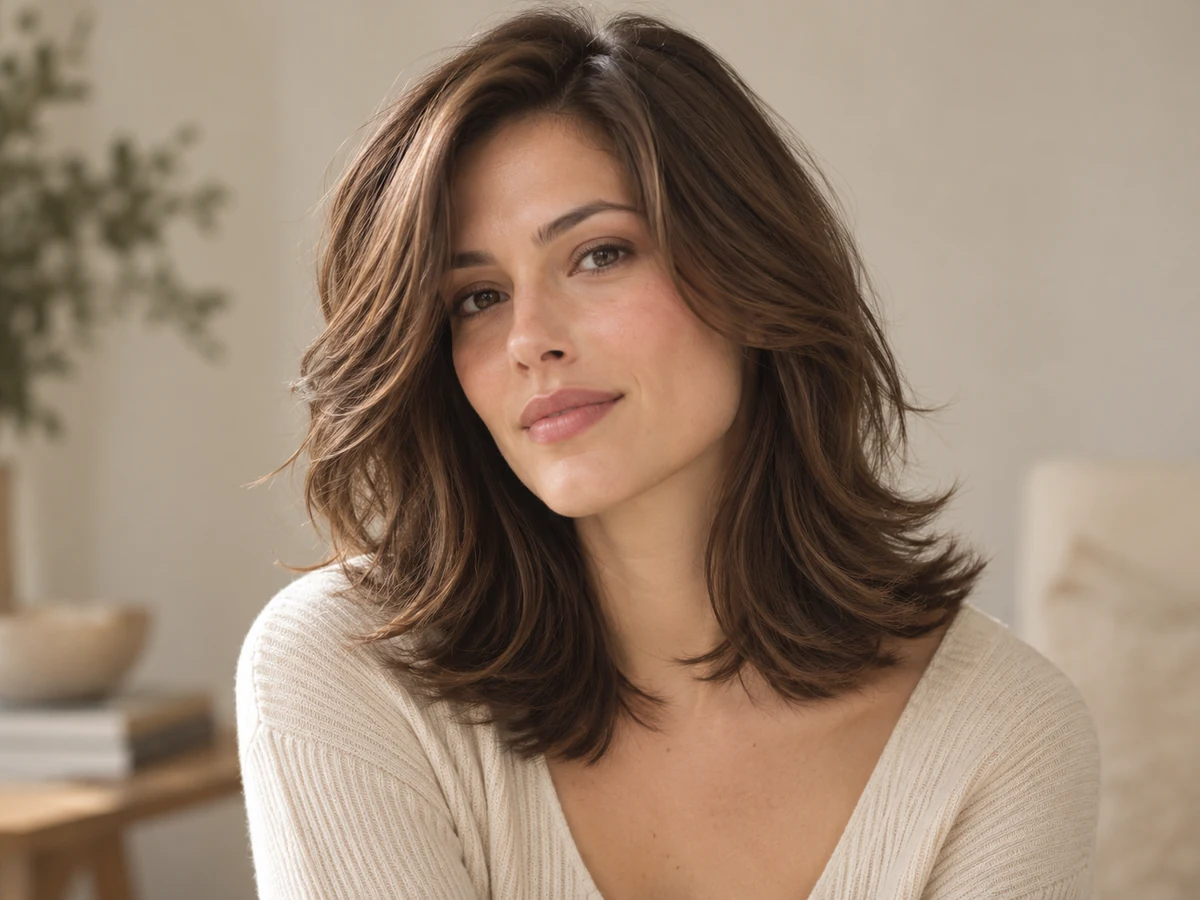
Long layers should create movement, not a shelf
Start layers low enough that the top does not puff away from the bottom. On very dense hair, gradual long layers can help the weight transition smoothly from crown to ends.
Face framing can be shorter than the back layers, but it should still connect naturally to the overall shape.
Straight, wavy and curly thick hair need different weight strategies
Straight thick hair shows every layer line. Wavy hair can hide transitions but may expand if too much weight is removed. Curly thick hair needs shrinkage-aware shaping so volume stays balanced.
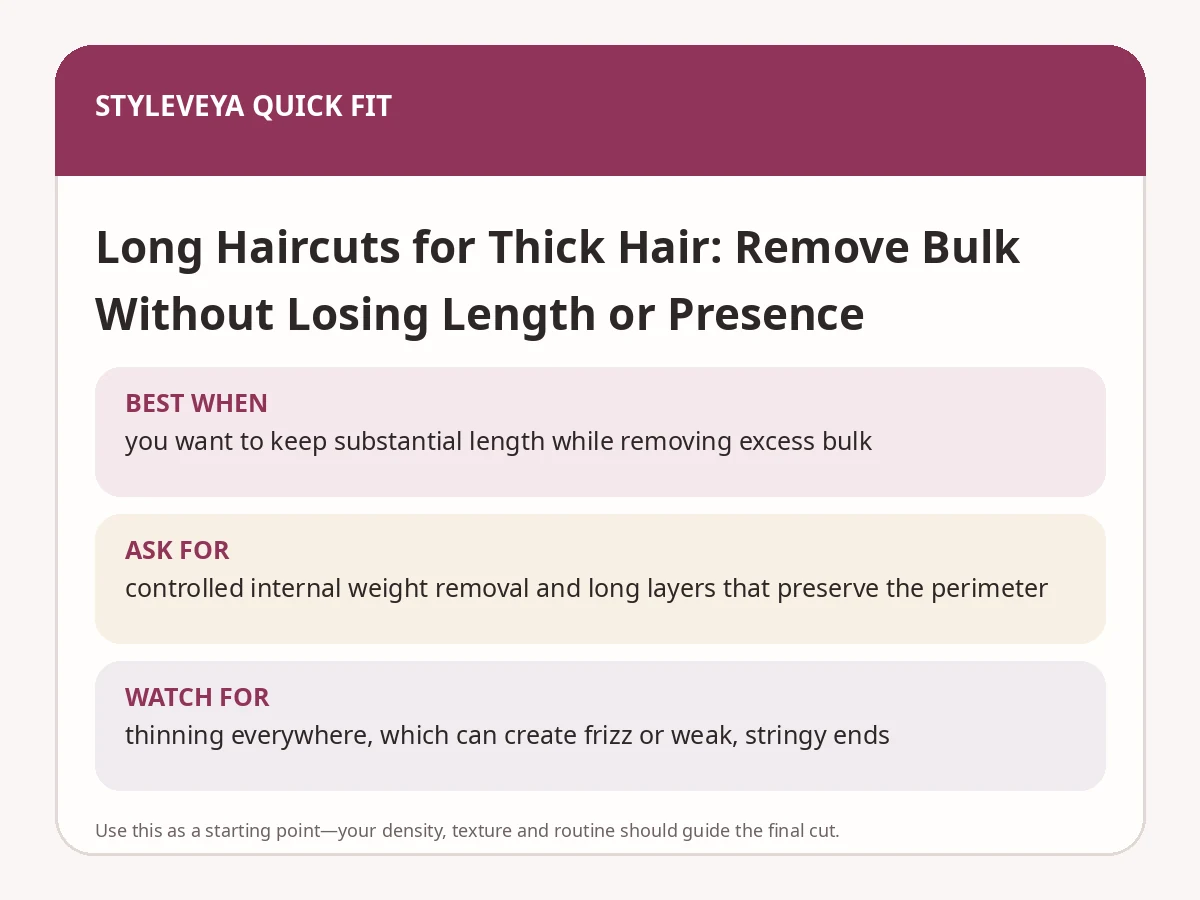
Styling, maintenance and grow-out
A thick long haircut should reduce styling time, not create a new round-brush routine. Ask how the cut will behave after air-drying and how much bulk will return as it grows.
Explain where the weight feels heaviest
- Show which areas feel heaviest: crown, sides, nape or ends.
- Ask for internal weight removal before aggressive surface thinning.
- Keep enough perimeter to avoid see-through ends.
- Discuss the lowest useful layer length.
- Ask how the shape will change as bulk grows back.
Decide where the weight bothers you most
“Thick hair” can mean very different problems. Some people carry most of the bulk at the sides, others at the nape, and others through the ends. The haircut should target the specific area that feels heavy instead of thinning everything evenly.
Internal shaping is usually safer than surface thinning
Removing weight underneath the top layer can reduce bulk while keeping the visible surface smoother and the perimeter stronger. Aggressive thinning on the outer surface can make long hair look frizzy or broken up.
Face framing can reduce front weight without sacrificing back length
If the hair feels heavy around the face but you want to keep the long silhouette, shorter front sections can create movement where you see it most while leaving the back substantial.
Wavy and curly thick hair need enough weight to control expansion
On textured hair, removing too much weight can make the shape widen. The useful goal is redistribution, not maximum lightness. Ask how much volume the hair gains when dry before deciding how much to remove.
Grow-out matters because bulk returns unevenly
Internal weight removal can feel excellent at first but gradually become heavy again as shorter internal sections grow. Ask how the cut is expected to change over several months and whether the same areas will need reshaping.
Drying time is part of the haircut problem
Long thick hair can be easy to style yet still take a long time to wash and dry. If drying time is the main frustration, removing hidden weight through the interior can be more useful than adding many visible short layers.
Tell the stylist where the hair stays damp longest. Dense sections around the nape and back often need a different strategy from the face frame.
Parting can change where bulk gathers
A center part distributes weight more evenly, while a side part moves more hair to one side and can make that temple or cheek area feel heavier. If you switch parts often, the haircut should be balanced in both positions.
Check the finished cut with your usual part and with the alternative you actually wear before deciding the sides need more thinning.
Tie-back needs can limit how short the front layers should be
If you regularly wear a ponytail, braid or clip, keep the shortest face-framing sections long enough to reach those styles. Thick hair can become more frustrating when heavy side pieces fall out of every tie-back.
You can still remove bulk internally while preserving the front length that makes everyday styling practical.
Second-day behavior shows whether too much weight was removed
Over-thinned thick hair may look light and smooth after a salon blowout but expand or separate after sleeping or air-drying. Judge the haircut after the natural texture returns, not only on appointment day.
A strong perimeter and controlled internal shaping usually create a more reliable result than chasing maximum lightness.
Where to remove weight—and where not to
- Keep the perimeter strong if you want the hair to continue looking thick and healthy.
- Remove weight internally if the hair feels heavy but you do not want see-through ends.
- Use longer layers if you want movement without a dramatic change in shape.
- Avoid aggressive surface thinning if your hair tends to frizz or expand.
Frequently asked questions
Should thick long hair be thinned?
Sometimes, but the technique matters. Controlled internal weight removal is often safer than thinning everywhere.
Are long layers good for thick hair?
Yes, when they are blended gradually and positioned to move weight rather than create bulky shelves.
Can thick hair keep a blunt perimeter?
Yes. The interior can be shaped while the visible outer edge stays strong and full. If you wear the hair both down and tied back, ask for the finished cut to be checked in both positions so the weight removal improves daily use rather than only the salon finish. Also check the ends after air-drying: if they suddenly look sparse, too much weight may have been removed from the wrong area. The finished perimeter should still look substantial without a salon blowout.