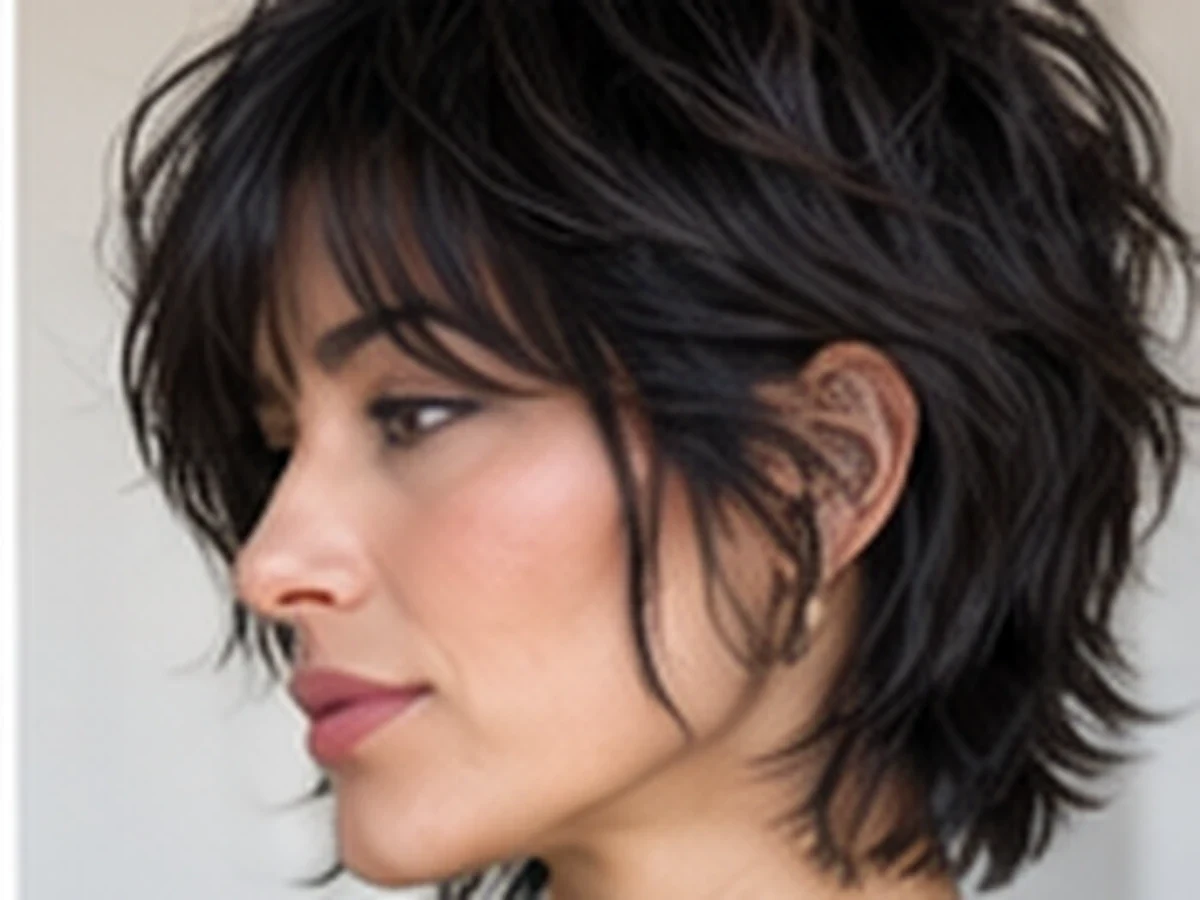
A shaggy pixie with a long nape keeps the compact footprint of a pixie but lets the back extend enough to create a softer, more directional silhouette. The extra nape length can make the cut feel less severe and gives the grow-out more personality.
The shape works best when the crown, fringe and nape feel related rather than like three separate haircuts. Shaggy Pixie Cuts is the broader owner page for the pixie-shag family; this page focuses specifically on versions that deliberately keep more length in back.
Keep crown texture light enough that the nape still belongs to the cut
Piecey crown layers create the shaggy movement, but they should blend into the back instead of stopping abruptly.
A longer nape can be wispy, tapered or fuller. Choose the finish based on whether you want a soft pixie feel or stronger mullet influence.

Fringe controls how feminine, edgy or relaxed the shape feels
Long side fringe softens the cut and gives more styling options. Shorter broken fringe makes the shape feel more graphic.
If you wear glasses, check how the temple pieces and fringe sit together before going very short around the sides.
Fine hair needs restraint; thick hair needs weight control
Fine hair can look fuller with a softer crown and a substantial fringe. Thick hair may need internal shaping so the top does not overpower the narrow sides and nape.
Styling, maintenance and grow-out
The longer nape makes grow-out more forgiving than a tightly tapered pixie, but it still changes character quickly. Decide whether you are happy for it to become shaggier between trims or want to keep the outline neat.
Specify the nape from the back and side
- Show the exact nape length you want from the back and side.
- Choose whether the nape should be wispy, tapered or fuller.
- Ask how crown layers will connect into the back.
- Bring a fringe reference separately.
- Discuss how shaggy you are comfortable letting the cut become between trims.
The nape length should be chosen from the side as well as the back
A long nape can look subtle from the back but much more dramatic in profile. Before cutting, decide whether you want the extension to read as soft length or as a deliberate tail.
More side weight keeps the cut in pixie-shag territory
If the sides remain connected to the crown and nape, the shape feels softer and more rounded. Shortening the sides more aggressively creates stronger mullet influence.
Fine hair needs enough density through the fringe
On fine hair, over-layering the crown and fringe can make the whole cut look sparse. A softer top with a fuller front often creates more usable volume.
Thick hair may need hidden weight removal
Dense hair can make the crown too bulky compared with the narrow sides and nape. Internal shaping can reduce weight without making the surface look shredded.
Glasses can change how the side shape reads
Temple arms sit exactly where a shaggy pixie often has side pieces. If you wear glasses daily, put them on during the consultation and check whether the fringe and sideburn area still feel balanced.
Grow-out can be an advantage if you plan for it
The extra nape length means the cut can evolve into a short shag or mini mullet instead of immediately looking overgrown. If you like that direction, trims can focus on the fringe and sides rather than shortening the back every time.
Parting changes how the crown and fringe connect
A side part can give the crown more lift and make the fringe sweep across the forehead, while a center or off-center part creates a more balanced front. If you regularly change your part, ask for enough connection that the cut still works in both positions.
Ear exposure changes the whole side profile
Keeping the ear more exposed makes the nape look longer and more directional. Leaving extra side length softens that contrast and keeps the cut closer to a pixie shag.
Decide whether you prefer the ear area tucked, covered or somewhere in between before the side pieces are shortened.
Second-day styling should stay simple
A shaggy pixie can look great with a little irregularity, which is useful after sleeping. If the crown flattens, a quick root refresh or finger styling should be enough; the cut should not require rebuilding every section with heat.
If the nape twists or flips naturally, decide whether that movement adds to the shape or becomes something you would constantly try to straighten.
Necklines and collars can affect the long nape
A longer back section may rub against coat collars, scarves or high-neck clothing. If that repeatedly pushes the nape outward, a slightly shorter or more tapered finish may be easier to live with.
That practical detail is worth considering if you wear structured collars most days. If you usually tuck the sides behind the ears, test that position too; it can make the nape look more pronounced and change whether the cut reads as a soft pixie shag or a stronger mullet-inspired shape. Check that view from both sides before the final detail work.
Choose the nape, sides and fringe as one shape
- Choose a softer nape if you want an easy pixie-shag grow-out.
- Choose stronger separation if you want visible mullet influence.
- Keep more fringe density if your hair is fine.
- Control crown bulk internally if your hair is very thick.
Frequently asked questions
Is a long-nape pixie a mullet?
It can lean that way, but not every long-nape pixie is a mullet. Keeping more side weight and a softer transition makes it feel more like a pixie shag.
Is this cut good for fine hair?
It can be when the crown is not over-layered and enough density is kept in the fringe and perimeter.
How often does a shaggy pixie need trimming?
It depends on how precise you want the outline. A deliberately shaggy version can grow longer between trims than a sharp classic pixie.