
This is a direct comparison rather than another gallery of shaggy pixies. Pixie shag and pixie mullet are close relatives, and inspiration photos are often labeled inconsistently. The clearest difference is how much length and weight remain through the sides compared with the back—not simply the fringe or how messy the styling looks.
A pixie shag usually keeps the silhouette more connected and rounded. A pixie mullet creates stronger separation: shorter sides, a more obvious crown-to-nape contrast and a back that reads longer on purpose.
A pixie shag keeps more connection through the sides
The crown can be choppy and the nape can extend, but the side sections still help bridge the top and back. The result feels textured and airy rather than sharply disconnected.
This is usually the easier choice if you want something unconventional without committing to a strong mullet outline.
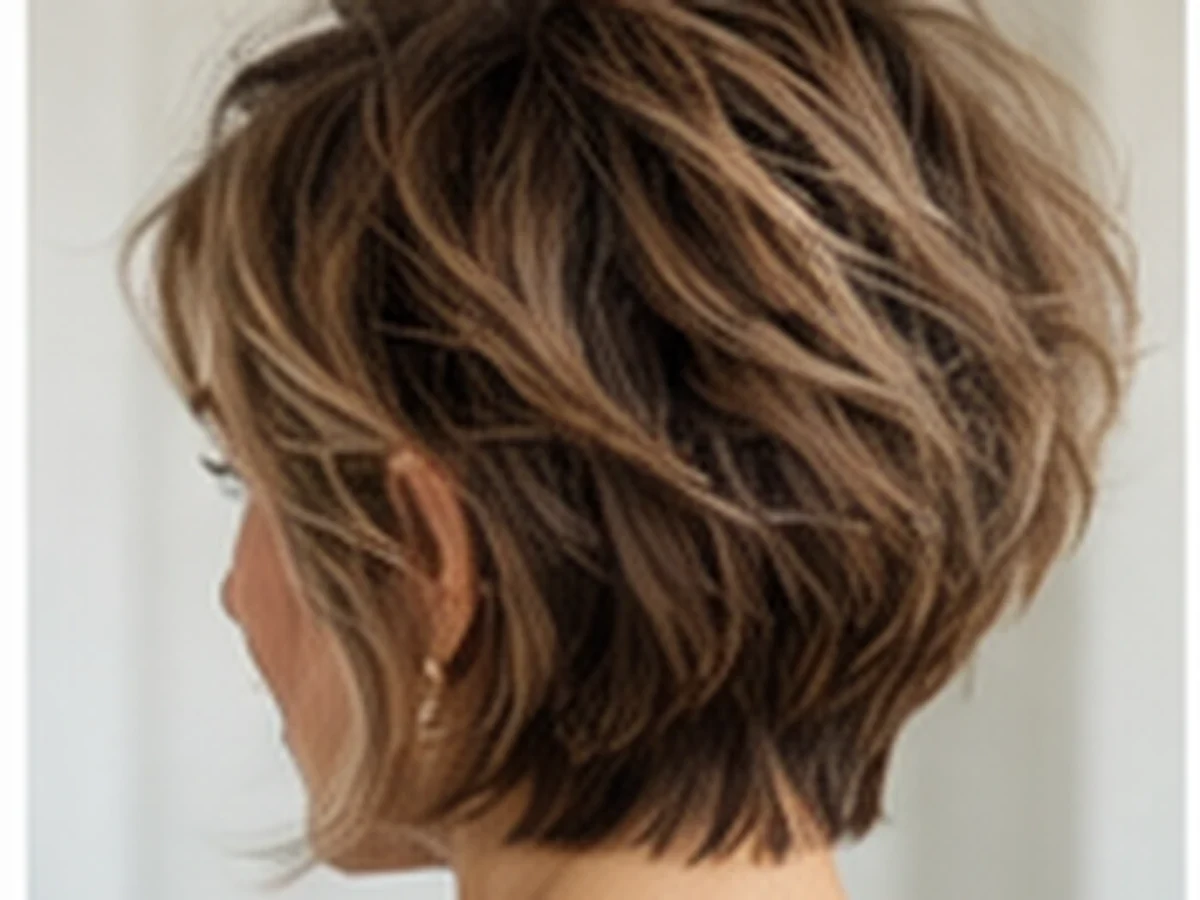
A pixie mullet makes the nape a deliberate feature
The sides are typically shorter or more tapered, which allows the back length to stand out. The crown may be shaggy, but the silhouette clearly points backward.
The more dramatic the side-to-nape contrast, the more clearly the cut reads as a mullet.
Density changes which version is easier to control
Fine hair often benefits from the more connected pixie-shag approach. Dense hair can support stronger mullet separation, but internal weight still needs control.
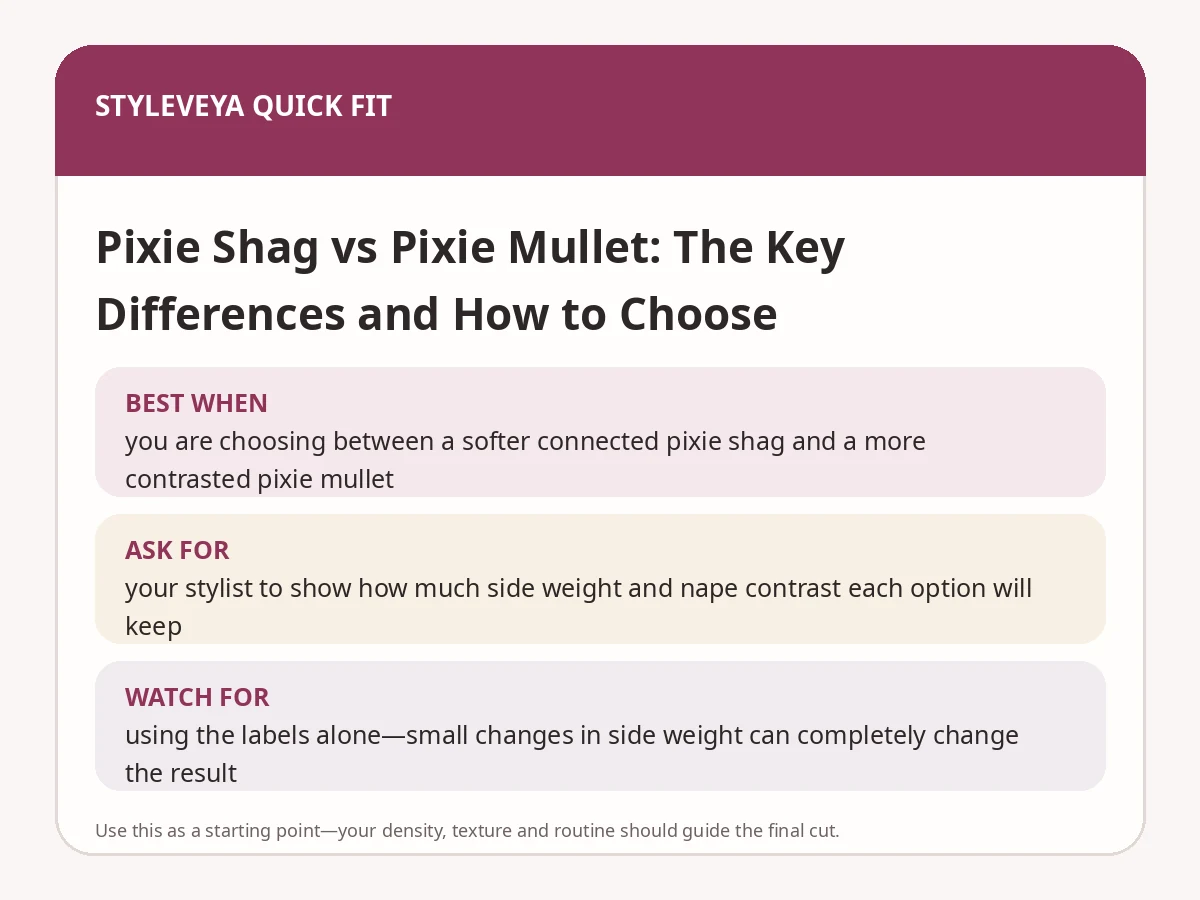
Styling, maintenance and grow-out
Both cuts can be quick to style but change character quickly as they grow. A pixie shag usually grows out more softly; a pixie mullet may need side cleanups if you want the back to remain the focal point.
Choose by silhouette, not by the haircut name
Salon and social-media labels are inconsistent. One person’s pixie shag may look very close to another person’s soft mullet. Instead of relying on the name, compare three visible features: how much side weight remains, how far the nape extends and whether the crown connects smoothly into the back.
If those three details are clear in your reference photos, the stylist has a much better chance of reproducing the shape you actually mean.
Fringe can push either cut in a different direction
A heavy straight fringe can make a pixie shag feel more compact, while a longer piecey fringe can exaggerate the movement of a mullet. The fringe is not what defines the two cuts, but it changes how dramatic the finished silhouette feels.
Choose the fringe separately from the nape. If you like the back of one reference and the front of another, bring both and explain which part of each image you want to combine.
Glasses and ear exposure can change the side profile
With glasses, very short side pieces may sit differently around the temple arms, while longer shaggy sections can bunch behind the frames. If you wear glasses every day, keep them on while the side weight and ear area are refined.
The same applies if you usually tuck the sides behind your ears. A pixie shag with more side length behaves very differently tucked than a pixie mullet with a tighter side profile.
Grow-out can move the cut from one family toward the other
A pixie mullet often becomes softer as the sides grow, while a pixie shag can start to look more mullet-like if the nape keeps lengthening faster than the sides are reshaped. That means the maintenance plan should match the silhouette you want to preserve.
If you are comfortable letting the cut evolve, the distinction matters less. If you want a very specific shape, ask which areas should be trimmed first as it grows.
Clarify side weight, nape length and crown texture
- Decide how much side weight you want to keep.
- Show the exact nape length from side and back views.
- Choose whether the crown should feel soft or deliberately choppy.
- Bring a fringe reference separately.
- Ask how the cut will look after six to eight weeks of growth.
The side profile is the fastest way to tell them apart
From the front, both cuts can look shaggy and fringe-heavy. From the side, the difference becomes clearer: a pixie shag usually keeps more side weight, while a pixie mullet creates a stronger step between shorter sides and a longer back.
The nape should be planned as deliberately as the fringe
If the back is the feature you care about, decide exactly how long and narrow you want the nape to feel. A softer tapered nape creates a more blended shag, while a visibly extended section pushes the cut toward mullet territory.
Fine hair often benefits from the connected shape
Fine hair can lose visual density when the sides are cut too short against a longer back. Keeping more connection through the side panels usually helps the haircut feel fuller.
Dense hair can support stronger separation
Thicker hair has enough mass to carry a more dramatic side-to-nape contrast, but the crown may still need weight control so the haircut does not become bulky.
Styling effort depends on how extreme the contrast is
A softly blended pixie shag can often be air-dried or finger-styled. A strong pixie mullet may need more deliberate side control so the longer back remains the focal point.
Grow-out should be part of the decision
If you dislike frequent cleanups, the more connected pixie shag is usually more forgiving. A sharper mullet shape can lose definition faster as the side sections grow.
A practical comparison
- Pixie shag: softer side connection, more rounded silhouette, easier grow-out.
- Pixie mullet: shorter sides, stronger nape emphasis, more visible front-to-back contrast.
- Hybrid: shaggy crown with a longer nape but enough side weight to avoid a strong mullet outline.
Frequently asked questions
Which is softer, a pixie shag or pixie mullet?
Usually the pixie shag because the sides and back stay more connected.
Which has a longer nape?
Both can, but a pixie mullet usually makes the nape more visually separate from the shorter sides.
Which grows out more easily?
A connected pixie shag often grows out more forgivingly, while a stronger mullet may need side maintenance to keep its intended contrast.