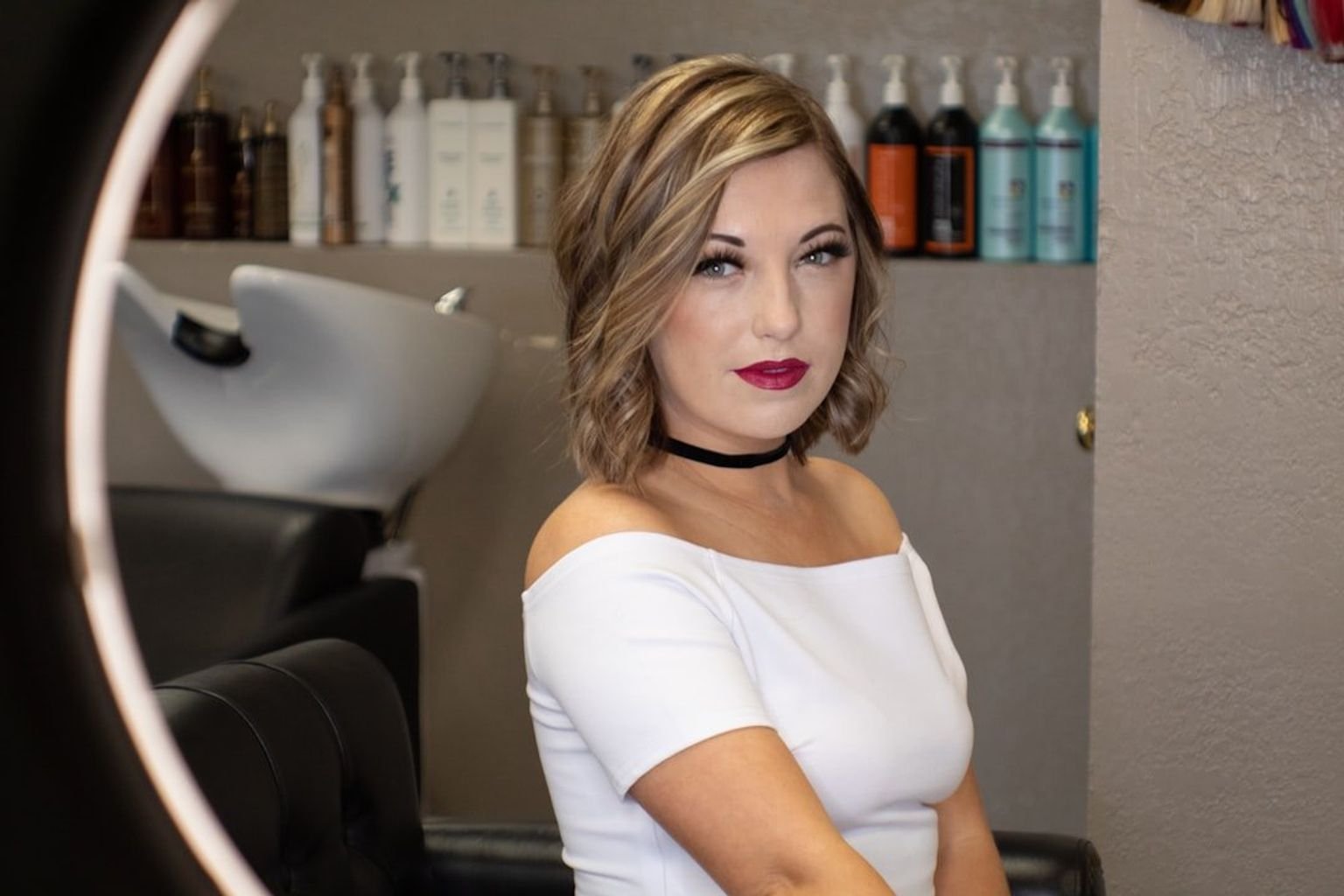
Rooted blonde keeps deliberate depth near the scalp instead of trying to make every strand equally light from root to ends. The darker area can be your natural color, a softly blended shadow root, or a slightly deeper tonal formula used to connect fresh highlights with the base.
The main benefit is not simply that “dark roots are trendy.” Root depth changes contrast, grow-out and how bright the lighter pieces appear. A few pale sections often look brighter when they sit beside natural depth than when the whole head is lifted to a similar level.
Rooted blonde is a placement strategy
The phrase can describe several finishes:
- Natural roots left untouched while highlights begin lower.
- A shadow root added after highlighting.
- A smudged root that connects the natural base to lighter mids.
- A darker root paired with bright face-framing pieces.
Those approaches do not require the same maintenance. Ask what is actually being done to the root rather than assuming every rooted blonde will fade or grow out in the same way.
A darker root can make blonde look brighter
Contrast changes perception. When light pieces sit next to a deeper base, they stand out more.
That means you may be able to keep visible brightness without lightening every strand near the scalp. This can be useful if you like blonde but do not want the entire root area repeatedly processed.
StyleVeya’s blonde balayage guide explains how placement away from the scalp can create softer grow-out.
Natural-root blonde is the lowest-commitment version
If your natural color blends well with the blonde, leaving some root untouched avoids introducing another artificial shade that will itself need maintenance.
This works especially well when the highlights are placed to connect gradually with the natural base.
The root does not have to be very dark. Even a medium or dark blonde natural root can create enough depth to make the lighter pieces look dimensional.
A shadow root can soften fresh highlights
Sometimes highlights reach close to the scalp and look brighter or more striped than the client expected. A carefully chosen shadow root can soften that transition.
Match the root depth and tone to the long-term color plan. A root formula that is much darker than the natural base may look dramatic at first but can create a different maintenance problem as the natural hair grows in.
Rooted blonde is not automatically low maintenance
A softer root line can reduce how quickly regrowth bothers you, but the mids and ends are still blonde.
Very light lengths may still need tonal refreshes, conditioning, heat protection and careful handling. If the ends fade warm or feel dry, a blended root does not eliminate those needs.
For a broader comparison, see StyleVeya’s low-maintenance blonde ideas.
Ask what will happen when the root formula fades
A gloss, demi-permanent shadow and permanent darker color do not create the same future.
If the root is only being toned slightly deeper, it may soften gradually. If permanent color is used to create a much darker root, future lightening can become more complicated.
Ask your colorist what formula is being used, how it is expected to fade and whether it changes the plan for future blonde appointments.
Fine hair can benefit from visual depth
Blonde hair can sometimes look visually flatter when every strand is close to the same light level.
Keeping some darker depth at the root and underneath can create the appearance of more separation between sections. That does not create more physical density, but it can prevent the color from looking like one flat sheet.
If fine-hair fullness is also a haircut concern, StyleVeya’s fine-hair haircut hub keeps color and cutting decisions separate.
Thick hair can support stronger contrast
Dense hair gives a colorist more internal sections to work with, which can make a deeper root and brighter ends feel very dimensional.
The risk is creating too many unrelated tones. If the root, mids and ends all compete, the color can look busy instead of blended.
A transition shade or melt can help connect those zones. StyleVeya’s color melting vs balayage guide explains how lightening placement and tonal blending differ.
Very dark natural roots need realistic expectations
If your natural base is deep brunette and the blonde is very pale, the contrast will remain visible even when the transition is expertly blended.
That can be beautiful if you like a high-contrast rooted look. If you want a softer effect, the blonde may need to begin lower, use more intermediate tones, or stay slightly deeper.
Bring reference photos that show a natural base similar to yours whenever possible. A rooted blonde on light brown hair does not translate identically to nearly black hair.
Face-framing brightness changes the whole result
A rooted blonde can still feel bright if the lightest pieces sit around the face.
You can keep more natural depth through the crown and interior while adding selected pale ribbons near the front. This gives the eye a brighter impression without lightening every root section.
Ask how wide and how bright you want that face frame to be. A dramatic money piece needs different maintenance from subtle babylights.
Gray hair changes the root conversation
If you have visible gray at the hairline or part, leaving the root completely natural may create a different contrast than you expect.
Some people like the silver integrated into the rooted look. Others want the gray softened or covered while still keeping a deeper root effect.
That becomes a gray-blending decision rather than simply a blonde-placement decision. StyleVeya’s gray blending guide explains those options more clearly.
Do not let “rooted” become an excuse for a harsh band
Intentional root depth should connect with the rest of the hair.
A hard horizontal line where dark suddenly becomes light is not the same thing as a rooted blonde. The transition should make sense with the highlight placement and the way the hair moves.
If you can see a clear stripe around the head, ask whether a melt, additional fine pieces or tonal adjustment would create a more gradual shift.
Choose the root depth around your long-term plan
If you want to stay blonde for a long time, preserving some natural depth can make future appointments more flexible.
If you think you may return to brunette, a rooted approach can also reduce the visual shock of going darker because the top already contains depth.
If your goal is maximum lightness from scalp to ends, rooted blonde may simply not be the right direction.
What to tell your colorist
Useful details include:
- Your natural root depth.
- How much root you want visible.
- Whether the root should match your natural color or be intentionally darker.
- How bright you want the face frame.
- Whether you prefer high contrast or a very soft blend.
- How often you want root and toner maintenance.
- Your full previous-color history.
The StyleVeya Stylist Brief can help organize those priorities before the appointment.
A rooted blonde should look intentional from day one
Rooted blonde should not look like blonde you simply stopped maintaining. The difference is placement and blend.
Keep enough depth to make the blonde dimensional. Make the transition gradual enough to support grow-out. Choose a root formula that fits the long-term plan rather than only the first salon photo. Done well, the darker base does not reduce the blonde effect—it gives the blonde something to stand against.