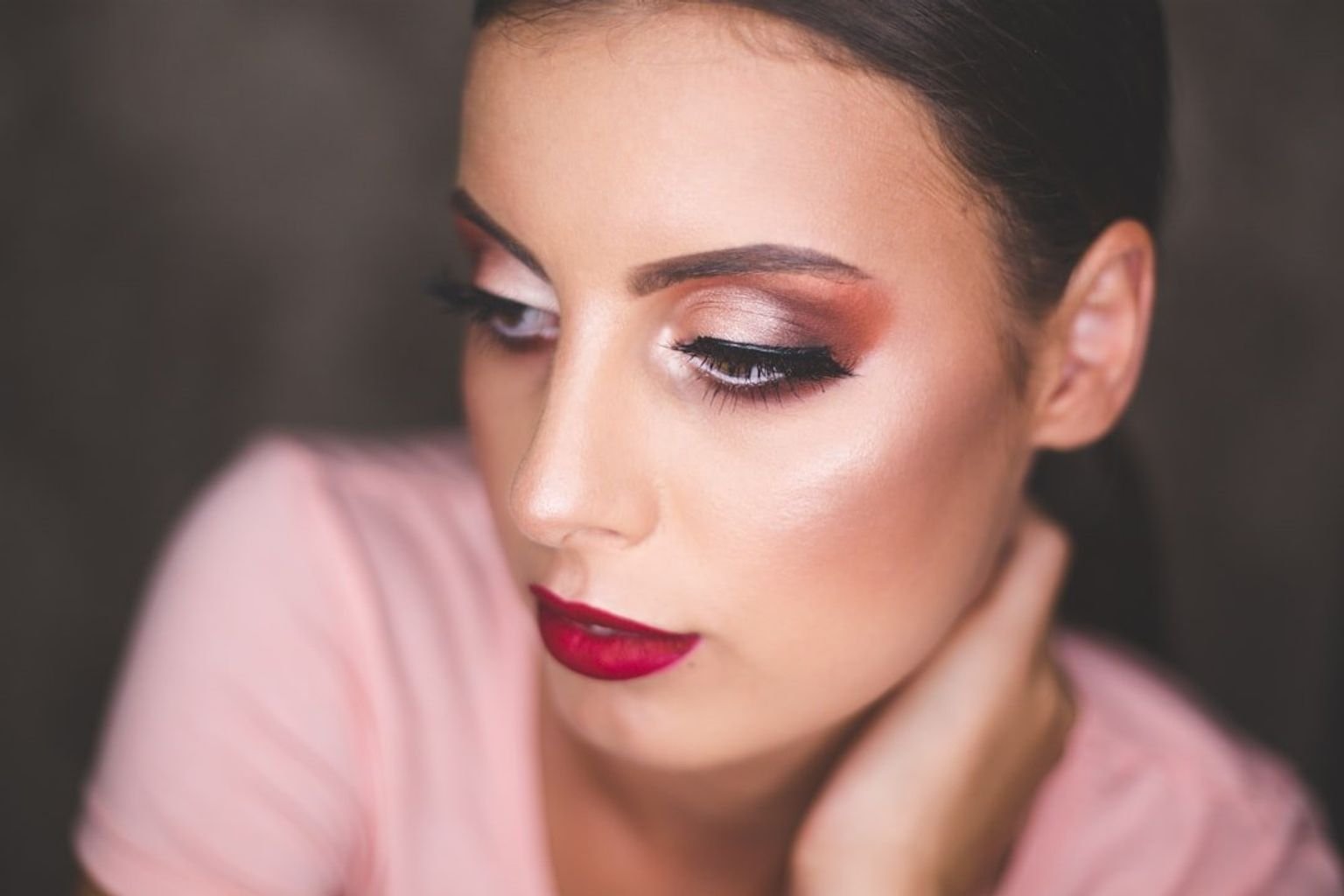
Glowy makeup can mean several different things. “Dewy” usually describes controlled light reflection on selected areas of the face. “Balmy” is softer and more emollient, with a lived-in sheen that can look almost skincare-first.
Both finishes can be beautiful, but neither works best when every area of the face is equally shiny. The difference between intentional glow and makeup that looks like it is breaking down is usually placement.
Dewy makeup is about controlled reflection
A dewy finish places light where you want the eye to land—often the upper cheekbones, temples and sometimes the center of the lid or bridge of the nose.
The rest of the face does not have to be matte. It simply needs enough balance that the glow still looks deliberate.
Lightweight skin tints, satin creams and subtle liquid highlighters usually make this easier than stacking several glossy products.
Balmy skin is softer and less “perfect”
Balmy makeup has a more flexible surface. The shine often looks less like highlighter and more like naturally moisturized skin.
This finish works well when you want freckles, texture and real skin to remain visible rather than covering everything with opaque foundation.
That connects naturally with StyleVeya’s bare-looking skin makeup guide, which focuses on keeping the face polished without piling on base products.
The center of the face usually needs more control
The sides of the nose, upper lip, chin and center of the forehead are common areas where natural shine increases throughout the day.
If you deliberately add balm there too, the finish can become less defined quickly.
A small amount of translucent powder in those areas can preserve the glow on the cheeks without flattening the whole face.
Dewy does not mean wet everywhere
A common mistake is applying luminous primer, dewy foundation, cream blush, liquid highlighter, face mist and balm across the same areas.
Each product may look subtle on its own, but together they can create more shine than intended.
Build one reflective layer at a time and check the result in natural light before adding another.
Balmy skin needs a stable base underneath
If the base is already very rich or emollient, adding more balm can make foundation and concealer move.
Keep the complexion products thin and let the balmy finish come mainly from selected areas rather than coating the entire face.
Texture matters more than trend labels
Very dry skin, oily skin and combination skin do not respond to glow products in the same way.
If the cheeks are dry but the T-zone becomes shiny quickly, you may want a balmy cheek with controlled powder through the center.
If the whole face is dry, a softer luminous base may look more natural than placing intense highlighter only on the cheekbones.
Choose one main source of shine
If your base already has a dewy finish, you may need little or no separate highlighter.
If the base is satin or natural, a cream highlighter or balm can create targeted reflection.
This “one main source” rule helps prevent the face from becoming uniformly glossy.
Cream blush supports balmy skin well
Cream blush blends naturally into an emollient base and can make the skin look like the color is coming through rather than sitting on top.
The trade-off is wear. If your blush fades quickly, apply a thin layer and set only the edges or use a small amount of matching powder blush where you need extra longevity.
Powder blush can still work with dewy skin
You do not need to avoid powder products entirely.
A finely milled powder blush placed over a lightly set area can add color without removing all glow. Keep the reflective finish mainly above and around the blush rather than directly underneath every layer.
Highlighter placement should follow the face, not a template
The highest point of the cheekbone is a common placement, but the exact area depends on your features.
If highlighter sits too close to the nose, it can emphasize texture or make the center of the face look shinier. If it is placed too low, it may pull the cheek downward visually.
Apply a small amount, step back from the mirror and look at where the light catches naturally.
Do not put shine everywhere you have texture
Reflective products can make skin texture more visible because they catch light across raised and recessed areas.
If you like glow but do not want to emphasize a particular area, keep that zone more satin and move the shine slightly above, beside or away from it.
Keep real skin visible and place reflection only where it improves the overall finish.
Balmy eyelids can crease
A glossy or balmy eye can look beautiful in photos, but the eyelid moves constantly.
If you want that effect for everyday wear, keep the balm very thin and accept that some creasing may be part of the look. For longer wear, use a satin shadow instead of a true balm.
Glowy makeup still needs shape
When the skin has a lot of sheen, the face can lose definition if every other product is also soft and reflective.
One clear shape decision—brows, mascara, liner or blush placement—helps the makeup feel intentional.
StyleVeya’s brown mascara guide and one-shadow makeup guide are useful if you want the rest of the face to stay restrained.
Daylight is the best test
Bathroom lighting can make glow look subtle, while daylight may reveal much more reflection.
Before adding another layer, stand near a window and turn your face slightly. Look at the forehead, nose, upper lip and cheeks separately.
If every area catches light equally, you may already have enough.
How to fix makeup that became too shiny
Do not powder the entire face automatically.
Press a tissue gently over the area with excess emollience, then add a very small amount of powder only where needed.
Leave the cheekbones or temples alone if the glow there still looks good.
How to fix makeup that became too matte
If the complexion looks flat after powdering, add a small amount of cream highlighter or balm to one or two high points.
You do not need to re-wet the whole face with setting spray or add gloss everywhere.
A practical dewy routine
- Use a natural or lightly luminous base.
- Conceal only where needed.
- Add cream or powder blush.
- Place a small amount of reflective product on the high cheekbone.
- Set the center of the face lightly if it becomes shiny.
A practical balmy routine
- Use a thin skin tint or concealer where needed.
- Add cream blush.
- Press a tiny amount of balm onto the high cheek area.
- Keep the nose and upper lip more controlled.
- Use simple eye and lip products so the skin remains the focus.
The difference is placement, not a strict product category
Dewy and balmy are useful descriptions, but the products can overlap.
What matters is where the shine sits, how much movement the base can tolerate, and whether the face still has enough contrast to look intentional.
Keep reflection where you want attention. Control it where makeup naturally breaks down. That balance is what makes glow look polished rather than accidental.