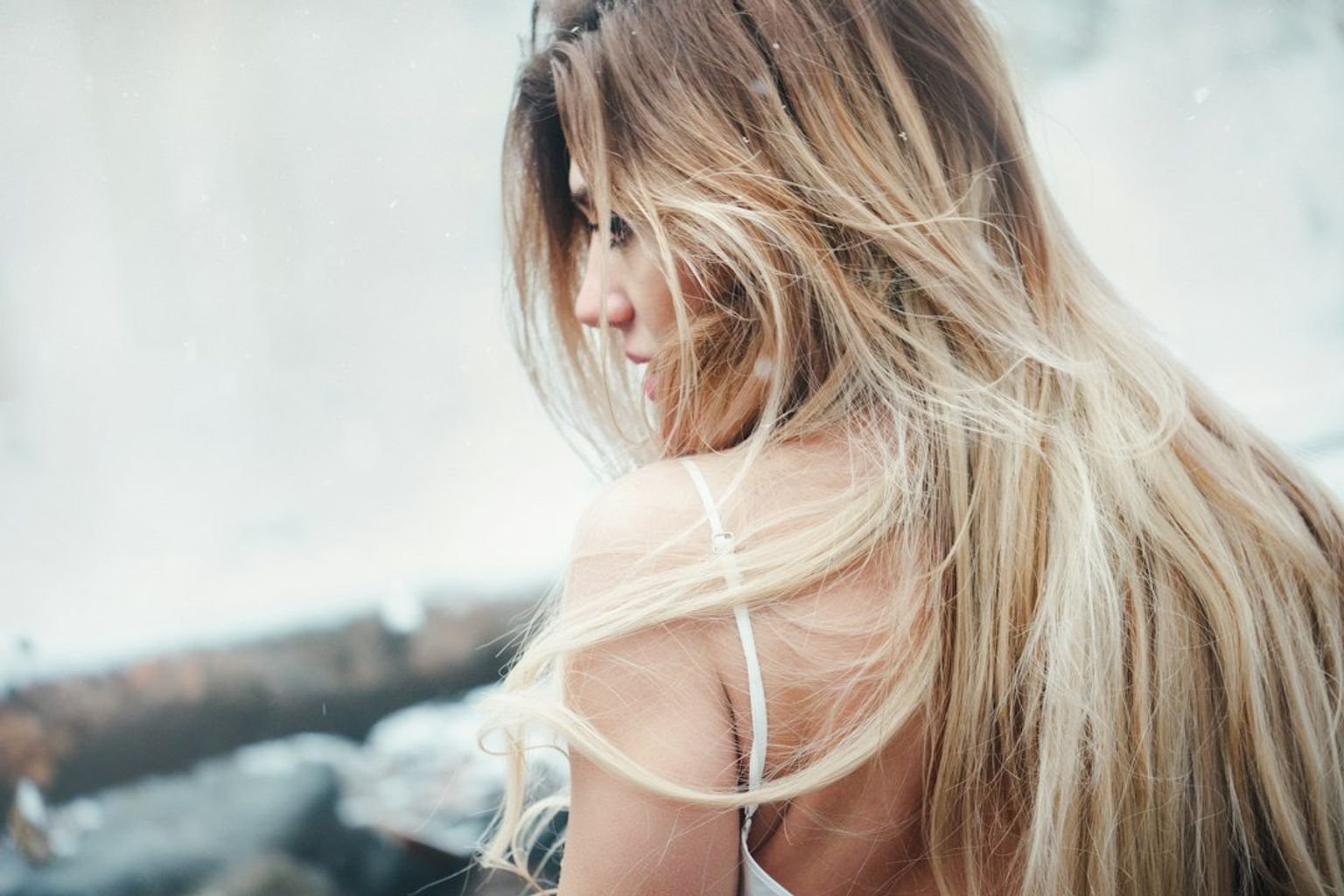
Creamy beige blonde sits between icy and golden. It is light, soft and neutral-looking, but it still has enough warmth to keep the hair from reading gray. That balance is why the shade looks expensive when it is right—and why it can be easy to lose between salon visits.
The color works best when the plan starts with your current base, hair condition and color history rather than one swatch. If your hair naturally pulls warm, forcing it too cool can make the result look dull or require more processing than the hair should tolerate.
Beige blonde is a tone, not one exact level
You can wear beige blonde at several depths.
A darker beige blonde can keep more natural root and use lighter ribbons through the mids and ends. A brighter version may sit close to pale blonde, with enough neutral-warm pigment to avoid looking silver.
That is different from StyleVeya’s mushroom blonde, which usually leans cooler and more muted.
The root strategy matters as much as the toner
A beige blonde often looks more natural when the root is planned rather than erased.
A soft shadow root or preserved natural depth can reduce the line of regrowth and give the lighter sections something to contrast with.
If softer grow-out is a priority, compare the placement ideas in StyleVeya’s blonde balayage guide.
Why beige blonde turns yellow
Warmth can become more visible as toner fades, mineral buildup accumulates or the hair’s underlying pigment shows through again.
That does not necessarily mean the original color was wrong. Tonal services are expected to soften over time.
Purple shampoo is not the whole maintenance plan
Purple can help reduce visible yellow, but constant use is not automatically better.
Porous ends may grab violet more strongly than warmer areas near the root, which can leave the color uneven or dull.
Use toning products when the tone actually needs correction and follow the product directions rather than treating purple shampoo as an everyday default.
Hair condition sets the limit
The prettiest beige blonde is not worth pushing weakened hair beyond what it can tolerate.
If the lengths are already lightened, a colorist may choose to brighten only selected pieces and refresh the rest with gloss or toner rather than overlapping lightener everywhere.
StyleVeya’s hair-color decision guide helps compare starting shade, upkeep and hair condition together.
Beige blonde on naturally dark hair
Deep brunette starting hair usually requires more lightening to reach a light beige result.
That means the route matters. A reference photo showing naturally light brown hair may not represent the same amount of processing required for darker hair.
If you want lower maintenance, a darker beige or brunette-beige transition may be more realistic than trying to maintain very pale ends.
Beige blonde on light brown hair
Light brown hair can often support a softer beige result with less dramatic contrast.
Keeping some natural depth at the root can make the lighter pieces look brighter while preserving a gentler grow-out.
Beige blonde on previously highlighted hair
If the hair already contains highlights, the service may be more about tonal correction and selective brightening than full-head lightening.
A gloss can reconnect different shades and reduce yellow without starting over.
StyleVeya’s gloss vs permanent color guide explains why tonal services solve different problems from permanent base changes.
Beige blonde can still have dimension
Neutral does not mean flat.
A mixture of slightly deeper beige, lighter cream and natural root can create more movement than one uniform pale shade.
If every section is lifted to the same level, the color can lose contrast and make the haircut look flatter.
Face-framing brightness can make the whole color feel lighter
You do not need every section equally pale to create a bright blonde impression.
A few lighter pieces around the face can make the result feel significantly brighter while allowing the crown and interior to keep more depth.
Warmth is not the enemy
Beige blonde needs some warmth to stay creamy.
If every golden reflection is neutralized, the result may become ashy, gray or dull.
Creamy beige blonde needs some balanced warmth; neutralizing every golden reflection can make it look flat.
Hard water and buildup can change how the color reads
Mineral and product buildup can reduce shine and make the color look muddier or warmer.
If the hair feels coated as well as visually dull, ask whether buildup should be addressed before adding more color.
Heat can make pale blonde look drier
Lightened hair often shows surface dryness more clearly than darker hair.
Excessive heat can make beige blonde look rough and less reflective, even when the tone itself is still correct.
Use heat protection and the lowest effective heat for the style you are creating.
Rooted blonde can make beige easier to maintain
Keeping deliberate depth near the scalp can reduce pressure to lighten the root at every appointment.
StyleVeya’s rooted blonde guide explains how a darker base changes contrast and grow-out.
Ask how the color is expected to fade
Do not judge the plan only by salon day.
Ask what undertone is likely to become more visible after several washes, how often a gloss may be useful, and whether the root strategy will still look intentional as it grows.
A useful salon brief
Instead of asking only for “beige blonde,” say:
- I want creamy neutral blonde, not icy silver.
- I want to keep some natural root depth.
- I prefer soft brightness around the face.
- I do not want a strong yellow or orange result.
- I want a maintenance plan that does not require constant full-head lightening.
- This is my previous color history.
The StyleVeya Stylist Brief can help organize those details before the appointment.
Do not chase salon-day perfection with repeated correction
Blonde naturally changes between appointments.
If the hair is healthy and the tone is only slightly warmer, a gloss or small adjustment may be enough. Repeated lightening or corrective color can create more damage than the original tonal shift justified.
Creamy beige blonde works best with a realistic maintenance plan
Keep enough warmth for the color to remain creamy, enough depth for the blonde to stay dimensional, and enough restraint in the lightening plan to protect the hair.
The target is not a perfectly neutral swatch that never changes. It is a blonde that still looks intentional as toner softens, roots grow and everyday life changes the finish.