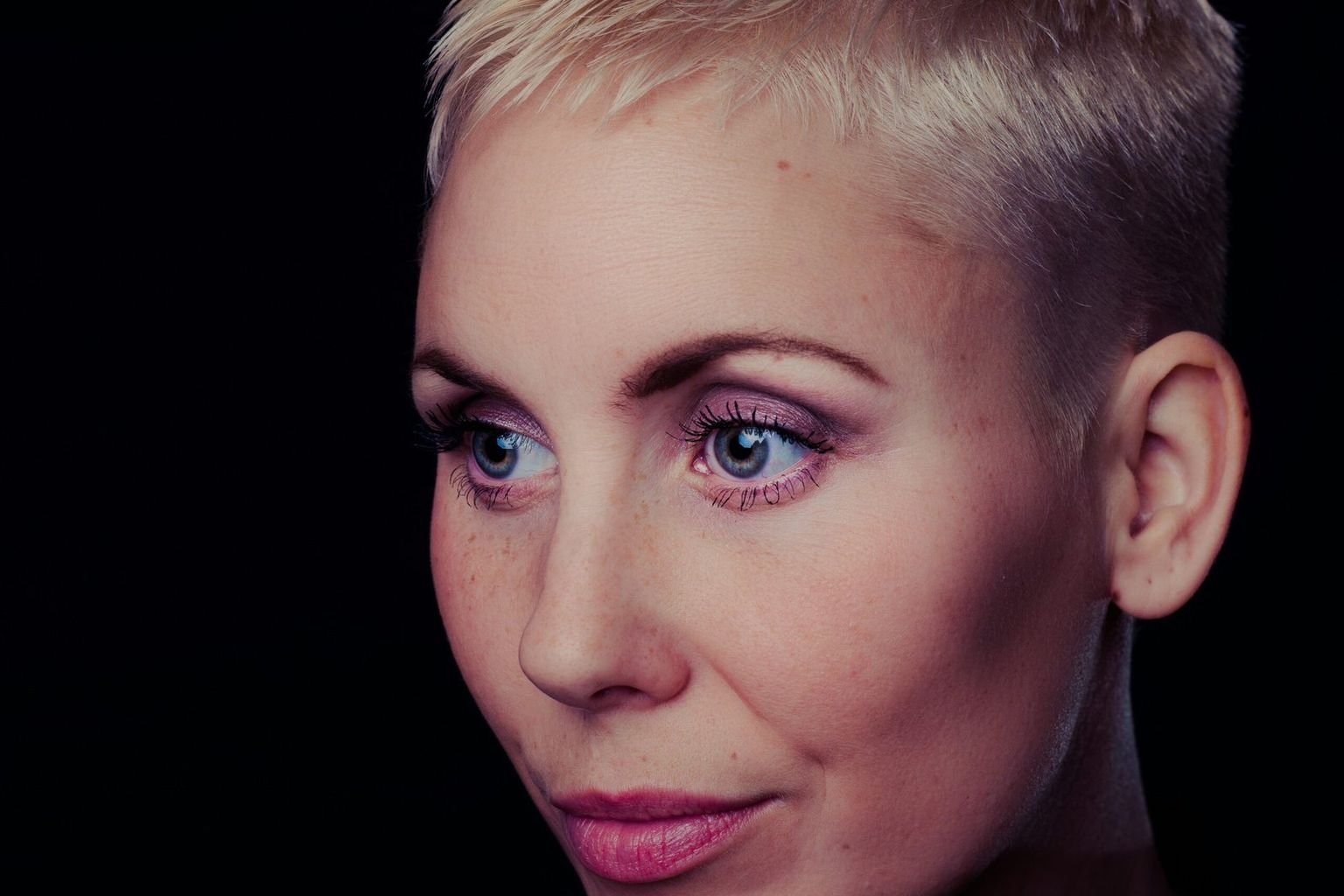
The curtain crop sits between a close pixie and a grown-out short cut. The defining feature is not the trend name but the extra front length: enough hair to split, sweep or fall away from the forehead while the overall silhouette remains short.
Vogue’s fall 2026 coverage uses the term for a softer, more grown-out short cut. For a reader deciding whether to wear it, the important variables are growth pattern, density, texture and whether that front section will cooperate without daily restyling.
What a curtain crop actually is
Think of it as a short cut that refuses to look too freshly “pixied.” The sides and back stay compact, while the top and front keep enough movement to separate around the forehead. The result can read polished, boyish, soft, edgy or romantic depending on the finish.
Unlike a traditional pixie, the front is usually not cut purely for lift, spikes or a neat side sweep. The cut works because the fringe area has enough length to fall forward and then split. That extra front weight is what creates the curtain effect.
Curtain crop vs pixie: the difference you will notice at home
A pixie is a broad haircut family, so there is overlap. Still, a typical pixie often depends more on intentional shape around the temples, crown and fringe. It can be very cropped, very sculpted or heavily textured.
The curtain crop usually feels less “finished” in the best way. The top is allowed to move. The front can fall toward the eyes. The center or off-center split becomes part of the look rather than something you have to fight.
That makes it appealing for people who like short hair but do not want every piece tucked perfectly into place.
The front hairline matters more than the trend photo
Before asking for this cut, check your growth pattern before worrying about face shape.
A strong cowlick, widow’s peak or directional growth at the front can change where the “curtains” naturally open. That is not automatically a problem. It simply means your version may need a side split rather than a centered one, or slightly more length so the hair has enough weight to settle.
Before the appointment, let your stylist see how the front behaves when it is clean and not forced into position. That tells them more than a heavily styled reference photo.
Straight hair gets the cleanest curtain effect
On straight hair, the shape can look sharp without feeling severe. Fine straight hair may need careful internal texture so the front does not collapse flat, while thick straight hair may need weight removed underneath to stop the cut becoming helmet-like.
The danger with very fine hair is over-thinning. Too much texturizing can leave the front wispy and make the scalp more visible. A better approach is often to preserve a clear outline and create movement strategically.
Wavy hair can make it softer—and slightly less predictable
Natural wave often suits this cut because it creates the looseness the style is trying to achieve. But the wet-to-dry difference matters. A fringe that looks perfectly long when wet can jump upward after drying.
For that reason, leaving a little more length at first is usually safer than trying to force a precise eyebrow-skimming result on the first cut.
If your hair changes dramatically with humidity, mention that too. The salon finish should not be the only version of the haircut that works.
Curly hair needs a curl-by-curl interpretation
A curtain crop on curly hair should not be treated as a straight haircut with curls added afterward. Curl spring, shrinkage and density all influence where the front finally lands.
The shape can be excellent on curls, especially when there is enough top length for the texture to form rather than puff, but the silhouette needs to be planned in its dry state. The general haircut decision guide is useful here because texture and daily styling time matter more than the trend label.
Turn the reference photo into a salon brief
Instead of saying only “I want a curtain crop,” describe the parts that matter:
- how short you are comfortable going around the ears and nape;
- whether you want the front to split naturally or be styled into curtains;
- how much forehead you want visible;
- whether you tuck your hair behind your ears;
- how much time you are willing to spend styling the front;
- what you want the cut to look like six weeks later, not just on day one.
A useful reference photo should show the front, side and overall density where possible. The live StyleVeya Style Finder can also help you narrow the kind of short-hair silhouette you actually want before the salon conversation.
The grow-out is one of its biggest advantages
Many people hesitate over very short hair because the awkward stage can feel endless. A curtain crop has a small advantage: it already starts with some looseness around the front.
As the top grows, it can transition into a longer crop, short bob territory or a tucked ear-length shape without looking immediately “overgrown.” The nape and sides may still need cleanup, but the front does not depend on staying extremely short.
How often does it need trimming?
That depends on how precise you want the outline. Someone who likes a clean nape may want a tidy-up around four to six weeks. Someone who enjoys the grown-out shape can often stretch longer, especially if the front was intentionally left soft.
This is where the phrase “low maintenance” can be misleading. Styling may be quick, but short cuts reveal growth faster than long hair. The question is whether you mind the changing shape.
Styling does not have to mean a full blow-dry
The trend works best when the hair still looks touchable. For many textures, that means drying the roots in the direction you want the front to fall, then using a small amount of lightweight product through the ends.
Too much wax can separate the fringe into stiff pieces. Too much smoothing cream can flatten fine hair. Start with less product than you think you need and add only where the cut needs definition.
When the curtain crop becomes more work than expected
You may find it frustrating if you strongly dislike hair touching your forehead, need your hair fully tied back for work or sport, or have a front growth pattern that requires daily heat styling to create the split you want.
That does not mean the cut is “wrong” for you. It means the most photographed version may not match your routine. A slightly longer bixie, side-swept pixie or ear-length bob may deliver the same short-hair feeling with fewer daily negotiations.
When the shape fits the routine
The curtain crop makes the most sense for someone who wants short hair with movement rather than sharp precision. It is especially appealing if you like changing the part, tucking one side back, air-drying some days and wearing the front slightly messy rather than perfectly controlled.
Browse the wider StyleVeya haircut collection before committing so you can compare it with other short shapes instead of treating one trend as the only option.
Copy the structure, not the exact photo
A curtain crop works better when it is adapted rather than copied exactly. They keep the idea—short overall, longer and looser through the front—then adjust the details to the person wearing it.
That may mean a deeper side part, a longer fringe, softer temple pieces or more weight at the crown. Those changes do not dilute the trend. They are what make the cut wearable after the salon photo is over.
Frequently asked questions
Is a curtain crop the same as a bixie?
Not exactly. A bixie usually carries more bob-like length and weight, especially around the perimeter. A curtain crop tends to stay shorter while preserving longer movement through the front.
Can a curtain crop work on thick hair?
Yes, but removing internal bulk without destroying the outline is important. Thick hair often benefits from controlled weight removal underneath rather than aggressive thinning through the visible surface.
Do I need a center part?
No. A soft off-center opening often looks more natural and can work better with cowlicks or uneven growth.
Can I air-dry it?
Often, yes. The success of air-drying depends on texture and front growth direction. Ask for a cut that respects how your hair dries naturally rather than one that only works after salon styling.
If both shapes appeal to you: use your real styling time and maintenance preference to compare short-hair directions in the StyleVeya Style Finder.