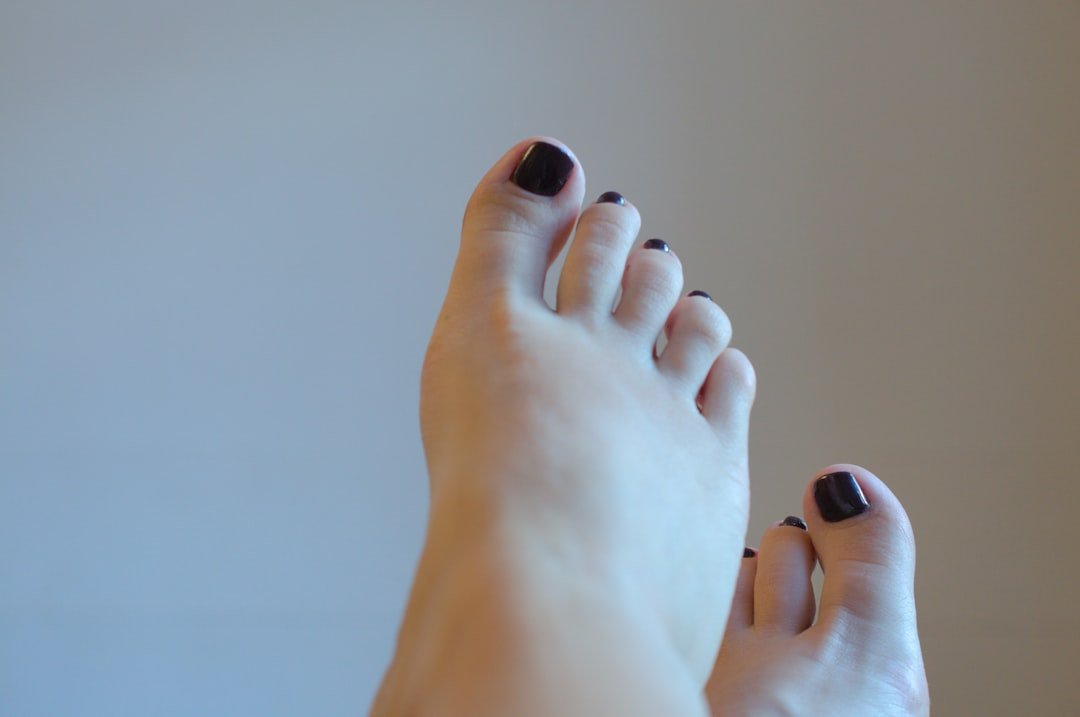
Fall pedicure color can go darker without becoming predictable. Denim blue, merlot, olive and warm brown all feel seasonal, but they behave very differently on the foot. Judge the shade against your skin tone, usual footwear, manicure and the amount of grow-out you are comfortable seeing rather than choosing by the bottle alone.
Start with contrast, not trend names
Toenails are small, so very deep polish can visually merge into one dark block. If you want obvious color, choose a shade that still shows its undertone in normal indoor light. If you prefer a quieter pedicure, a deeper shade can work almost like a neutral.
Before choosing, hold the swatch near your foot rather than judging it on a display card. Skin tone, shoe color and lighting can shift how blue, red, green and brown read.
Denim blue: cooler and softer than navy
Denim blue works when you want depth without the severity of near-black navy. Look for a muted mid-to-deep blue with a little gray rather than an extremely saturated cobalt. On short toenails, a glossy finish helps the blue remain visible instead of collapsing into charcoal.
Denim blue is especially useful if your wardrobe includes cream, gray, black, camel or actual denim because it coordinates without looking matched on purpose.
Merlot: classic depth with different undertones
Merlot is not one color. A brown-leaning wine shade feels softer and warmer, while a blue-red merlot feels cleaner and higher contrast. If you already wear burgundy lipstick or deep red manicures, compare the undertone rather than trying to match the exact shade.
Because dark red is recognizable even on very short nails, it is one of the easiest fall pedicure directions when you want something polished but not experimental.
Olive: muted, modern and surprisingly neutral
Olive can look sophisticated when it is dusty rather than bright. A khaki-olive feels earthy and understated; a deeper military green looks stronger and more graphic. The shade works particularly well with tan, cream, chocolate, black and gold accessories.
If you are unsure whether green will feel wearable for several weeks, start with a grayer olive rather than a vivid forest green. The muted version behaves more like taupe on the foot.
Toasty brown: warm without looking orange
Chocolate, coffee, cinnamon and chestnut shades are easy to carry from early fall into winter. Choose first between a neutral brown and a visibly warm reddish brown. If the polish looks orange beside your skin and that is not the effect you want, move toward cocoa or espresso.
For a darker manicure comparison, see our chocolate brown nail guide.
Match the pedicure to how long you will wear it
A pedicure often remains visible longer than a manicure, so longevity should influence the color choice. Very dark shades make tip wear and small chips easier to notice. Mid-depth colors are more forgiving as the polish grows away from the cuticle.
If you know you will not refresh the pedicure for several weeks, choose a shade you still enjoy once it is no longer perfectly fresh. A color that feels exciting for one evening but tiring after ten days is not a practical choice.
Your manicure does not have to match
Hands and feet can coordinate by undertone, depth or finish rather than exact color. A sheer pink manicure with a merlot pedicure can look deliberate. So can silver nails with denim-blue toes, or a nude manicure with olive.
If you want the two to feel related, repeat just one quality: both cool, both glossy, both muted, or both in a similar depth range.
Think about open-toe shoes and sandals
Dark polish can appear even deeper inside black or brown footwear, while muted green or blue can become more visible against nude or metallic sandals. If you are choosing the color for an event, consider the shoe before you commit.
That does not mean the pedicure must coordinate with one outfit. The better goal is a shade that still makes sense with the colors you wear most often.
Use your manicure as a contrast test, not a matching rule
If your hands already carry a strong red, blue or brown, putting the same intensity on the feet can feel very coordinated or slightly heavy depending on your style. A softer neutral manicure can let a richer pedicure lead, while a bold manicure can pair well with a quieter toe color.
Compare the two at normal distance. The goal is not perfect duplication; it is deciding whether you want the hands and feet to read as one color story or two related accents.
Choose depth with regrowth in mind
Very dark polish creates strong contrast at the cuticle as the nail grows. Mid-depth olive, denim and warm brown usually disguise that change more quietly than near-black wine or navy.
If long wear matters more than maximum drama, choose the deepest shade you still like once a small amount of natural nail becomes visible at the base.
Pick a fall pedicure shade by the effect you want
- Choose denim blue if you want a cool dark color that still reads clearly as blue.
- Choose merlot if you want a classic fall shade with strong contrast and easy recognition.
- Choose olive if you prefer muted, earthy color that works almost like a neutral.
- Choose toasty brown if you want warmth and the easiest bridge between fall and winter wardrobes.
What to ask for at the salon
Ask to see two coats on a swatch or sample tip if the bottle looks very dark. One coat can reveal undertone, while two coats show whether the finished color will still look blue, red, green or brown. If you are choosing between similar shades, compare them in daylight before the final application.
The best fall pedicure is the one you are still happy to look at after the trend moment passes. Pick for your routine, wardrobe and tolerance for visible grow-out, not just the seasonal label. If you are between two shades, choose the one that still looks clearly like its color family under ordinary indoor light, because that is where you will see it most often.