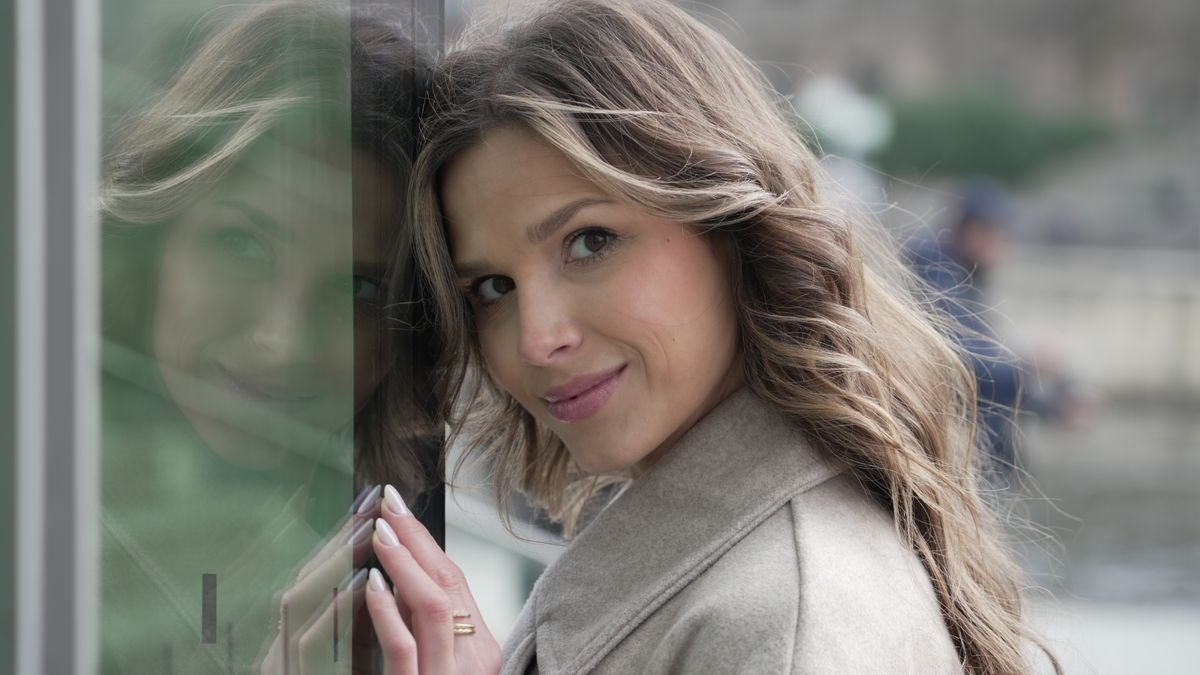
Caramel balayage can mean anything from barely lighter warm ribbons through dark brown hair to brighter golden pieces around the face with much deeper roots. Before choosing the shade name, decide how much contrast you actually want; that choice changes the salon plan, maintenance and amount of lightening far more than the word caramel alone.
Caramel balayage works best as a placement-and-tone decision rather than a single shade. Your starting color, previous dye, hair condition and desired root softness all matter. When you are comparing balayage, foils, babylights and other highlighting methods, compare the Hair Highlights Guide first. For the overall color plan, use How to Choose Hair Color.
Image note: the photographs below are visual outcome references for warmth, contrast and placement. A finished photo cannot prove which professional coloring technique created it, so take the look you like to your colorist and let them choose the method that suits your starting hair.
6 caramel balayage directions worth comparing
1. Face-framing caramel brightness

If you want the color to be noticeable without lightening most of your hair, start with brightness around the face and let the rest stay deeper. This gives the eye a clear focal point while preserving more of the natural brunette base.
The important salon question is how bright those front pieces should become relative to the rest. A small difference feels soft; a much lighter face frame creates a stronger statement and may need more frequent toning to keep the warmth where you want it.
2. Higher-contrast caramel against dark roots

This direction keeps a clearly darker root and creates a more obvious transition into brighter lengths. Compare it if you want balayage to read from across the room rather than only in sunlight.
More contrast usually means more lift, and more lift means hair condition becomes a bigger part of the decision. If the lengths are already fragile or heavily colored, ask whether a softer caramel target would give you a healthier-looking result.
3. Soft caramel ribbons through medium brown hair

Soft ribbons are useful when you want dimension but do not want obvious streaks. The lighter pieces sit close enough to the brunette base that the whole result still reads as brown hair, only with more movement.
This is one of the easier directions to live with because the contrast is lower and the grow-out can be subtle when placement begins away from the scalp. It also pairs naturally with the ideas in Low-Maintenance Brunette Hair Color.
4. Subtle caramel dimension with minimal contrast

If you want people to notice that your hair looks richer rather than immediately notice “highlights,” keep the caramel close to your starting depth. This can be especially useful on medium brown hair where a small tonal shift already creates movement.
This direction is not about making every section lighter. It is about leaving enough dark hair between the lighter pieces so the dimension remains visible. Without that depth, caramel can quickly turn into an all-over warm blonde effect.
5. Caramel dimension on long wavy brunette hair

Waves make dimensional color easier to see because each bend catches light differently. If your hair is usually worn wavy or curled, bring reference photos that show that texture—but also ask how the placement will look when your hair is straight or air-dried.
A color that only looks blended after a full salon wave set may feel very different in your normal routine. Your color plan should work with the way you actually wear your hair most days.
6. Warm chestnut-caramel for a richer brunette result

If golden caramel feels too light for you, move the whole idea deeper toward chestnut and amber. You still get warmth and visible movement, but the result stays firmly brunette.
This can be a smart option if you want richness without chasing maximum brightness. It also sits closer to the copper family, so tell your colorist whether you want the warmth to read more golden-brown or more red-brown.
Placement matters as much as the caramel shade
Before your appointment, decide where you want the eye to notice the lightest pieces. Around the face gives immediate brightness. Through the mids and ends keeps the root quieter. A few wider ribbons create more contrast, while many finer pieces can make the result feel diffused.
Do not focus only on the front photo of a hairstyle. Ask to see the back and sides too. Balayage that looks beautiful from the front can still feel unbalanced if all the brightness sits in one area.
How warm should caramel be?
Caramel usually sits in the warm brown-to-golden family, but there is still a wide range. Some versions lean beige-gold, some honey, some amber, and some closer to chestnut. Your starting hair and how it lifts will affect what is realistic in one appointment.
If you dislike orange tones, say that specifically rather than simply asking for “cool caramel,” because different people use those words differently. Bring two or three visual references and point to the exact part of each photo you like.
Maintenance: low-root upkeep does not mean zero upkeep
Balayage can grow out more softly than color placed directly at the root, but tone still changes over time. Warmth can become more noticeable, gloss can fade and porous ends can look different from healthier roots. Your colorist may recommend periodic gloss or toner appointments even when the placement itself does not need to be redone.
Use hair care appropriate for color-treated hair, reduce unnecessary heat and protect the lengths from repeated stress. If your hair already has bleach, permanent dark dye or multiple previous color layers, make sure the colorist knows before deciding how light to go.
Quick comparison
| Direction | Best if you want… | Contrast |
|---|---|---|
| Face-framing caramel | Brightness near the face | Medium |
| High-contrast caramel | A visible transformation | High |
| Soft caramel ribbons | Natural brunette dimension | Low to medium |
| Subtle caramel | Very quiet enhancement | Low |
| Caramel on waves | Visible movement through texture | Medium |
| Chestnut-caramel | Richer, deeper warmth | Low to medium |
Questions to take to your colorist
- How much lighter is realistic from my current base?
- Which areas should stay dark so the dimension remains visible?
- Do I need balayage, foils, foilayage or another method to reach this result?
- How warm will my hair naturally lift?
- Will I need a gloss or toner between lightening appointments?
- How will this placement look when my hair is straight or air-dried?
- Is my current hair condition strong enough for the amount of lift I want?
Use the StyleVeya Stylist Brief to organize your starting shade, previous color, desired contrast and maintenance tolerance before the appointment.
Frequently asked questions
Is caramel balayage low maintenance?
It can have a softer root grow-out than highlights placed directly at the scalp, but the tone may still need refreshing. Maintenance depends on contrast, starting shade, porosity and how light the hair is taken.
Does caramel balayage only work on dark brown hair?
No. It can be adapted across several brunette and dark-blonde starting shades. The amount of contrast and the exact caramel tone should be adjusted to the base.
Is balayage the same as caramel highlights?
No. Caramel describes the color direction; balayage describes a placement or painting approach. A colorist may use balayage, foils, foilayage or more than one method to create a caramel-looking result.
Can previously dyed dark hair get caramel balayage in one appointment?
Sometimes, but not always. Artificial dark pigment can be harder to lift predictably than natural hair. A strand test and realistic target are more useful than assuming one session will reach the reference photo.