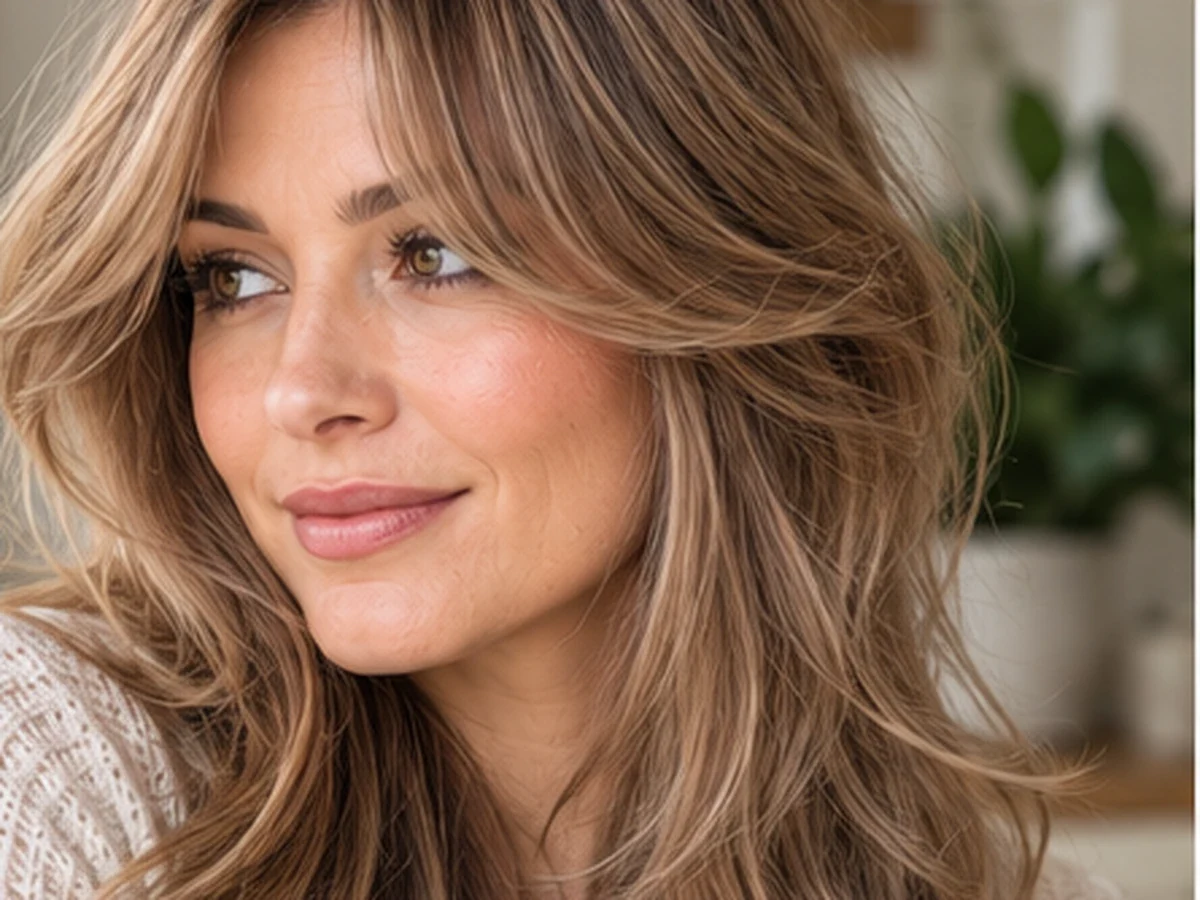
The butterfly haircut keeps the back length long while creating a noticeably shorter, airy layer system around the face and upper half. The contrast is what gives the cut its lift: shorter front layers move independently while the lower length remains substantial.
It is a useful option when you want the visual change of shorter hair around the face without actually cutting the whole haircut short. If you prefer a more continuous layer pattern, compare Long Layered Haircuts.
The front layers create the “butterfly” effect
The shortest pieces often begin around the cheekbones or jaw and flow into longer layers around the shoulders. When styled away from the face, they create the lifted, wing-like movement associated with the cut.
The front can be dramatic or subtle. Longer starting points are easier to grow out and work better if you often wear the hair straight.
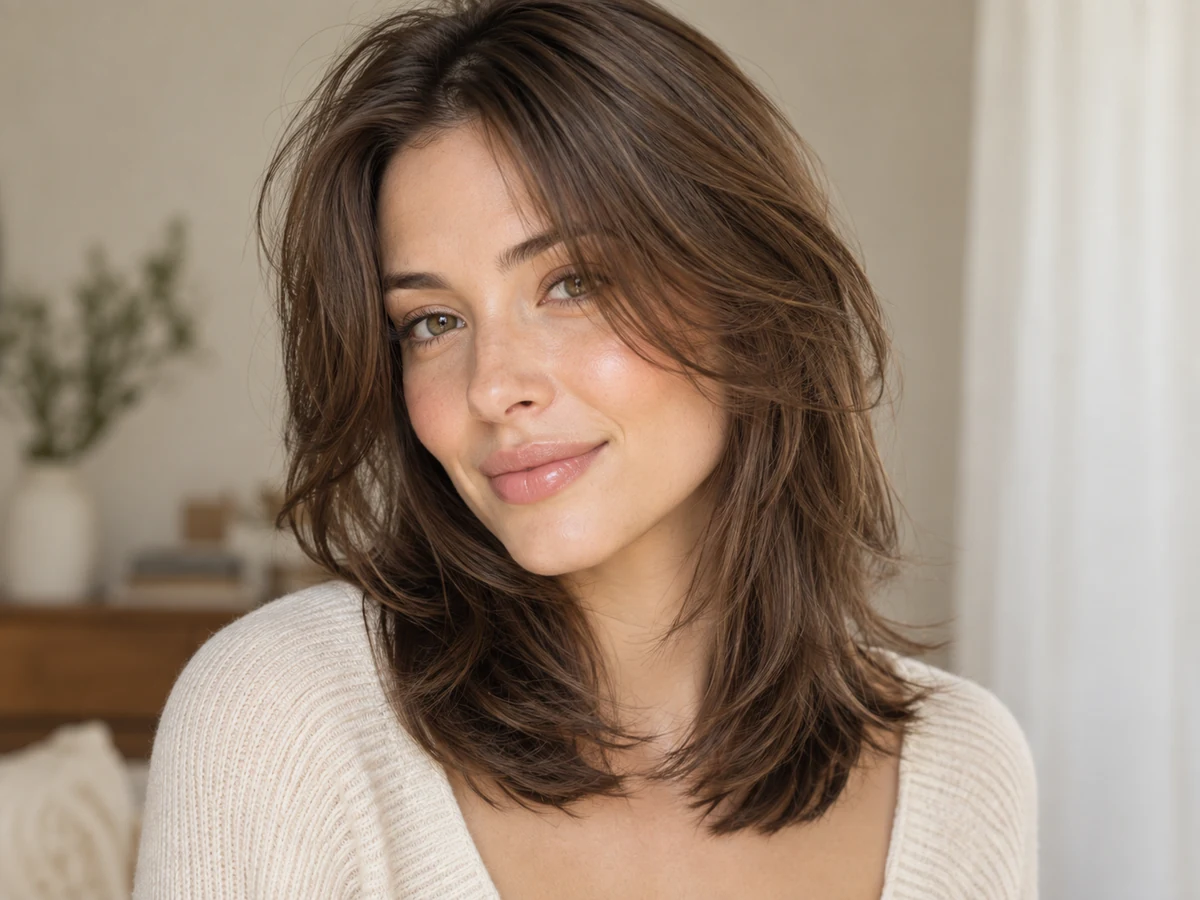
The back length should still feel full
The lower section anchors the haircut. If too much density is removed from the ends, the contrast can look accidental rather than intentional.
Keep enough perimeter weight that the long section still looks healthy when the shorter layers are not styled.
Density determines how much separation the cut can support
Thick hair can handle stronger internal layering. Fine hair usually needs a softer butterfly effect so the ends do not become sparse.
Styling, maintenance and grow-out
The classic salon finish uses a round brush or large rollers to sweep the front layers away from the face. The cut can still work air-dried, but the effect will be softer and more dependent on natural texture.
Decide whether you want the cut or the blowout effect
Many butterfly references combine a layered cut with a highly styled finish. The volume around the cheeks and crown may come partly from the haircut and partly from round-brush direction, rollers or hot tools.
Before choosing the shortest layer, look for photos of the same kind of cut in a softer or air-dried state. If you only like the fully styled version, be realistic about whether that routine fits your mornings.
Tie-back needs can limit how short the front should go
Short front layers create the strongest butterfly effect, but they may fall out of ponytails, clips and buns. If tying the hair back is important for work, exercise or convenience, keep the shortest pieces long enough to reach your usual style.
Jaw- or collarbone-level framing often gives a softer version of the effect while preserving more function.
Parting changes how the front layers open
A middle part creates a more symmetrical winged shape, while a side part makes one side fuller and can change where the shortest pieces sit against the face.
If you regularly switch your part, mention that before the front layers are finalized. The cut should still connect when the hair moves from one side to the other.
Second-day styling should be considered before cutting
Freshly styled butterfly layers can look light and separated, but the front may settle flatter overnight. If you do not want to rebuild the whole finish each morning, choose a layer length that can be refreshed with a quick part change, light brushing or minimal heat.
A slightly longer front often gives more room for an imperfect second-day finish without looking disconnected from the rest of the haircut.
Agree on the shortest front layer first
- Choose where the shortest front layer should land.
- Say how much long length must remain untouched.
- Ask how the front layers will connect to the lower section.
- Discuss whether you want curtain fringe or only longer face framing.
- Explain whether you will actually blow-dry the layers away from the face.
The cut works best when the contrast is deliberate
The butterfly effect depends on a noticeable difference between the shorter front and upper layers and the longer lower section. If every layer is evenly spaced from top to bottom, the result reads more like a standard long layered cut.
Fine hair needs a softer version
Fine hair can lose density quickly if the upper layers are too short or too numerous. A restrained butterfly shape with longer face framing often gives the visual lift without making the lower section look thin.
Thick hair can carry a stronger two-level shape
Dense hair has more weight to work with, so the front and crown can be layered more aggressively while the lower length still looks full. Internal shaping can also prevent the back from feeling heavy.
Natural texture changes how dramatic the cut appears
Straight hair shows the contrast clearly. Wavy hair adds its own movement and may need fewer layers. Curly hair requires more caution because shrinkage can make the shorter sections jump much higher than expected.
The classic finish needs styling, but the cut should survive without it
Round-brushing or using large rollers makes the face-framing layers sweep away from the face, but the haircut should still look intentional when air-dried or quickly styled. If the shape only works after a full blowout, it may not match a low-effort routine.
Grow-out is easier when the shortest layer is chosen carefully
Cheekbone-length layers create a stronger butterfly effect but take longer to rejoin the rest of the haircut. Jaw- or collarbone-length framing grows out more smoothly and is easier to tie back.
Decide how dramatic you want the butterfly effect
- Choose shorter front layers if you want a dramatic butterfly effect and are comfortable styling them.
- Choose longer face framing if you want easier grow-out and tie-back.
- Keep the lower perimeter strong if your hair is fine or the ends are already light.
- Use stronger internal layering if your hair is very dense and heavy.
Frequently asked questions
Is a butterfly haircut the same as long layers?
It is a type of layered haircut, but it usually has a stronger contrast between short face-framing layers and long lower length.
Is a butterfly cut good for fine hair?
It can be, but the layering should be restrained so the lower perimeter stays full.
Does a butterfly haircut need curtain bangs?
No. Curtain bangs can enhance the look, but longer cheekbone or jaw-length framing can create a similar effect with less maintenance.