
Layering is a technique rather than one fixed length. It can add movement, reduce bulk, build lift or make the front easier to style; those jobs matter more than an age label.
If your hair has changed in density, texture or gray pattern over time, the layer placement may need to change with it. For a specific medium-length shape, use Medium Haircuts for Women Over 50. If you want a clearly short silhouette, compare Pixie Cuts for Women Over 50 instead.
Use layers to place volume where you actually want it
Shorter crown layers can create lift, but they can also expose scalp if density is lower. Longer layers preserve more weight and create a softer, more fluid outline.
Face-framing pieces can brighten the front without requiring the entire haircut to be heavily layered.
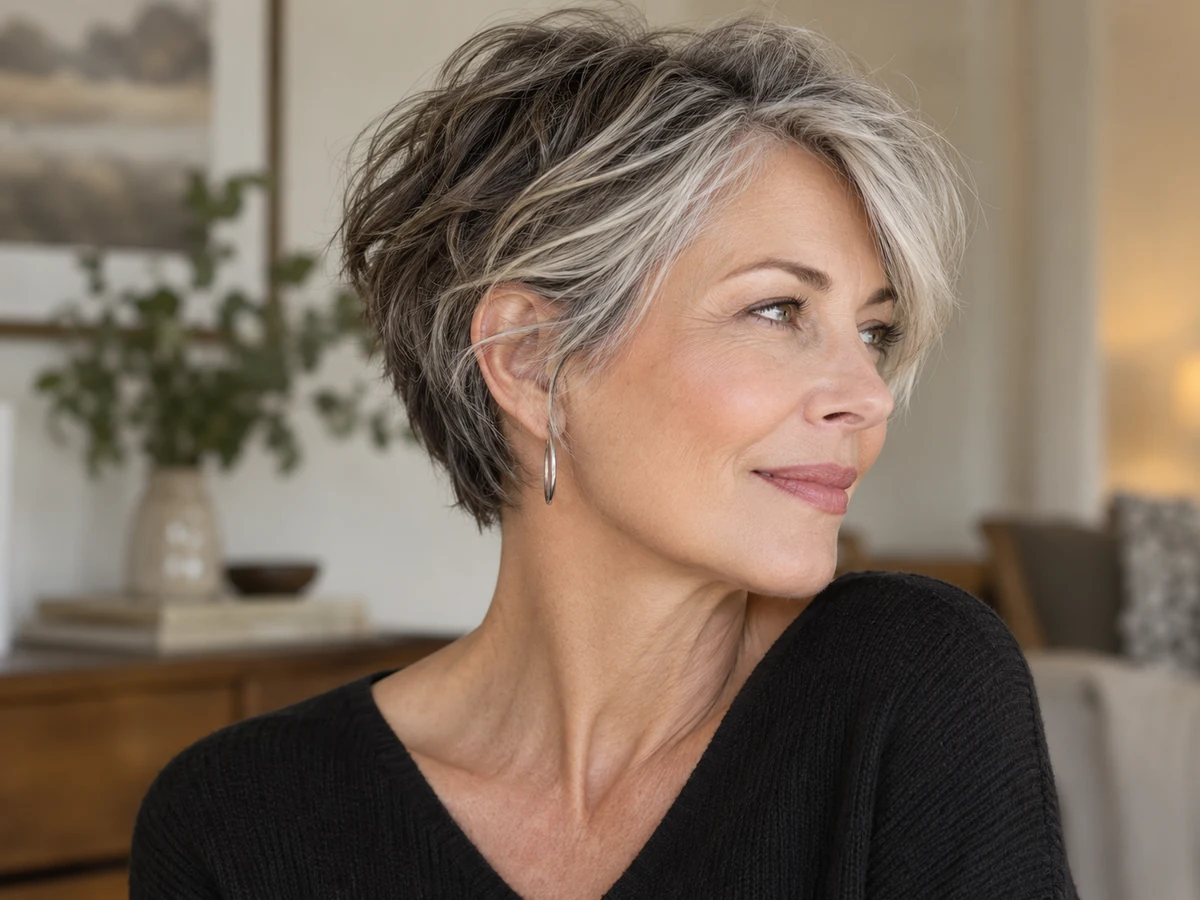
Gray and silver hair often benefits from shape more than extra thinning
Gray hair can feel wiry, soft, coarse or fine; there is no single texture. The stylist should assess how your individual hair bends and where it holds weight.
If the hair is already light through the ends, avoid aggressive thinning and keep the perimeter intentional.
Density should decide the layer count
Fine hair usually needs fewer, longer layers. Dense hair can support more internal shaping. Wavy hair may need only selective layers because the texture already creates movement.
Styling, maintenance and grow-out
A good layered haircut should have an easy version for ordinary mornings. If you do not round-brush every day, ask to see how the cut will sit with your usual air-dry, diffuser or quick blow-dry routine.
Questions worth settling before the cut
- Describe your current density, not what your hair was like years ago.
- Say where you want lift and where you want weight preserved.
- Ask where the shortest crown and face-framing layers will sit.
- Explain how you style gray or silver texture day to day.
- Ask how the layers will grow out between trims.
Age should not decide the layer pattern
Hair density, texture and maintenance tolerance are more useful than age when deciding where layers should begin. Two people of the same age may need completely different shapes because one has fine straight hair and the other has dense wavy hair.
Fine hair often needs fewer layers than expected
When density is lower, short layers can expose more scalp and make the ends look thin. Longer layers or face framing can create movement while preserving more visual weight.
Dense hair can support deeper internal shaping
Thicker hair can usually carry more layering without losing fullness. Internal weight removal can make the haircut feel lighter while the outside line remains substantial.
Gray texture may need a different cutting approach
Some gray hair feels coarser or more resistant, while other gray strands are soft and fine. The stylist should judge the actual texture rather than assuming silver hair behaves one way.
Face framing can create change without over-layering
If you want the front to feel fresher but do not want to lose density through the back, targeted cheekbone-, jaw- or chin-length pieces can create visible movement with less structural change.
Think about the lowest-effort version of the haircut
If you do not blow-dry daily, ask how the layers will sit air-dried. If you wear the hair behind the ears or tied back often, the shortest pieces need to cooperate with that routine.
Parting can create lift without adding more layers
A side part can shift more hair across the crown and create visible lift, while a center part gives a more even front shape. If flatness is the main concern, test parting before assuming the haircut needs shorter crown layers.
That is especially useful when density is limited because every additional short layer removes some weight from the longer sections.
Glasses and hearing devices can affect the side shape
Hair around the temples and ears may sit differently if you wear glasses or hearing devices every day. Very short side pieces can flick outward, while dense layers can bunch around the arms or earpiece.
Wear the devices you use most often during the final salon check so the cut works in normal life rather than only with the ears uncovered.
Tie-back needs should influence face framing
Cheekbone-length pieces create a stronger change around the face, but below-chin framing is easier to tuck or include in a ponytail. If convenience matters, decide the shortest front length by function rather than by age or trend.
Grow-out can be planned around one weak point at a time
Sometimes the fringe becomes awkward before the perimeter needs trimming, or crown layers lose lift while the lower length still looks good. A maintenance visit can focus on the area that changed first instead of automatically reshaping everything.
This keeps the cut useful for longer and reduces unnecessary removal of length. If you alternate between wearing the hair down and tying it back, check both versions before the final trim so the shortest layers still cooperate with the styles you use most. That practical check is more useful than adding or removing layers simply because of age. It also helps keep future trims focused on the part of the haircut that has actually stopped working.
Match the layers to the hair you have now
- Choose longer layers if preserving density is the priority.
- Choose more internal shaping if thick hair feels bulky.
- Use face framing selectively if you want visible change without thinning the back.
- Keep crown layers restrained if scalp visibility or fine density is a concern.
Frequently asked questions
Do women over 50 need shorter layers?
No. Layer length should be based on density, texture and the shape you want, not age.
Are layers good for thinning hair?
They can be when used sparingly. Too many short layers can make lower-density hair look thinner, so preserving the perimeter often matters.
Can gray hair be layered?
Yes. Gray hair can look especially dimensional with thoughtful layers, but the cutting approach should match its actual texture and density.