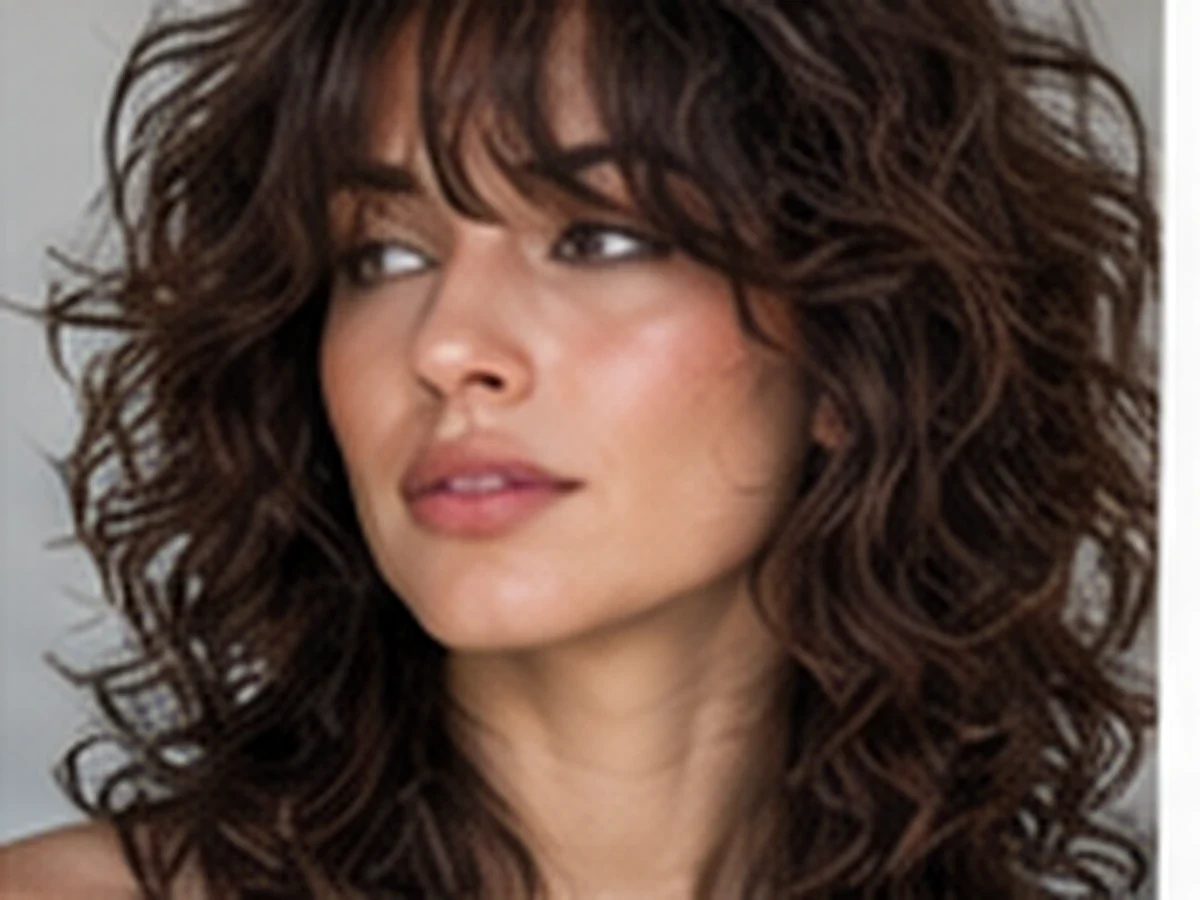
Long curly hair needs shape that respects shrinkage. A layer that looks long when stretched can spring much higher when dry, so every major length decision should be made with the finished curl pattern in mind.
Distribute the volume without losing the sense of length. Long layers can create movement, but they need enough connection that the silhouette does not split into a short top and thin lower section. Short Haircuts for Curly Hair is useful if you are considering a major length change.
Place layers according to where you want the curl shape to expand
Higher layers create more width and lift near the crown. Lower layers preserve a longer, narrower outline. Neither is automatically better; the choice depends on density and the silhouette you prefer.
Ask the stylist to look at the hair dry and identify where the curl pattern is tighter or looser before setting layer lengths.
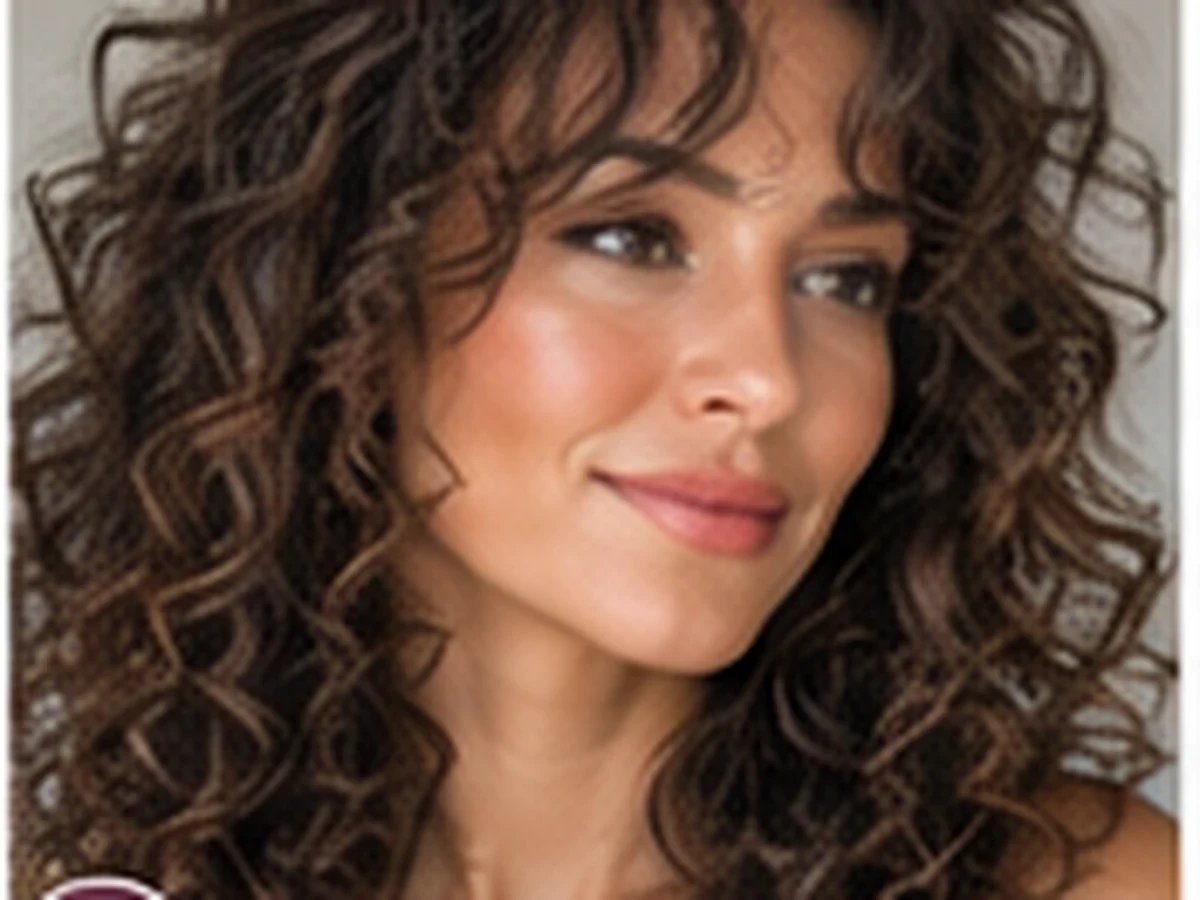
Keep the perimeter full enough to anchor the length
Long curls can become see-through at the bottom if too much hair is removed from the lower half. A rounded or softly U-shaped perimeter often supports the curls while keeping the length visible.
Face framing can be shorter, but it should be planned around dry shrinkage.
Curl pattern, density and strand thickness all matter
Fine curls usually need more weight. Dense curls can support deeper internal shaping. Mixed curl patterns may need different layer lengths in different areas.
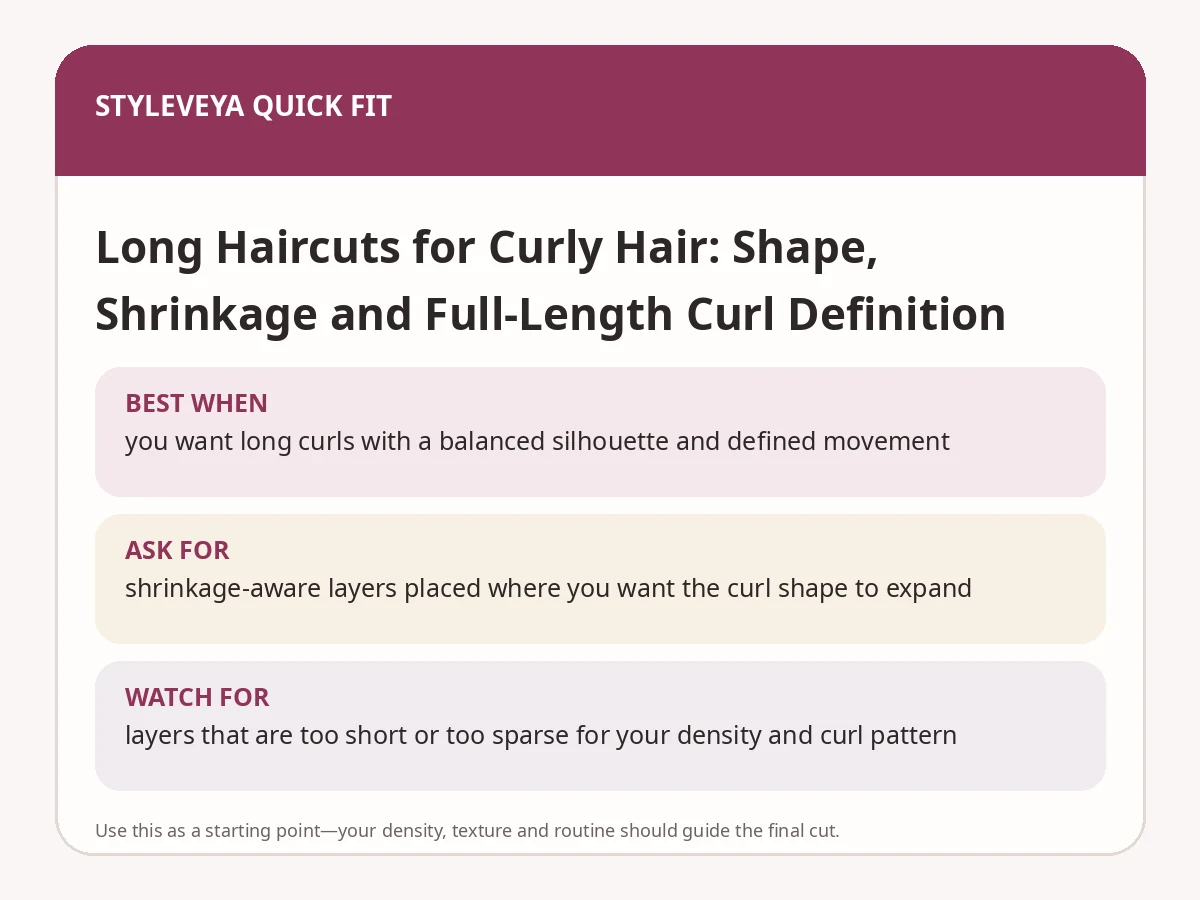
Styling, maintenance and grow-out
The haircut should make your usual wash-day routine easier. If you diffuse, air-dry or stretch the curls, explain that before cutting so the finished shape works in the state you wear most often.
Judge the cut after an ordinary wash day, not only after a salon finish. If the shape looks balanced only when every curl is individually arranged, the layer pattern may be asking too much of your routine. A practical long cut should still look intentional when some curls clump tightly and others dry looser.
Map where your curls are tightest before choosing layer heights
Many heads of curly hair contain more than one pattern. The crown may spring higher, the nape may hang longer, and the pieces around the face may react differently again. Cutting every zone to the same stretched length can therefore create a very uneven dry outline.
Before the appointment, notice which sections shrink the most and which areas become bulky first. That information is more useful than trying to assign your whole head one curl-type label.
Crown layers change the whole silhouette
Shorter crown layers can create lift and a rounder outline, but they also remove some of the length that visually connects the top to the bottom. If you want long hair to remain the dominant impression, keep enough connection between the crown and the lower layers.
If you prefer a fuller, more rounded shape, higher layers may make sense. If you prefer an elongated outline, begin the layering lower and let the upper curls keep more length.
Fringe and face framing need their own shrinkage plan
Curly fringe can change a long haircut dramatically because the shortest front pieces sit close to the face and show every change in spring. Decide where you want those curls to land when dry, then leave enough margin for days when the pattern contracts more strongly.
If you are not ready for a full fringe, cheekbone- or jaw-level framing can create movement without taking as much hair away from the front. For a broader comparison, use Bangs and Fringe Ideas.
Tie-back and protective styling can affect the layer plan
If you regularly wear a ponytail, bun, braid or another pulled-back style, mention that before the cut. Very short face-framing sections or disconnected crown layers may fall out of styles that previously worked.
You do not need to keep every strand the same length, but it helps to know which sections must still reach your usual tie-back point. If that function matters, make it part of the salon brief instead of discovering the limitation afterward.
Care habits matter when the hair is long
Long curls can tangle and dry out more easily through the lengths, so haircut decisions should not be separated from the routine you can realistically maintain. The American Academy of Dermatology recommends gentle detangling and conditioning for curly hair and notes that dry brushing can increase breakage and frizz. Its curly-hair care guidance is a useful background reference when you are reviewing your routine.
Discuss shrinkage before any major length comes off
- Show the stylist your hair dry and naturally settled.
- Discuss shrinkage before agreeing on layer lengths.
- Point to where you want the widest part of the silhouette.
- Keep enough perimeter weight to avoid thin ends.
- Explain your normal wash, product and drying routine.
Shrinkage should be measured in the state you actually wear the hair
Stretched length is not the most useful reference if you normally wear your curls in their natural state. The stylist should compare wet, stretched and dry positions so the final layer lengths do not end up much shorter than expected.
Fine curls usually need more weight
Fine curls can look sparse at the bottom if too many layers are added. A stronger perimeter and fewer internal layers often preserve density while still allowing movement.
Dense curls can support deeper shaping
Very dense curls may need more internal structure to prevent the hair from becoming one heavy triangle. Distribute volume deliberately instead of removing as much hair as possible.
Mixed curl patterns need uneven solutions
If the crown is tighter than the underneath sections, identical layer lengths may not create an even shape. Different areas may need slightly different cutting decisions so they sit at a similar dry height.
Face framing should be planned around dry shrinkage
A front section that looks chin-length when stretched may sit much higher when dry. Decide where you want the shortest curl to land in its natural state before cutting.
Long curls should still work on lower-effort wash days
If your routine includes air-drying, the haircut should balance well without a diffuser. If you usually stretch the curls or wear protective styles, explain that too, because those habits affect which layer pattern is practical.
Plan the shape around shrinkage and density
- Keep more perimeter weight if your curls are fine or the ends already look light.
- Add more internal shaping if dense curls create too much width.
- Plan face framing dry if shrinkage is strong.
- Use different layer lengths by zone if your curl pattern varies significantly across the head.
Frequently asked questions
Are layers good for long curly hair?
Yes, when they are planned around shrinkage and density. Poorly placed layers can create unwanted bulk or thin lower sections.
Should long curly hair be cut dry?
Many curly clients benefit from dry assessment or dry cutting because it shows the true length and curl pattern. Technique varies by stylist.
How do I keep long curls from looking triangular?
Strategic layers and internal shaping can distribute width, but the exact placement depends on where your curls expand naturally.