
If you want to keep long hair, the main maintenance problems are usually heavy ends, tangling, shapeless weight or front pieces that constantly fall into the face.
A lower-effort version usually keeps a substantial perimeter and uses layers selectively instead of cutting short layers throughout. If you want more visible movement, compare Long Layered Haircuts.
Keep enough weight at the bottom to prevent endless tangling
A healthy-looking long perimeter does not have to be perfectly blunt, but it should feel deliberate. Wispy ends can make the hair look thinner and often tangle more easily.
A soft U-shape or gentle rounded line can keep length while making the back feel lighter.
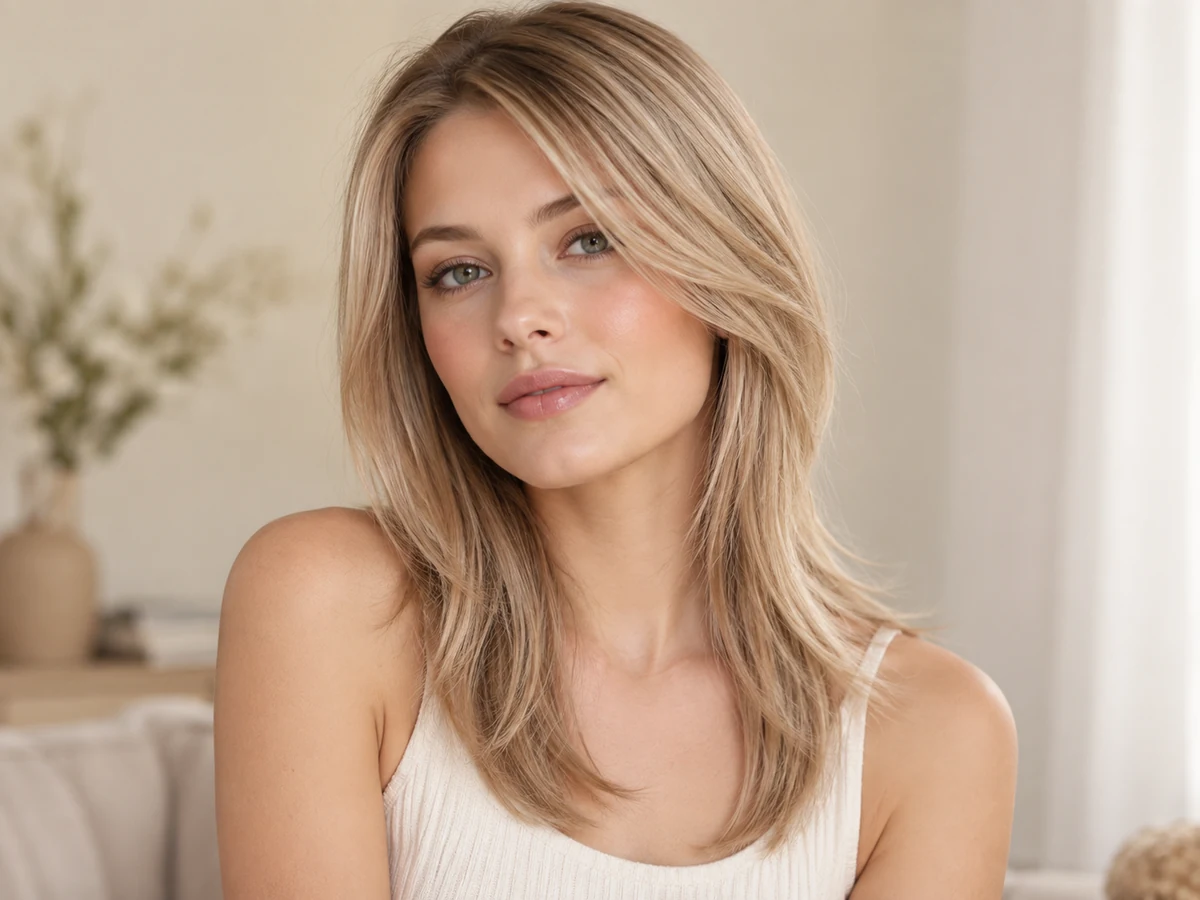
Use face framing where it makes daily life easier
Long front pieces can open the face without requiring a full layered haircut. Keeping the shortest pieces below the chin makes them easier to tuck back, braid or include in a ponytail.
Shorter face framing creates more movement but usually asks for more styling.
Texture should decide how much weight to remove
Fine long hair usually needs more perimeter weight. Thick hair can benefit from internal shaping. Wavy and curly hair need enough length in the right places to avoid unwanted expansion.

Styling, maintenance and grow-out
Low-maintenance long hair depends heavily on condition. A good cut cannot compensate for split, fragile ends indefinitely. Trim enough to keep the perimeter healthy and choose layers that do not force you into daily heat styling.
Drying time is part of maintenance
Long hair can be easy to style and still take a long time to wash, detangle and dry. If drying time is the part you dislike most, keeping every possible inch may work against the low-maintenance goal.
A modest reduction in length can remove weight and shorten drying time without changing the overall impression of long hair. This is often more useful than adding many short layers that create extra sections to style.
Think about how the hair behaves under coats and collars
Very long hair can knot where it rubs against scarves, coat collars and bag straps. If tangling repeatedly starts in the same area, the problem may be friction and worn ends rather than a lack of layering.
Ask whether cleaning up the perimeter or changing the overall length slightly would make daily detangling easier before adding more texture through the interior.
Parting and front shape can create change without sacrificing length
If you are bored with long hair but do not want to cut much off, changing the part or adjusting the front can create a visible difference while leaving the back largely untouched.
Long curtain pieces, cheekbone framing or a deeper side part can change the front view significantly. Choose the front length according to whether you need it to tuck, braid or tie back.
Plan the next trim around the first maintenance problem
Long hair does not need to be trimmed simply because a fixed number of weeks has passed. Look for the first issue that actually affects your routine: ends tangling, the perimeter looking sparse, face framing losing shape or the overall length becoming too heavy.
That makes the appointment more specific and helps preserve length where it is still working well.
Salon brief for low-maintenance long hair
- Say how much length you absolutely want to keep.
- Ask for the minimum layering needed to improve movement.
- Choose face-framing pieces that still tie back.
- Discuss whether a U-shape, V-shape or straighter perimeter suits your density.
- Explain how often you heat-style.
Low maintenance should mean fewer daily decisions
A haircut is not low maintenance simply because it is long. Lower-effort long cuts reduce the number of things you need to fix every morning: pieces falling into the face, ends tangling, bulky sides or layers that only look good after heat styling.
Fine hair usually benefits from a stronger outline
Fine long hair can look thinner when too many layers are added through the bottom half. A straighter or softly rounded perimeter often preserves more visual density.
If movement is still important, use a small amount of face framing or very long layers instead of cutting several short levels through the back.
Thick hair may need weight removed internally
Dense long hair can feel heavy even when the perimeter looks good. Strategic internal shaping can reduce bulk without making the ends wispy.
Remove the weight you feel while preserving the fullness you still want to see.
Face-framing pieces should match your routine
If you often tie the hair back, ask for the shortest front pieces to remain long enough to reach the ponytail or tuck behind the ear. Short fringe-like layers can look attractive in photos but add daily styling if they constantly fall forward.
Condition affects maintenance more than trend choice
Long hair with split, fragile ends can be difficult to detangle no matter how well it is cut. Regular trimming, careful detangling and realistic heat use usually make a bigger difference than adding more styling layers.
Choose a perimeter based on what you want to preserve
A straighter line gives the strongest visual density. A U-shape keeps length through the center while softening the corners. A stronger V-shape creates more movement but can make the sides feel shorter.
If keeping the maximum amount of visible length matters, a gentle U-shape is often the easiest compromise.
Keep length without creating extra work
- Choose a stronger perimeter if your ends are fine or prone to looking sparse.
- Choose internal shaping if your hair is very dense and heavy.
- Keep face framing below the chin if easy tie-back matters.
- Avoid short layers if you do not want to style the crown or front daily.
Frequently asked questions
Can long hair really be low maintenance?
Yes, when the shape works with your texture and the front pieces are practical. The main work is usually washing, drying and detangling rather than styling the haircut itself.
Do layers make long hair harder to maintain?
Short layers can, but long strategic layers often improve movement without adding much daily work.
What is the easiest front layer for long hair?
Below-chin or collarbone-length face framing is usually easier to tuck back and grow out than short fringe-like pieces.