
Straight hair makes the architecture of a short cut easy to see. That can be a strength: clean lines, sharp fringes and precise layers all read clearly. It also means the haircut needs to be balanced because there is less natural wave to disguise uneven weight.
The best short shape depends on density and growth pattern more than on straightness alone. Fine straight hair often needs a strong perimeter or controlled layering; thick straight hair usually needs internal weight removal. Short Haircuts for Thick Hair is useful if bulk is your main concern.
A pixie can use direction instead of curl for movement
Longer fringe, a side part and piecey crown layers can stop straight hair from lying flat without requiring a lot of product.
Keep enough length at the front to work with your natural hairline and cowlicks rather than forcing the hair into a direction it resists.
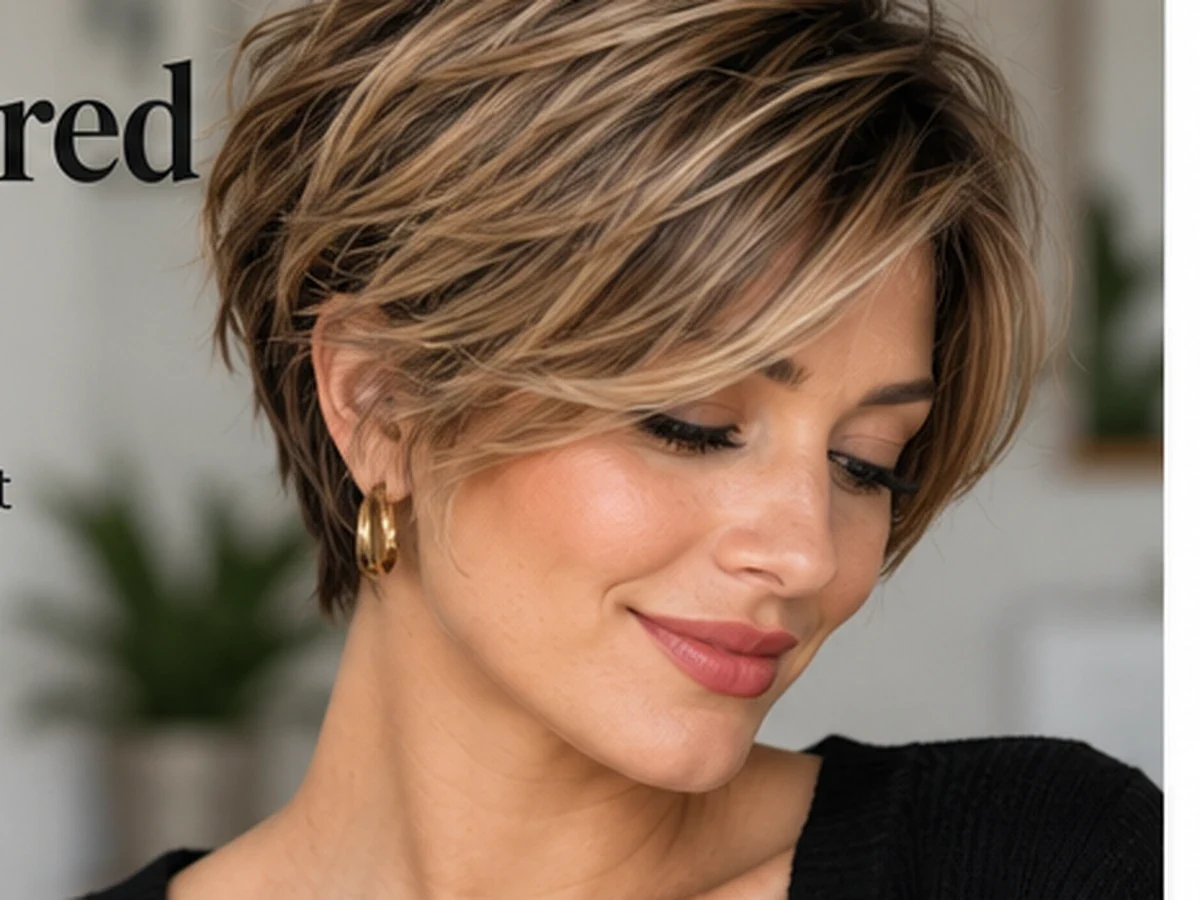
Short layers should have a clear purpose
On straight hair, every layer shows. Soft graduation can create lift at the back, while longer top layers keep the cut from looking choppy in unintended places.
If you prefer a sleek finish, fewer, longer layers often look more polished than a heavily textured surface.
Fine and thick straight hair behave very differently
Fine hair needs strategic lift without losing density. Thick straight hair can feel helmet-like if too much weight is left in the sides, so internal shaping is often important.

Styling, maintenance and grow-out
Choose a cut that still works without a full blow-dry. A short haircut should have a believable air-dried or quick-styled version, even if you sometimes polish it with heat.
Parting changes the structure more than people expect
On short straight hair, a center part, side part and off-center part can create noticeably different weight distribution. A side part can give more lift through the top, while a center part makes the outline and fringe symmetry easier to see.
Before asking for more layers, try the part you actually wear most. If changing the part already creates enough movement, you may be able to keep more density through the haircut.
Ear and nape length affect how polished the cut feels
Very short pieces around the ears create a crisp outline but show growth quickly. Slightly more length gives you room to tuck the hair back and usually creates a softer transition as the cut grows.
The nape matters for the same reason. A tight tapered nape looks precise, but the shape changes faster as it grows. A softer neckline usually gives a more forgiving grow-out if you prefer longer gaps between appointments.
Short straight hair exposes uneven weight quickly
Because there is less natural bend to disguise the outline, a heavy side or disconnected layer can be obvious. Ask the stylist to check the cut after the hair falls naturally rather than judging only while sections are lifted with a brush.
If one side consistently flips, sits flatter or grows forward, the answer may be a small weight adjustment rather than adding texture everywhere.
Choose the maintenance trade-off before the exact style
A pixie or tight crop can be quick to style in the morning but may need more frequent reshaping. A short bob or longer crop usually gives more grow-out flexibility but may need slightly more drying or directional styling.
Decide which kind of maintenance bothers you less: more frequent salon visits or a little more daily styling. That decision is often more useful than choosing between two reference photos that look similar.
Before a short straight-hair cut
- Show how your hair naturally parts.
- Point out any cowlicks before the hair is wet.
- Say whether you want the outline clean or piecey.
- Ask how the stylist will create lift without over-thinning.
- Discuss how often you are willing to trim a short shape.
Length changes how much straight hair can lift naturally
Very short straight hair can stand away from the head with the right direction, while slightly longer sections tend to fall more smoothly. If you want volume without daily styling, the cut needs enough structure at the crown but not so much length that the weight pulls everything flat.
Fine straight hair needs lift without sacrificing density
Short crown layers can create movement, but too many can make fine hair look thinner. A stronger perimeter with selective layers usually gives a better balance between fullness and shape.
Thick straight hair benefits from hidden weight control
Dense straight hair can become boxy if the sides are left too heavy. Internal shaping can reduce that bulk without making the visible surface look choppy.
Fringe can add shape, but growth pattern decides whether it is easy
A straight fringe can look very polished on straight hair, but cowlicks and strong growth direction matter more than texture alone. If the front hairline resists lying flat, a longer or side-swept option may be easier.
Product should support the cut rather than create it
Light mousse, root lift or a small amount of flexible paste can add direction. If the haircut needs heavy wax or repeated backcombing to hold shape, the underlying balance may not be right for your routine.
Choose the shape by density and growth pattern
- Choose a cleaner perimeter if you like sleek, polished short shapes.
- Choose selective crown layers if flatness is the main problem.
- Choose internal shaping if your hair is thick and boxy at the sides.
- Keep fringe longer if your hairline has a strong cowlick or you want easier grow-out.
Frequently asked questions
Does straight hair look good short?
Yes. Straight hair can show short-cut structure beautifully, from sleek bobs to textured pixies.
How do I stop short straight hair from looking flat?
Strategic crown layers, a side part, longer fringe and lightweight styling products can create direction without removing too much density.
Are pixies high maintenance on straight hair?
The daily styling can be quick, but short perimeters and fringes usually need regular trims to keep their intended shape.