
This is the broad shoulder-length haircut guide: use it when you know roughly where you want the hair to finish but still need to decide how the shape should work with your texture, density and routine. The length can be blunt, softly layered, curly, wavy or face-framed; it does not have to read as a bob.
Once the hair reaches the shoulder area, decide where you want the weight to sit. A stronger perimeter keeps the lower edge fuller, face-framing changes the front without sacrificing much length, and internal shaping can reduce bulk while preserving the outside line.
If the exact collarbone endpoint interests you, use the clavi-cut guide. If you specifically want a bob-family silhouette at this length, compare Long Bob Haircuts. For a direct layers-versus-one-length decision at collarbone length, use Collarbone Layers vs One-Length Lob.
A one-length shoulder cut keeps the outline strong
A mostly one-length shape is useful when you want the ends to look substantial. The line can sit directly on the shoulders or just above them so it does not constantly flip against clothing. A slight bevel or soft point-cut edge keeps the finish from looking severe without removing much density.

This shape tends to work well for straight or gently wavy hair, especially when you prefer easy blow-drying and a clean silhouette. If your hair is very thick, a stylist can remove some internal weight while leaving the outside edge intact.
Shoulder contact is worth checking before the final length is set. Ends that sit exactly on a collar or shoulder can turn outward even when the rest of the hair is smooth. If you dislike that flick, moving the line slightly above the shoulder or below the collarbone can be easier to control.
Soft layers add movement without turning the cut wispy
Shoulder-length hair does not need short layers everywhere. Longer layers beginning below the cheekbones or around the jaw can give the cut enough movement to stop it feeling blocky while preserving fullness through the bottom.
Ask where the shortest layer will sit when your hair is dry. That one detail affects how the cut frames the face, how easily it tucks behind the ears and whether the ends still feel dense.
Face-framing pieces can change the front without changing the whole haircut
A few front pieces can make a simple shoulder cut feel much more intentional. Cheekbone-length pieces create visible movement higher around the face; jaw-length pieces are softer; below-chin pieces are easier to grow out and usually require less daily styling.

If you are considering fringe as well, compare Bangs and Fringe Ideas. The best fringe choice depends as much on your hairline and routine as it does on the haircut itself.
Natural waves can do most of the shaping for you
Wavy hair already creates width and movement, so the cut often needs less layering than a straight-hair reference photo suggests. A shoulder-length shape with a solid enough perimeter can let the bends form naturally without the lower section looking sparse.
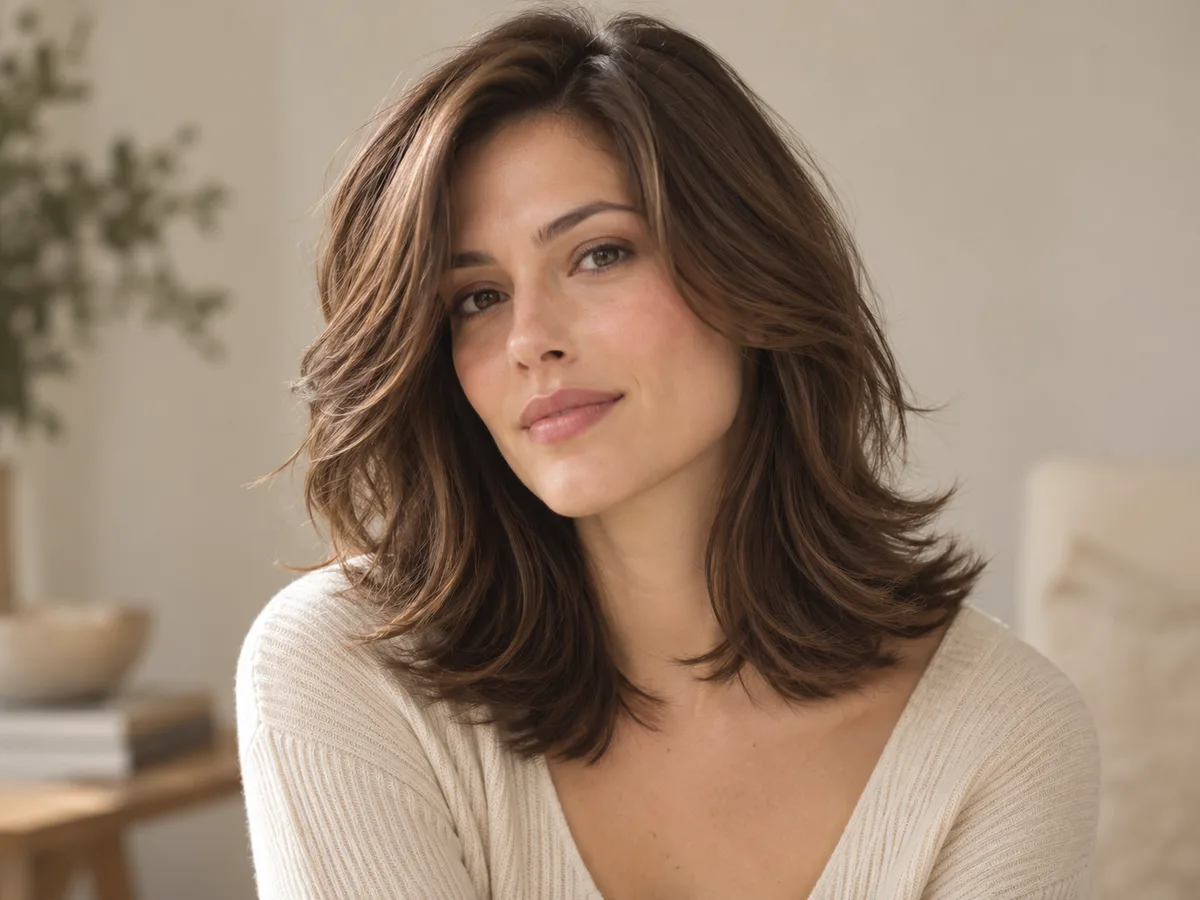
When the wave pattern is uneven, selective layering can help the heavier areas release while leaving calmer sections alone. Balance the overall shape instead of forcing every section into the same curl pattern.
Curly shoulder-length hair should be planned at its dry length
Curly hair can sit at shoulder length beautifully, but the wet cutting length may be misleading. Shrinkage can move the finished perimeter well above the shoulder, and different curl sections may spring up by different amounts. Decide where you want the overall shape to sit when dry, then let the stylist adapt the layering to the real curl pattern.
Be especially careful with short layers at the crown if you prefer a calmer silhouette. They can create useful lift, but they can also make the top much rounder than a straight-hair reference suggests. If your curls are dense, controlled internal weight removal may be more useful than simply adding more visible layers.
For fine hair, protect the bottom edge first
Fine or lower-density hair usually benefits from keeping visible weight at the perimeter. Too many short layers can make the lower half appear thinner than it is. A light face frame and restrained internal shaping often give enough movement without sacrificing fullness.
If fine hair is your main concern, Layered Haircuts for Fine Hair goes deeper into where layers help and where they can work against density.
For thick hair, remove bulk where it is hidden
Thick shoulder-length hair can feel heavy through the sides and back. Instead of adding lots of short surface layers, ask whether internal weight removal can soften the shape while keeping the outside line polished. This often gives the hair more swing without making it look overly layered.
Choose a shape that matches how you actually style
If you usually air-dry, the cut should make sense with your natural texture. If you blow-dry, a smoother perimeter and longer layers may be easier to control. If you switch between straight and wavy finishes, leave enough length around the front to work in both states.
A shoulder cut can also be practical for workouts and busy mornings because most versions still allow a low ponytail or half-up style. If tying it back is essential, test the intended front length before cutting shorter face-framing pieces.
Plan for how the shoulder line grows out
Shoulder-length cuts are usually forgiving, but different versions age differently. A crisp one-length edge becomes softer as it grows, while a heavily layered cut can start to feel disconnected if the shortest pieces grow at a different pace from the perimeter.
If you prefer longer gaps between appointments, ask for a shape that can move naturally toward collarbone length. Softer face framing and restrained layering generally make that transition easier than a highly precise outline with several short sections.
What to tell your stylist
- Show where you want the ends to sit when dry, not just when stretched straight.
- Say whether tying the hair back matters to you.
- Point to where you want the shortest face-framing piece to land.
- Explain whether you air-dry, diffuse, straighten or blow-dry most often.
- Ask how much weight will remain at the perimeter.
- If your hair is thick, ask whether internal weight removal is enough before adding short surface layers.
- If your hair is fine, say clearly that preserving fullness through the ends matters.
- If your hair curls or waves, ask the stylist to confirm the finished dry length before removing more.
Frequently asked questions
Is shoulder-length hair the same as a long bob?
Not always. A long bob usually has a stronger bob outline, while shoulder-length hair can be more layered, softer through the perimeter or less structured overall.
Is shoulder length good for fine hair?
It can be. Keeping the perimeter strong and limiting unnecessary short layers usually helps fine hair look fuller.
Does shoulder-length hair need layers?
No. A one-length shape can look polished and full. Layers are useful when you want more movement, less bulk or extra face framing.
Can curly hair work at shoulder length?
Yes. Plan around dry shrinkage and the natural width of the curl pattern rather than using a wet or straightened reference as the final length.
How often does a shoulder-length haircut need trimming?
It depends on the precision of the shape and your tolerance for grow-out. A blunt line shows growth sooner, while a softer layered cut usually grows out more forgivingly.