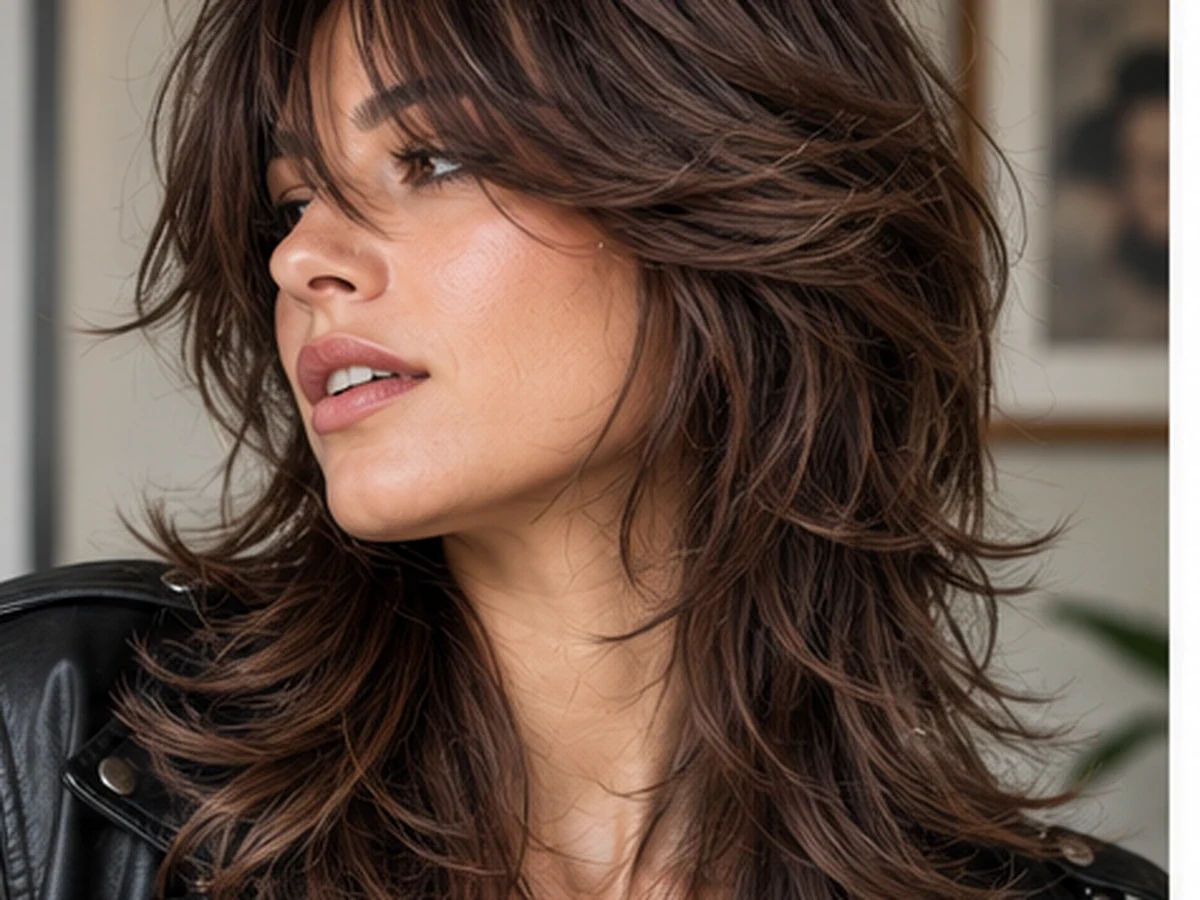
A wolf cut combines a shorter, shaggy upper layer pattern with more length through the lower half. The result sits somewhere between a shag and a mullet, but the balance can be soft and wearable or deliberately dramatic.
The useful decision is how much contrast you want between the crown and the lower length. A subtle wolf cut keeps the layers connected; a stronger version creates obvious separation. Bangs and Fringe Ideas is worth checking because the fringe often changes the whole mood of the cut.
Crown layers create the lift and texture
Shorter layers around the crown and upper sides make the haircut feel airy and piecey. They should still connect into the mid-lengths so the top does not look detached.
Fine hair needs a gentler version because too many short layers can expose density. Thick hair can support a stronger shaggy crown.
The lower length decides whether it feels more shag or more mullet
Keeping more fullness through the sides makes the cut feel like a modern shag. Removing more side weight and preserving a longer back pushes it toward mullet territory.
That balance should be discussed before cutting because it is harder to change once the side length is removed.
Natural texture can make the cut easier to style
Wavy hair often creates the piecey movement automatically. Straight hair may need product or a quick bend. Curly hair can wear a wolf shape too, but shrinkage changes the layer relationships.
Styling, maintenance and grow-out
A wolf cut is forgiving in texture but not completely maintenance-free. Fringe, short crown layers and the nape can grow at different rates, so decide which parts you are willing to trim between full cuts.
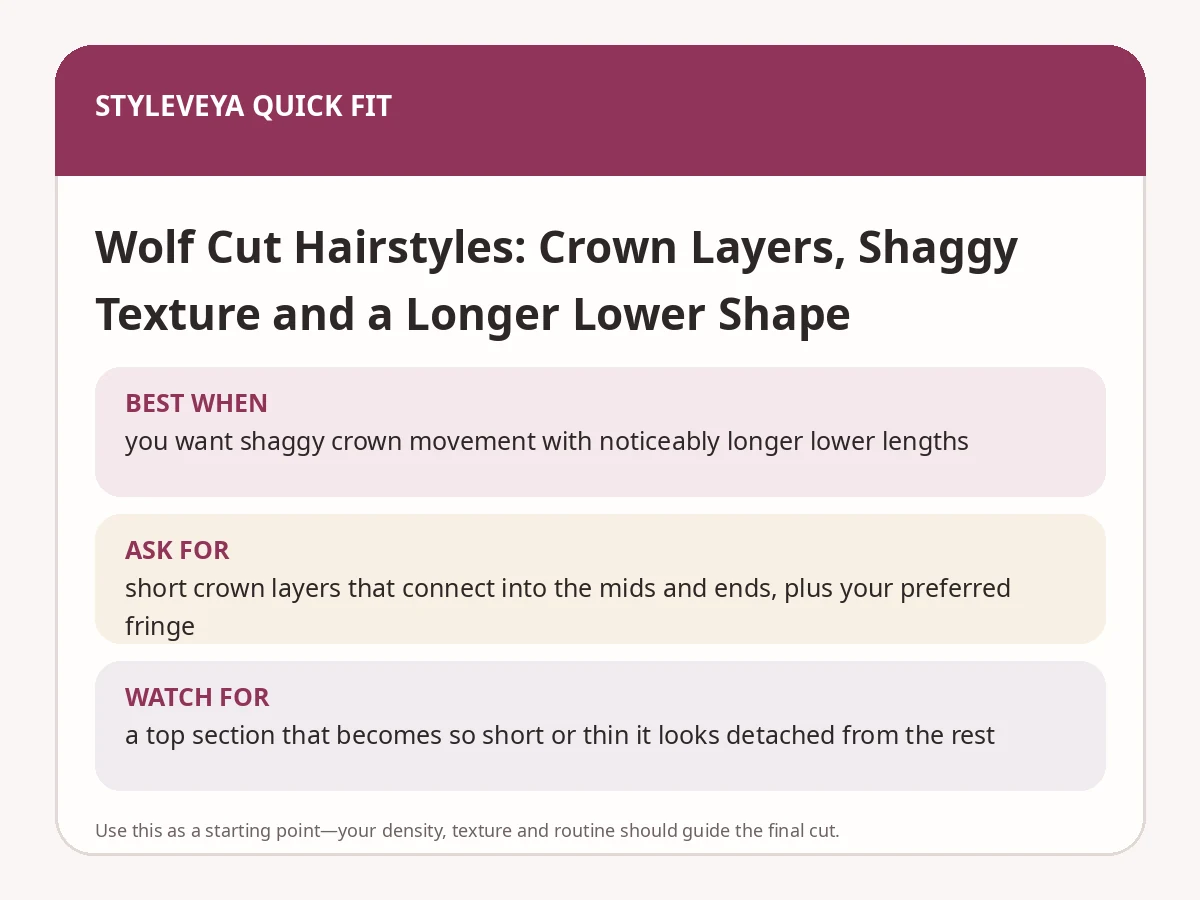
Define the wolf-cut contrast before cutting
- Choose how strong the crown-to-length contrast should be.
- Say whether you want shag or mullet influence.
- Bring a separate fringe reference.
- Ask how much side weight will remain.
- Explain whether you style with heat, air-dry or rely on natural wave.
Decide how much side weight you want to keep
The amount of hair left around the ears changes the whole character of a wolf cut. More side weight makes the shape feel closer to a shag; shorter or more disconnected sides push it toward a mullet.
This is one of the most important decisions to make before cutting because side length takes time to grow back.
Fine hair needs a softer crown
Fine hair can lose visible density if too many short crown layers are added. Keeping the shortest layers a little longer and preserving more fullness through the sides usually creates movement without exposing too much scalp.
Thick hair can support stronger separation
Dense hair can carry a more dramatic crown-to-length contrast, but the internal weight still needs control. If too much bulk remains in the upper sides, the cut can become round rather than intentionally shaggy.
Wavy hair often needs the least styling
Natural wave already creates bend and separation, so a wolf cut can air-dry with visible texture. Straight hair may need lightweight product or a quick bend through selected pieces. Curly hair needs more shrinkage planning so the shortest layers do not jump too high.
Fringe should be chosen separately from the rest of the cut
A curtain fringe softens the overall shape, while shorter broken bangs make the cut feel more graphic. If you are unsure, longer fringe is easier to grow and can still be styled away from the face.
Grow-out is easiest when the layers stay connected
A very extreme wolf cut can become uneven-looking as the crown grows while the lower length remains long. A softer connected version usually transitions more naturally between appointments.
Parting changes how dramatic the crown looks
A center part spreads the upper layers more evenly, while a side part can create extra lift and make one side feel fuller. Before asking for shorter crown pieces, try the part you actually wear most days.
If changing the part already gives enough height, you may be able to keep more length through the crown and make the grow-out easier.
Second-day hair reveals whether the cut is genuinely easy
Freshly styled wolf cuts can look airy and separated, but the upper layers may collapse overnight while the lower length stays in place. If that happens to you, plan the cut around a quick refresh rather than a complete restyle.
Longer connected layers are usually easier to revive with a little root lift or texture spray than very short disconnected pieces.
Tie-back and clipping can limit the shortest side pieces
If you still want to pull the hair into a low ponytail or clip, say that before the sides are shortened. A dramatic wolf cut can remove exactly the pieces you rely on for securing the hair.
You can keep the shaggy crown and longer back while preserving enough side length for practical styling.
Reference photos should show the side and back
Front-facing images do not show how much side weight or nape length creates the silhouette. Bring at least one side or back reference so the stylist can see whether you want a soft shag influence or a stronger mullet effect.
Choose how much shag-to-mullet contrast you want
- Choose a softer wolf cut if you want easier grow-out and less daily styling.
- Choose stronger crown contrast if you want a more obvious shag-mullet effect.
- Keep more side weight if you want the cut to read more like a shag.
- Keep the fringe longer if styling flexibility matters.
Frequently asked questions
Is a wolf cut the same as a shag?
They overlap. A wolf cut usually has more contrast between shorter upper layers and longer lower length, while a shag can feel more evenly layered.
Does a wolf cut work on fine hair?
Yes, but a softer version with fewer short crown layers usually preserves density better.
Is a wolf cut hard to grow out?
Not necessarily, but the crown, fringe and lower length grow at different rates. A connected version generally grows out more smoothly than an extreme one.