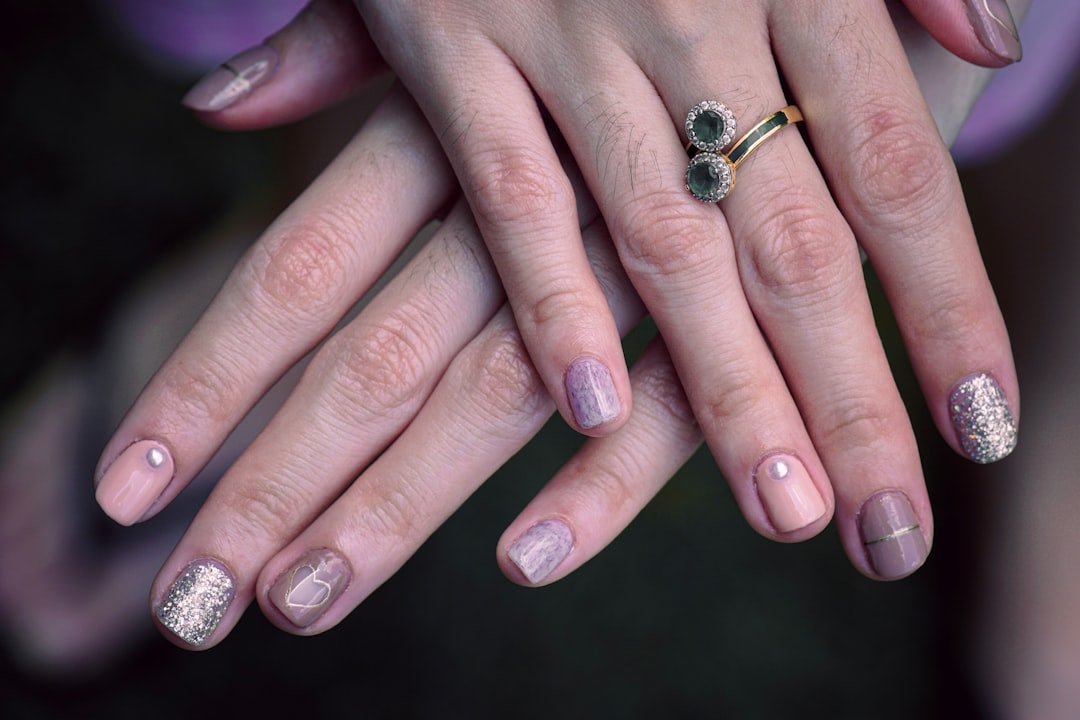
Mushroom gray nails sit between taupe, greige and cool gray. That makes the shade easier to wear than stark silver or flat cement gray because there is usually enough brown or beige underneath to keep the manicure soft.
Mushroom gray can lean brown, violet or closer to true gray, and that balance changes how the polish behaves against skin, jewelry and clothing more than the warm-versus-cool label alone.
Learn to spot the undertone
A mushroom polish that leans brown can look almost like muted mocha. One with more gray reads cooler and more modern. A violet-gray version can appear slightly mauve in daylight.
If you are choosing between salon swatches, compare them beside both a warm neutral and a cool gray. The undertone usually becomes more obvious when it has something to contrast with.
Why it works well on short nails
Mushroom gray does not need length or elaborate art to look intentional. On short round, squoval or soft-square nails, the muted tone can look clean and polished without disappearing completely.
If you are deciding which shape fits your natural nail, our nail-shape guide compares the practical differences.
Gloss changes the color more than people expect
A high-shine top coat increases reflection, which helps a muted gray-brown shade keep some depth. Matte top coat absorbs that reflection and can make the same polish look dustier and lighter.
If you want matte mushroom nails, start with a base shade that has enough visible depth before the top coat goes on.
Choose opacity deliberately
An opaque mushroom gray looks more graphic and modern. A slightly sheer greige version looks softer and can behave almost like a nude.
If your natural nail line is visible and that bothers you, use a more opaque formula. If you like translucency, two thin coats can create a softer result than one heavy coat.
Skin tone changes which version feels neutral
A shade can look neutral in the bottle and noticeably warm or cool on the hand. On some skin tones, taupe-heavy mushroom looks harmonious; on others it can become muddy. A cleaner gray or mauve-gray may work better.
There is no universal “best” mushroom shade. The useful test is whether the undertone looks intentional beside your skin rather than whether it matches a trend name.
Use detail sparingly
Mushroom gray is strongest when the color itself remains visible. A thin cream French edge, one metallic accent, a tiny dot or a sheer negative-space detail can add interest without turning the manicure into a different concept.
If you add chrome, choose a soft pearl or champagne effect rather than a mirror finish if you want to preserve the muted character.
It bridges seasons easily
Mushroom gray works with fall browns, burgundy and olive, but it also carries into winter with black, cream, silver and charcoal. That makes it useful when you want something deeper than nude but less dramatic than black, navy or chocolate.
What makes the shade look dull
The most common problem is choosing a gray-brown with very little contrast against the skin and then finishing it matte. That can make the nail look dusty rather than polished. Another issue is applying thick coats that settle unevenly around the cuticle.
Thin coats, a clean cuticle line and a smooth top coat usually matter more than adding nail art.
Compare it with nearby neutrals
If mushroom gray feels too cool, move toward taupe or cocoa. If it feels too brown, move toward slate or soft dove gray. If you want more visible color without leaving the muted family, try a mauve-gray.
For a darker direction, compare our matte dark nail guide. Mushroom gray takes the opposite approach: quiet depth with enough softness to behave almost like a nude.
Lighting can pull the shade warmer or cooler
Under warm indoor bulbs, mushroom gray may show more taupe or brown. In daylight, the gray or violet side often becomes clearer. That is why a salon swatch can feel different once you leave the chair.
If you are choosing between two close shades, compare them near a window before the full manicure rather than relying on overhead lighting alone.
Shorter shapes make subtle undertones easier to wear
Round and squoval short nails keep the manicure compact, which can make a muted gray-brown feel cleaner and less heavy. Longer square or almond shapes give the shade more visual area and can make the undertone more obvious.
If you like the color but find it dull on a longer shape, changing length or finish may solve the problem without changing the shade family.
Top-coat condition matters with muted neutrals
When gloss becomes scratched or cloudy, mushroom gray can lose the small amount of reflection that keeps it dimensional. A fresh top coat can restore depth without adding another color layer.
That is especially useful if the polish itself is intact and only the surface looks tired.
Use one accent only if the neutral needs contrast
If a full mushroom manicure feels too quiet, one cream micro-French tip, a tiny silver detail or a single glossy accent nail can add contrast without changing the overall neutral direction.
Keeping the accent small preserves the reason the color works: it remains calm, wearable and easy to coordinate. If you are unsure between a warmer taupe-gray and a cooler violet-gray, paint one nail in each and wear them for a day before committing. Seeing the shades beside your clothes, jewelry and normal lighting is more useful than judging a salon wheel for a few seconds.
A simple salon request
Instead of asking only for “mushroom gray,” describe the balance you want: “gray with a little taupe, not too brown,” or “a cool greige that still looks soft.” If possible, ask to see the swatch next to your skin in daylight before the full application.
A good mushroom manicure is less about following a named shade and more about finding the gray-brown balance that looks deliberate on your hands. If the shade is close but not quite right, change one variable at a time—undertone, opacity or finish—rather than abandoning the color family entirely.