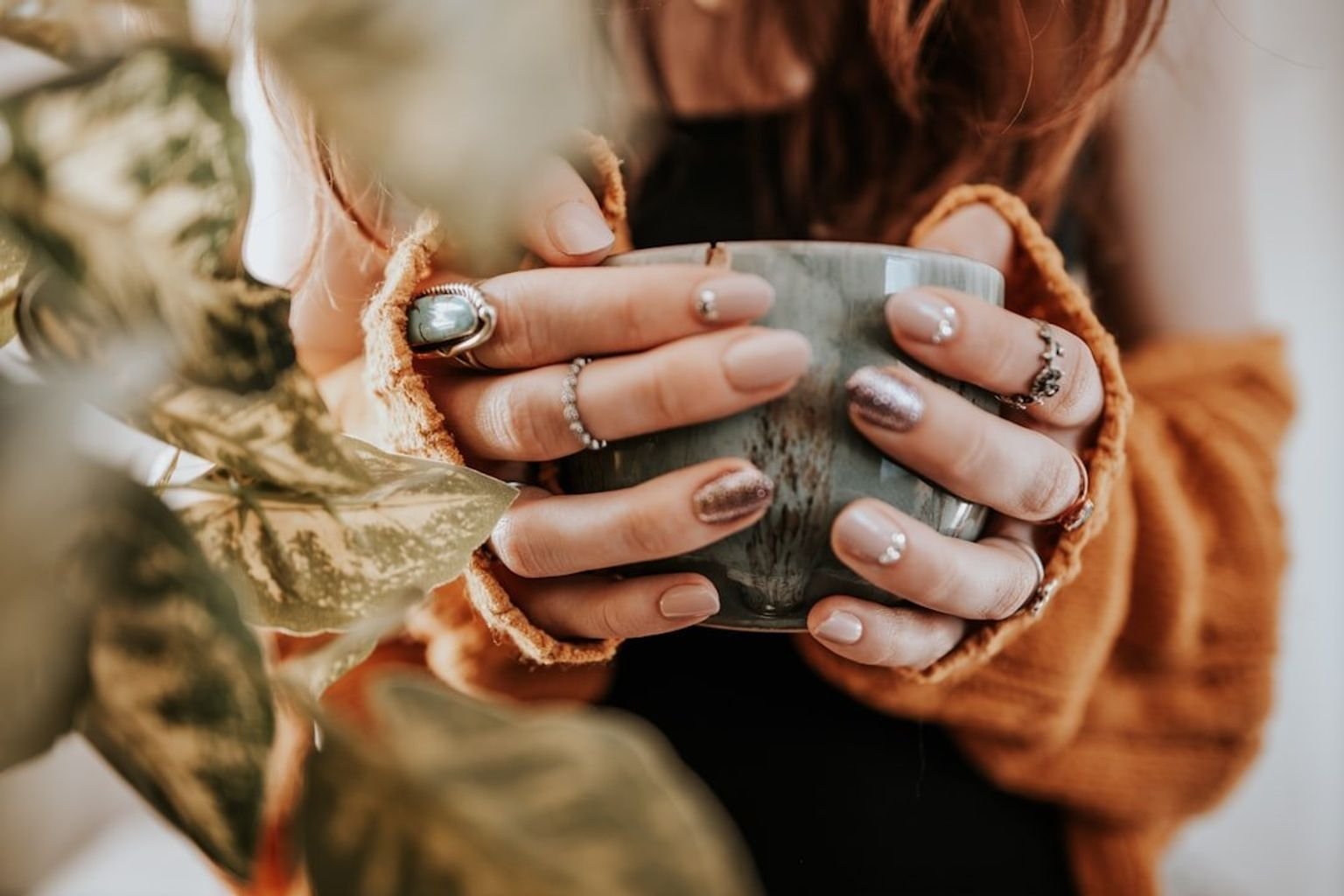
Pumpkin-cider nails sit between rust, orange, brown and gold. Compare how much orange you want to see, how reflective the finish should be and whether the shade still looks intentional with your skin tone in ordinary daylight.
Harper’s Bazaar’s fall 2026 coverage describes the shade as a golden-rust tone that can work in cream, metallic and color-shifting finishes. That range is exactly why the trend can feel understated or dramatic depending on how you wear it.
The color sits between orange and brown
A pumpkin-cider manicure is not the same as a bright pumpkin orange. The extra brown or golden depth makes the shade feel more muted and easier to pair with fall clothes.
If straight orange feels too vivid for you, look for descriptions such as rust, burnt orange, copper, cinnamon or amber-brown. Those shades live in the same general family without all looking identical.
A cream finish makes the color feel almost neutral
In a simple glossy cream formula, rusty orange can behave like a warm neutral. It is still clearly a color, but it does not have the high contrast of neon orange or the sparkle of metallic polish.
This version is useful if you want the seasonal effect without making the manicure the loudest part of your look.
Metallic pumpkin cider looks completely different
Add gold shimmer or a metallic finish and the same base shade becomes more decorative. Coppery light catches on the nail, making the orange-brown look richer and more dimensional.
If you already like the reflective look of chrome and metallic nail designs, a rusty copper is an easy fall-specific direction without moving into silver or mirror finishes.
Sheer versions can look softer than opaque orange
A translucent rust tint lets the natural nail show through and reduces the visual weight of the color. This can be especially flattering if you like warm tones but find opaque orange too strong.
It also connects naturally with the sunglass-nail trend, where the color behaves more like tinted glass than full coverage.
Short nails make the shade look clean and practical
Rusty orange does not need length to make an impact. On short nails, a glossy cream version can look neat, warm and polished without feeling busy.
If your natural nails stay close to the fingertip, compare ideas in our short natural nail guide. Shape and finish usually matter more than trying to copy the length in a reference photo.
Almond nails emphasize the warm, elegant side
An almond shape gives the shade a softer silhouette and can make metallic or glossy finishes look more fluid. Longer almond nails also provide more surface area for shimmer to shift in the light.
That does not make almond the “correct” shape. Square, squoval and round nails can look equally intentional. Our nail-shapes guide can help you compare the practical differences.
One color can shift dramatically under different lighting
Rust tones are especially sensitive to light. Warm indoor lighting may make the polish look more orange or golden, while daylight can reveal more brown or red.
If you are choosing a bottle in a salon, look at the swatch under more than one light source if possible. A shade that looks perfect under a warm lamp may feel different outdoors.
Skin tone does not dictate a single correct rust
There are lighter pumpkin-gold shades, redder rusts, deeper brown-coppers and muted terracotta tones. Rather than following a strict undertone chart, compare several versions against your hand and decide which contrast you like.
Some people want the polish to blend harmoniously with their skin; others prefer a stronger contrast. Both approaches can work.
Warm jewelry can intensify the golden side of the manicure
Gold, brass and bronze jewelry can pull out the warm metallic notes in a pumpkin-cider shade. Silver jewelry can create a cooler contrast that makes the rust look more orange.
You do not need to match your jewelry to the polish, but it is worth noticing how the colors interact if your hands are heavily accessorized.
Matte changes the trend into something earthier
Most pumpkin-cider references are glossy or metallic, but a matte topcoat can turn the shade toward clay or terracotta. The result feels less reflective and more grounded.
Because matte finishes show surface irregularities more easily, careful preparation becomes more noticeable.
A French tip can make the color easier to test
If a full rusty manicure feels like too much, use the shade on the tips over a sheer nude base. This keeps the seasonal color visible without covering the whole nail.
A micro tip feels subtle; a deeper tip creates more impact. The French-tip guide shows how changing tip width alters the overall look.
Do not confuse seasonal naming with a requirement to match exactly
Trend names are useful shorthand, not standardized color systems. One brand’s “pumpkin” may be bright orange while another’s “cider” is almost brown.
Choose by the actual color you see, not by whether the bottle has the right seasonal name.
How it fits with the rest of fall 2026 nails
This season is moving between soft sheers, cozy neutrals, jewel tones and more reflective metallic finishes. Pumpkin cider sits comfortably in the middle: warm enough to feel seasonal, but simple enough to wear like a neutral.
For a broader comparison, see our fall 2026 manicure guide covering milky, latte, jelly and jewel-tone directions.
Frequently asked questions
What color is pumpkin-cider nail polish?
It is usually a warm golden rust that sits between orange, brown and copper. Exact versions range from lighter amber-orange to deeper red-brown.
Does the trend work on short nails?
Yes. A glossy cream rust can look especially clean on short nails, while shimmer or metallic polish adds more visual detail if you want it.
What finish works best?
There is no single best finish. Cream looks understated, metallic feels richer, sheer looks softer and matte turns the shade more earthy.
Can I wear pumpkin-cider color as a French manicure?
Yes. Rust-colored tips over a sheer base are a simple way to try the shade without committing to a full opaque manicure.