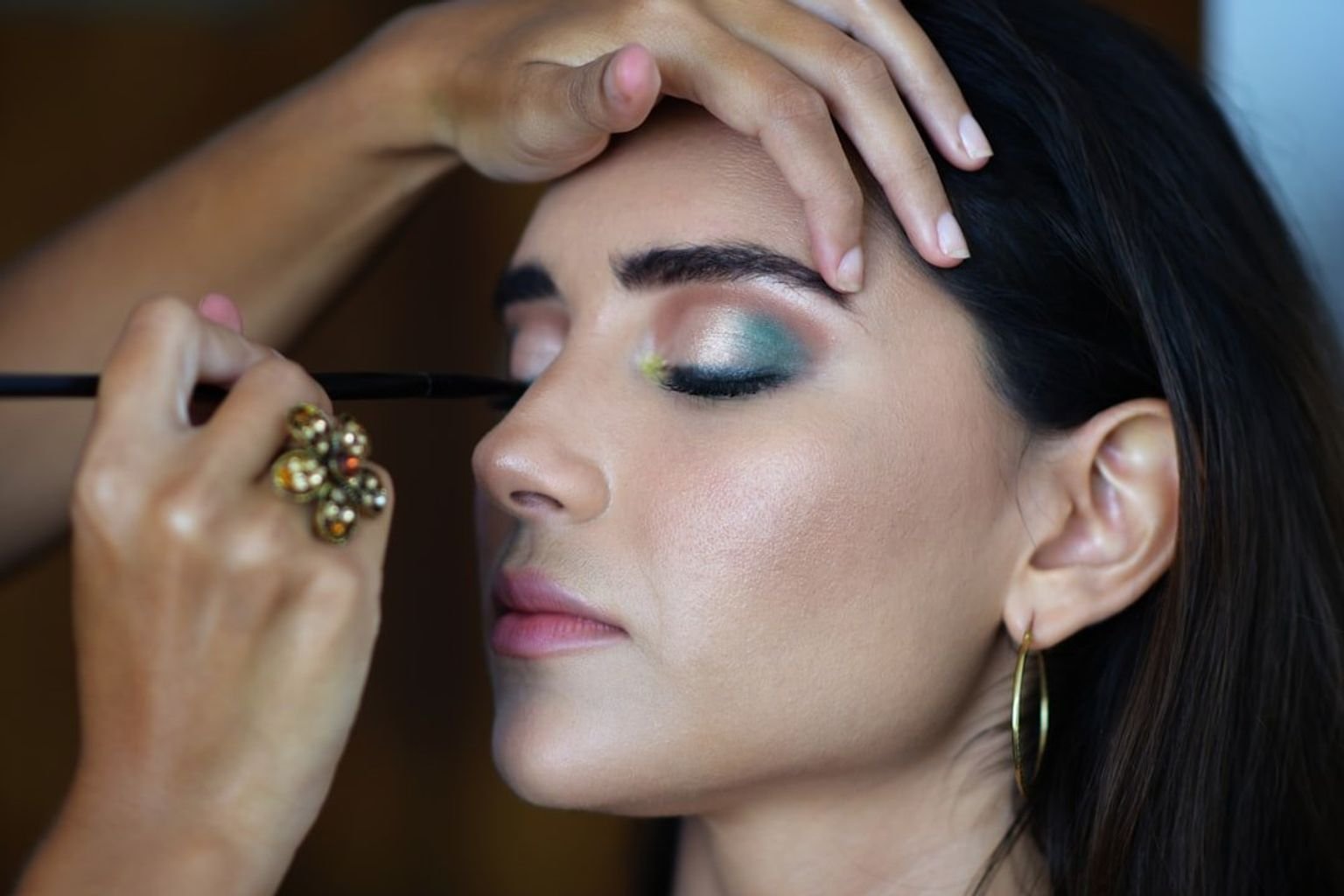
A soft smoky eye is built by concentrating depth close to the lashes and letting the edges fade before the color reaches too far across the lid. Espresso, plum and taupe can all create that effect without turning the whole eye into one dark block.
Allure’s fall 2026 makeup coverage also features softer smoky eyes. The practical choice is how much contrast your eye shape can carry comfortably and whether the deepest color should sit at the lash line, outer corner or both.
The modern smoky eye is about diffusion, not darkness
A smoky eye needs a blurred edge. It does not need the darkest shadow you own. Taupe, cocoa, espresso, plum and muted bronze can all create depth when the color is concentrated near the lashes and softened as it moves outward.
That gradient is what creates the smoky effect. When the same dark shade covers everything from lashes to crease, the eye can look flat instead of dimensional.
Pick one color family before adding more products
Starting with too many shades often makes blending harder. A single brown family with one deeper tone may be enough. The same is true for plum: use a muted base and deepen only where the eye needs definition.
You can always add another color later. It is much harder to remove five overlapping shadows once they have blended into one muddy layer.
Keep the deepest color close to the lashes
The lash line is the safest place to create intensity because it gives the eye structure without taking over the whole lid. A pencil, cream shadow or powder can all work as long as the edge is softened before it sets.
From there, fade the color upward and outward with less pressure. The eye should look deepest at the base of the lashes and increasingly transparent toward the crease.
Espresso is often easier to wear than black
Black can create beautiful drama, but it leaves less room for error because the contrast is immediate. Espresso gives a similar sense of depth with a softer transition into skin tones and neutral shadows.
That makes it useful for daytime, softer evening makeup or anyone who wants the smoky effect without a very graphic finish.
Plum adds depth without behaving like a bright color
A muted plum can read almost neutral from a distance, especially when mixed with brown. Up close, the purple undertone adds complexity that a straightforward brown may not have.
Keep the saturation controlled. The finished eye can stay smoky first, with plum showing as the undertone rather than reading as an obviously purple look.
The lower lash line should echo the top, not compete with it
Heavy color under the entire eye can pull the look downward. A softer approach is to use a small amount of the same shade along the outer half or two-thirds of the lower lashes, then diffuse the edge carefully.
Leave the inner corner cleaner if you want the eye to retain more openness.
Mascara changes how finished the smoke looks
Once shadow surrounds the eye, the lashes can disappear visually. Mascara restores separation between the shadow and the eye itself.
Black gives stronger definition; brown creates a softer result. The choice depends on how much contrast you want. Our brown-versus-black mascara comparison explains where the difference tends to show most.
Keep the base lighter if the eyes are carrying the look
A smoky eye does not require a heavy complexion. In fact, a lighter base can make the eye makeup look more current because the skin still has variation and movement.
The bare-looking skin approach works well here: cover what you want to correct, then stop before every part of the face has the same intensity.
Blush prevents the face from feeling disconnected
Deeper eye makeup can make the rest of the face look unexpectedly flat if all natural color has been covered. A small amount of blush helps reconnect the eyes with the complexion.
It does not need to be bright. Soft rose, neutral peach or another shade you already wear can be enough.
A stronger lip can work, but balance matters
The old rule that smoky eyes require a nude lip is not mandatory. A deeper lip can look deliberate when the eye is soft enough and the base remains edited.
If you want to combine the two, use less density around the eye or choose a blurred lip rather than outlining every edge sharply. The same balancing principle applies to deep berry lips: intensity works best when the rest of the face gives it room.
Hooded and deep-set eyes need visible placement, not copied placement
A tutorial may place shadow in a crease that sits differently on your eye. Instead of copying the exact location, look straight into a mirror and make sure some of the blended color is visible with the eye open.
That small adjustment is more useful than forcing everyone into the same diagram.
Daylight is the best test for blending
Warm bathroom lighting can hide a harsh edge. Before adding more shadow, check the eye in natural light if possible. You may find that the makeup already has enough depth.
Step back from the mirror too. Smoky makeup is designed to be read as a whole shape, not only from a few inches away.
Three common mistakes make the look heavier than necessary
- Starting too dark: begin with a medium shade and deepen gradually.
- Blending too far: diffusion should soften an edge, not spread color across the entire eye area.
- Adding more before checking: pause after each layer and look at the result from normal distance.
A simple soft-smoke formula
- Press a brown, taupe or plum shade close to the upper lashes.
- Blend the edge upward with a clean or lightly loaded brush.
- Add a deeper shade only to the outer lash line if more depth is needed.
- Use a small amount under the lower lashes.
- Finish with mascara and keep the rest of the face as light or polished as you prefer.
Frequently asked questions
Can a smoky eye be worn during the day?
Yes. Use softer shades such as taupe or espresso, keep the color closer to the lashes and avoid taking the shadow too high.
Do I need black eyeshadow?
No. Brown, plum, bronze and taupe can all create a smoky effect. The blurred gradient matters more than using black.
Why does my smoky eye look muddy?
Too many overlapping shades, too much product or blending color too far can remove the contrast between light and dark areas. Simplify the palette and rebuild the depth gradually.
Can I wear a dark lip with a smoky eye?
Yes. Keep one or both features slightly softer so the face still has visual breathing room rather than maximizing every element at once.