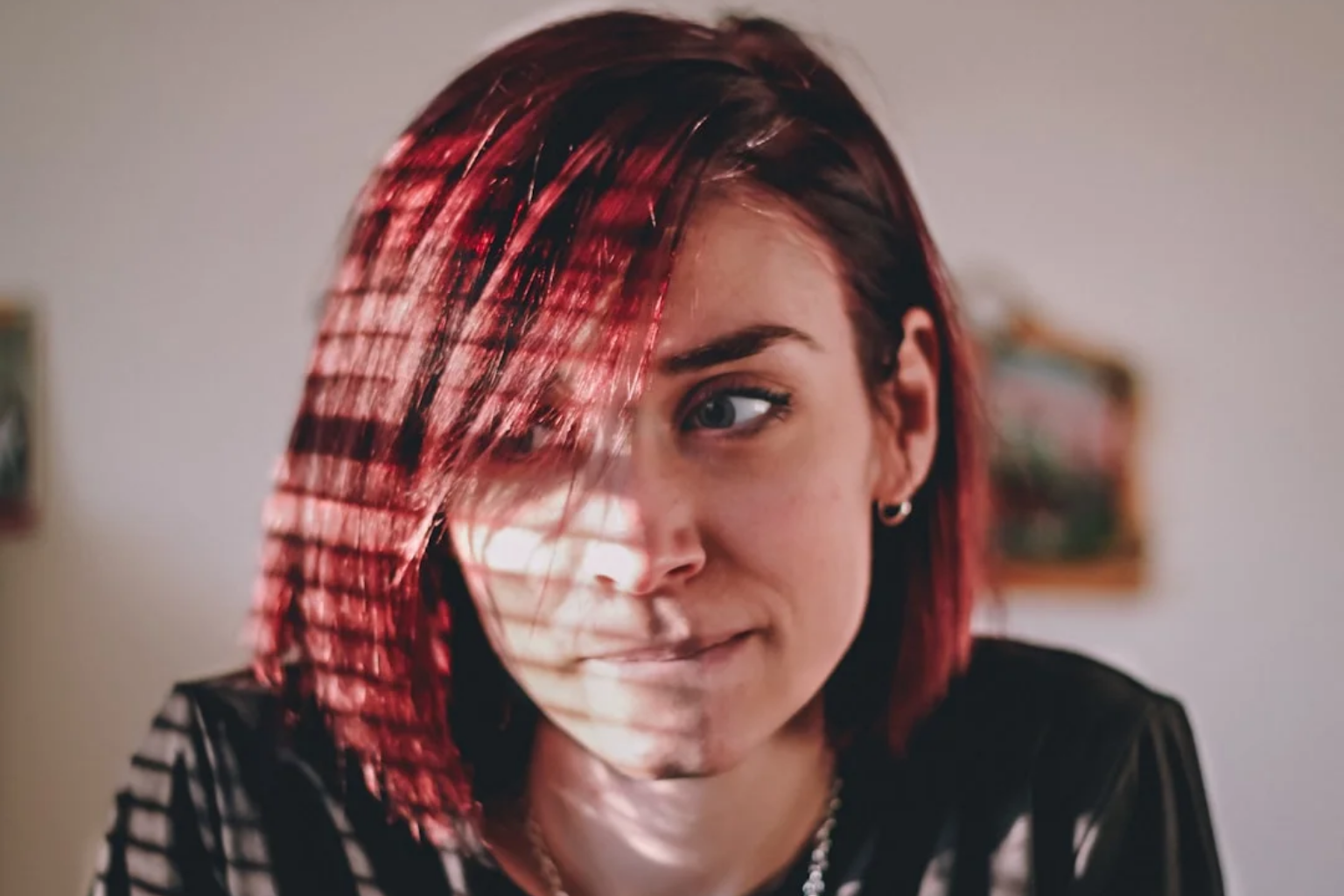
A brunette gloss and permanent hair color can both make brown hair look richer, but they are not interchangeable services. A gloss is usually chosen to refine tone, add shine or deepen color softly. Permanent color is more often used when the goal requires a stronger change to the natural base, more durable gray coverage, or a longer-lasting shift in depth.
Start with the problem you are trying to solve. “I want richer brunette” is not specific enough on its own.
Quick comparison
| Goal | Gloss / demi-style service | Permanent color |
|---|---|---|
| Refresh faded tone | Often well suited | May be more change than needed |
| Add shine | Common reason to choose it | Can add richness, but shine is not the main distinction |
| Cover resistant gray consistently | May soften or blend depending on formula | Often chosen for stronger coverage |
| Lighten the natural base | Usually limited | May shift natural pigment depending on formula and developer |
| Soft fade / lower commitment | Usually more flexible | Regrowth can be more defined |
Salon terminology varies, so ask what formula is actually being used rather than relying only on the word “gloss.”
What a brunette gloss is good at
A gloss can refresh a brunette that has become dull, warm or uneven in tone without necessarily making a major structural change to the base.
It may be used to cool orange reflection, add warm chocolate or honey tones, deepen porous ends, or make highlighted brunette look more cohesive.
If your brunette looks good when freshly colored but becomes warmer between appointments, StyleVeya’s guide to brunette warmth and toning explains why a tonal refresh may sometimes be more appropriate than another full permanent-color service.
What a gloss cannot do reliably
A gloss is not the answer to every color problem.
If your natural hair is dark and you want it noticeably lighter, a deposit-focused gloss will not simply turn it into a lighter brunette. If you need consistent coverage of resistant gray, a translucent tonal service may not provide the opacity you want.
It also cannot make previously lightened hair “unprocessed” again. It can change how that hair looks and feels temporarily, but the underlying color history remains.
Permanent color changes the maintenance pattern
Permanent color is useful when the desired result requires a stronger base change or more reliable coverage.
The trade-off is that new growth can become more obvious because the colored lengths remain different from the hair emerging at the scalp.
For someone covering bright silver against deep brunette, that regrowth contrast can become visible quickly. For someone making only a subtle base adjustment, the line may be softer.
Maintenance depends on contrast, not just the word “permanent.”
Gray coverage is not one all-or-nothing goal
Some people want every silver strand hidden. Others want the gray softened but still visible. Those are different services.
A gloss or demi-permanent formula may blend gray rather than fully cover it, depending on the product and hair. Permanent color may provide stronger coverage, but it can also create a more obvious regrowth line.
StyleVeya’s gray blending guide is useful if you are deciding whether complete coverage is even your preferred result.
Dark brunette can become too solid if every appointment adds more pigment
Repeatedly pulling permanent dark color through the full length can create buildup, especially on porous ends. The root may need one service while the mids and ends need only a tonal refresh.
This is one reason colorists often treat different zones differently instead of using one formula from scalp to ends.
If the lengths already have enough depth, ask whether they actually need more permanent pigment or simply a gloss to restore tone and shine.
A gloss can make dimensional brunette look more intentional
Highlights, balayage and natural variation create several shades within brunette hair. A gloss can help those tones relate to one another without eliminating all contrast.
For example, beige-brown highlights that have become too warm can sometimes be toned cooler while the deeper base remains untouched.
StyleVeya’s brown hair highlight ideas show how much placement and tone influence the final brunette result.
Choose the formula based on what you want to see later
Salon-day color is only half the decision. Ask how the result is expected to change.
Useful questions include:
- Will this fade gradually or leave a visible root line?
- How much gray will remain visible?
- Will the ends need the same formula as the roots next time?
- What tone is likely to appear as the color fades?
- If I change my mind later, which option is easier to transition away from?
If you are happy with your natural depth, start conservatively
If your base color already suits you and the problem is mainly dullness or warmth, there may be no reason to make a permanent base change.
A tonal service can sometimes solve the visible issue while preserving the natural root pattern you already like.
That is especially useful for people who want lower-maintenance brunette color.
If you need a real base shift, gloss may be too subtle
If you want to move from a much lighter natural base to deep brunette, cover substantial gray opaquely, or alter the natural base in a lasting way, permanent color may be the more appropriate tool.
The specific choice still depends on condition, previous color and the formula your colorist uses.
Previously lightened hair needs extra planning
Hair that has been bleached or highlighted can absorb darker pigment differently from untouched hair. Going from blonde to brunette may require more than applying one brown shade.
The underlying warm pigments that were removed during lightening may need to be considered so the finished brunette does not look hollow or fade strangely.
If you have heavily lightened hair, be completely honest about the color history before going darker.
Do not choose permanent color only because you want “longer lasting” shine
Permanent color is not automatically a better shine treatment. If the base does not need changing, repeatedly using a stronger service simply because you want richness can create unnecessary complexity.
Ask which part of your goal requires permanence. If the answer is only “I want it shinier,” a gloss may be worth discussing first.
At-home color requires the same honesty about the goal
If you use home color, follow the product instructions exactly and do not mix different dye products in an attempt to create a custom formula.
The U.S. Food and Drug Administration advises following warning statements, performing the recommended skin test, wearing gloves and not mixing different hair-dye products. Its hair-dye safety guidance is useful before any at-home coloring.
What to tell your colorist
Bring information, not only a shade name:
- Your natural color at the roots.
- How much gray you want visible.
- Any permanent, demi, gloss, henna or box color previously used.
- Where the hair has been lightened.
- Whether warmth or dullness is the main issue.
- How often you realistically want maintenance appointments.
The StyleVeya Stylist Brief can help you organize that history.
The practical decision
If the base is already right and you mainly want tonal correction, shine or a softer refresh, a gloss may be enough. If you need a stronger base shift or more consistent opaque gray coverage, permanent color may make more sense.
Do not choose based on which service sounds more powerful. Choose the least complicated formula that actually solves the problem you have.
Still deciding how far to change the color? Use your color history, gray goal and preferred direction to prepare the questions you want answered at the consultation with the StyleVeya Stylist Brief.