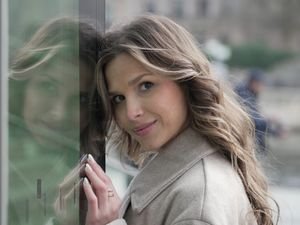
Choose the amount of contrast before you choose the highlight name. Brown hair can look very different with the same general family of lighter pieces. Fine caramel ribbons barely interrupt a brunette base; brighter beige sections create more visible movement; stronger lightening through the mids and ends can move the overall result closer to bronde.
The focus here is the finished look on brown hair, not proving which salon method created a photograph. Balayage, foils, foilayage, babylights and lowlights can all be used to build dimension. For method differences, go to the Hair Highlights Guide. For a specifically warm balayage result, compare Caramel Balayage; for a warmer, closer-to-brunette ribbon effect, see Amber Highlights on Brunette Hair.
Image note: the photographs below are visual outcome references. They help communicate brightness, warmth and contrast, but they do not prove which highlighting technique was used.
6 brown hair highlight ideas worth comparing
1. Soft warm dimension that keeps the brunette base dominant

This is a useful direction if you want people to notice that your brown hair looks brighter without immediately reading it as “highlighted hair.” The lighter pieces stay close enough to the base that depth remains the main feature.
Warm beige, honey and soft caramel tones can work here, but the exact tone should be chosen around your starting shade and how much warmth your hair reveals when it is lightened. If you want caramel to become the main story rather than a supporting tone, compare Caramel Balayage Hair Color.
2. Neutral beige ribbons for a softer brunette-to-bronde shift

Neutral beige highlights sit between obviously golden and obviously ashy. They can be useful if you want brightness but do not want orange-looking warmth or icy contrast against the brunette base.
The more pieces you lighten, the less brunette the overall color will read. If maintaining depth matters to you, tell your colorist you want the brown base to remain visible between the lighter ribbons rather than asking simply for “more highlights.”
3. Stronger lightening through the mids and ends

If you want a more noticeable change without committing to a lighter root, place more brightness away from the scalp. Keeping depth through the upper hair can make the grow-out feel softer while the lighter mids and ends give you more visual contrast.
This can work well if you like a low-maintenance root but still want photographs to show a clear color change. The trade-off is that the ends usually carry more of the lightening history, so condition matters before adding another round of bleach.
4. Sunlit golden highlights

Golden highlights give brunette hair a warmer, brighter finish without necessarily pushing it all the way to blonde. They are especially noticeable where light naturally hits the face and outer layers of the hair.
If you want this effect to stay polished rather than stripey, talk about the amount of separation between the light and dark pieces. A few brighter face-framing sections can be enough; you do not have to distribute the same level of brightness everywhere.
5. Brighter blonde ribbons on a medium-brown base

This is a higher-contrast option. The brunette base is still visible, but the lighter ribbons become a design feature rather than quiet background dimension. It works best when you are comfortable with the hair reading partly blonde in strong light.
Ask how much lightening is realistic in one appointment. Very dark, previously colored or fragile hair may need a different route from untouched medium-brown hair, so the target should be adjusted to the condition and history of the hair rather than forced to match a photograph.
6. Cool, low-contrast highlights

Cooler beige or muted highlights can give brown hair dimension without the obvious golden effect. They are useful when you prefer mushroom, taupe or neutral color families, but “cool” does not mean every trace of warmth can or should be removed.
Hair exposes underlying warm pigment as it lightens. Your colorist may use toner to control that warmth, but the toner will gradually fade. If you dislike any warmth at all, ask about the maintenance required before choosing the coolest possible target.
How much contrast should brown hair highlights have?
Think of contrast on a scale rather than as a yes-or-no decision. Low contrast keeps the highlighted pieces close to your brown base and usually creates softer grow-out. Medium contrast gives visible dimension without turning the whole head lighter. High contrast creates obvious ribbons or face-framing brightness and generally asks more from both the hair and the maintenance routine.
| If you want… | Start with… | Main trade-off |
|---|---|---|
| Almost-natural brightness | Soft warm dimension | The change may look subtle indoors |
| Neutral polish | Beige ribbons | Toner may need refreshing |
| Easy root grow-out | Brighter mids and ends | Older ends carry more lightening |
| Warm glow | Golden highlights | Warmth becomes part of the look |
| Visible transformation | Brighter blonde ribbons | More lift and maintenance |
| Muted dimension | Cool low-contrast highlights | Cool toner can fade toward warmth |
Warm, neutral or cool?
The best highlight tone is not determined by skin undertone alone. Your existing hair color, previous dye, natural warmth, the amount of lift and the overall contrast all affect the finished result. If your hair naturally exposes strong red or orange pigment, reaching a very pale cool highlight may require more lightening than your hair condition supports.
If lower maintenance matters most, choose a highlight tone that does not need constant correction to look acceptable as toner fades. Low-Maintenance Brunette Hair Color goes deeper into grow-out-friendly color decisions.
Maintenance and hair condition
Highlights involve lightening selected hair, which can increase dryness and brittleness if the hair is pushed too far. The American Academy of Dermatology notes that lightening hair significantly beyond its natural shade generally requires stronger peroxide and can create more damage. Its coloring and perming guidance includes practical care advice for color-treated hair.
Before the salon appointment, tell your colorist about permanent dye, box color, henna, previous bleach and any areas that already feel fragile. Afterward, use conditioner consistently, reduce unnecessary heat, and protect colored hair from prolonged sun and chlorine exposure.
Maintenance is not just about the roots. Toner, gloss and the condition of the lighter ends may need attention even when the root blend still looks good.
Questions to take to your colorist
- How much lighter can my hair safely go in one appointment?
- Do I want low, medium or high contrast?
- Should the brightness concentrate around my face, throughout the hair or mainly at the ends?
- Do I want warm gold, caramel, neutral beige or a cooler result?
- What technique gives this outcome on my starting shade?
- How often will toner or gloss realistically need refreshing?
If gray is part of your color decision, Gray Blending Hair Color covers a different goal: softening silver regrowth rather than simply brightening brunette hair.
Frequently asked questions
What highlights look best on brown hair?
Caramel, honey, beige, golden and cooler neutral highlights can all work. Choose among them by starting shade, desired contrast, existing color history and how much maintenance you want.
Are brown hair highlights the same as balayage?
No. “Highlights” describes the lighter pieces or overall result. Balayage is one technique a colorist may use to create lighter areas. Foils, foilayage, babylights and other methods can also be used.
Which highlights are lowest maintenance on brown hair?
Lower-contrast highlights with a soft root blend are generally easier to grow out than very bright pieces placed directly from the scalp. Maintenance also depends on how quickly the toner fades and how different the lightened hair is from your natural base.
Can very dark brown hair get light highlights in one visit?
Sometimes, but not always safely. Previous color, condition and the amount of lift required matter. A staged approach may be healthier than forcing the hair to a very pale target in one appointment.