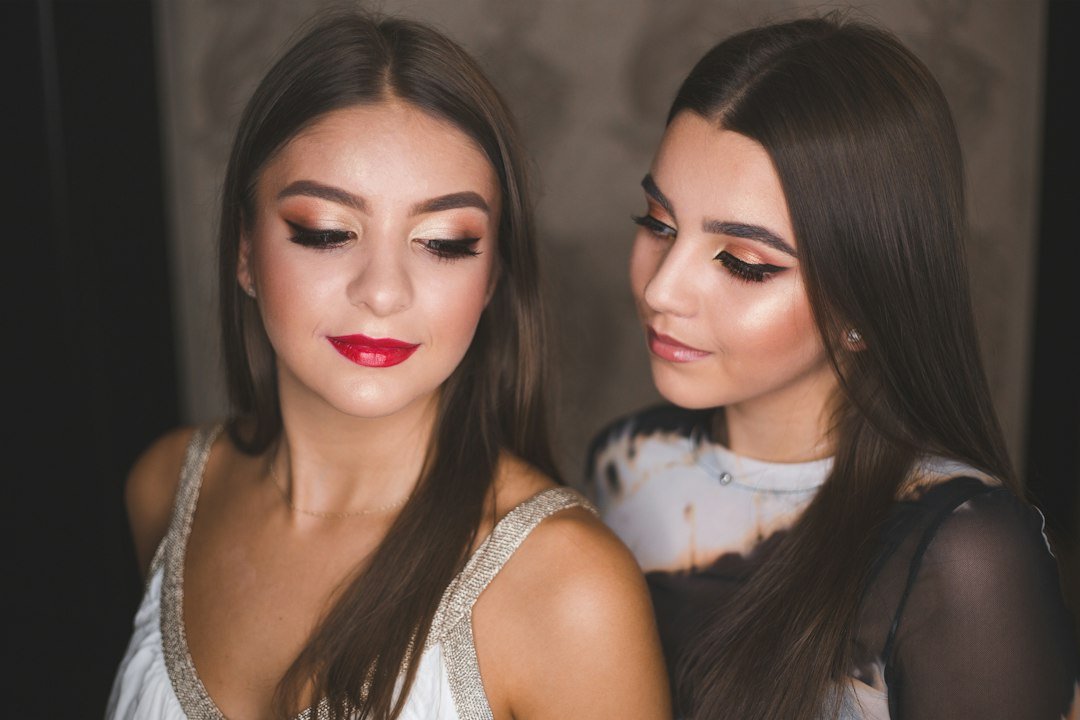
Monochromatic makeup uses one color family across the eyes, cheeks and lips, without requiring every feature to use the exact same shade. The most convincing version keeps a clear relationship between the colors while changing depth, transparency and finish so the face still has structure.
Think in families, not exact matches
Rose, peach, terracotta, plum and soft brown are easy starting points because each has lighter, deeper, warmer and cooler versions. A muted rose eye, a slightly warmer rose blush and a sheer berry-rose lip can still feel monochromatic even though none of the products matches exactly.
If you try to use one identical tone everywhere, the makeup can look flat or overly coordinated. Variation is what makes the idea wearable.
Choose one feature to carry the most color
Before applying anything, decide which feature should be strongest. If the eyes are deeper, keep the blush and lips more translucent. If the blush is the focus, let the eye stay soft and the lip sit close to your natural color.
This simple hierarchy prevents the face from becoming one uninterrupted block of the same tone.
Use depth to create shape
Within the same color family, use the deepest tone where you want definition and the lightest where you want softness. A plum look might use a deeper plum close to the lash line, a diluted mauve on the cheeks and a sheer berry lip.
You do not need contour for this to work. Small shifts in saturation can create enough separation between features.
Mix textures so the light changes
Matte eyes with satin cheeks and a balmy lip create more dimension than three matte products. The reverse can also work: a soft sheen on the eyelid, natural-skin blush and a velvet lip.
Our balmy vs dewy skin guide explains how finish changes where light sits on the face.
Let some natural skin remain visible
Monochromatic does not mean maximum coverage. Leaving areas of natural skin between the eye, cheek and lip color keeps the palette airy and stops the face from looking overworked.
For blush, start on the area you actually want emphasized rather than sweeping color from ear to nose. For shadow, keep some clean space under the brow unless a stronger editorial look is intentional.
Neutral definition can anchor the look
Brown mascara, espresso liner, neutral brows or a very soft taupe can give the face structure without disrupting the color story. These support shades are useful when the main palette is light or low contrast.
Black liner is not forbidden, but it will create a sharper break. Use it if that contrast is part of the look rather than because it is automatic.
Rose, peach, terracotta and plum behave differently
Rose usually gives the easiest everyday result because it can stay close to natural lip and cheek tones. Peach feels brighter and warmer. Terracotta creates more visible warmth and depth, especially in matte or satin finishes. Plum gives more contrast and can move toward a soft smoky effect if used heavily on the eyes.
Choose the family that already looks believable somewhere on your face rather than forcing a trend color that fights your undertone.
Keep the base quieter than the color story
A very sculpted base, strong bronzer and intense highlighter can compete with a monochromatic palette. If the point is color harmony, keep complexion products focused on evening the skin rather than creating several additional focal points.
That does not mean wearing less coverage than you like. It means keeping the supporting products visually quieter.
Undertone can connect products that are not exact matches
A warm rose eye and a neutral rose lip can still belong together if they share enough red or brown underneath. Likewise, a cool mauve blush can work with a deeper plum eye without becoming a different color story.
When one product seems out of place, compare undertone before assuming the shade itself is wrong.
Use transparency to keep the face from becoming one block of color
A sheer cheek, softly washed eyelid and more opaque lip can all sit in one family while creating clear hierarchy. Changing opacity is often easier than finding three products that differ perfectly in depth.
This is especially useful with stronger families such as plum or terracotta, where full opacity everywhere can become heavy quickly.
Daylight is the best check for color harmony
Warm bulbs can make peach and terracotta look richer, while cool lighting can make mauve and plum appear grayer. Check the finished look near a window before deciding that one feature needs more color.
If the palette works in daylight, it is usually easier to adjust for evening than the other way around.
Glasses can interrupt the monochromatic effect
Strong frames add another color and line across the face. If your glasses are bold, keep eye color slightly more restrained and let cheeks or lips carry more of the chosen family.
If the frames are light or rimless, you have more room to build the eye without competing with another strong visual element.
Common reasons the look feels flat
- Using the same opacity on eyes, cheeks and lips.
- Choosing three matte products with no change in reflected light.
- Carrying blush too far across the face so it merges with eye color.
- Using a lip shade that is much darker than everything else without balancing the eyes.
- Adding unrelated bronzer, contour and highlighter tones after the palette already feels complete.
A simple five-minute version
Use one cream color on cheeks, tap a small amount over the eyelid, then add a related balm or lipstick to the lips. Define lashes and brows with neutral products. This gives the effect without needing a coordinated full makeup collection.
Check the result at normal distance
Monochromatic makeup can look beautifully blended in a close mirror but too uniform from a few feet away. Step back after finishing. If the eyes, cheeks and lips disappear into one level of color, deepen only one area or change one finish.
The idea works because it simplifies color decisions while still allowing dimension. Keep the family consistent, vary depth and texture, and let one feature lead.