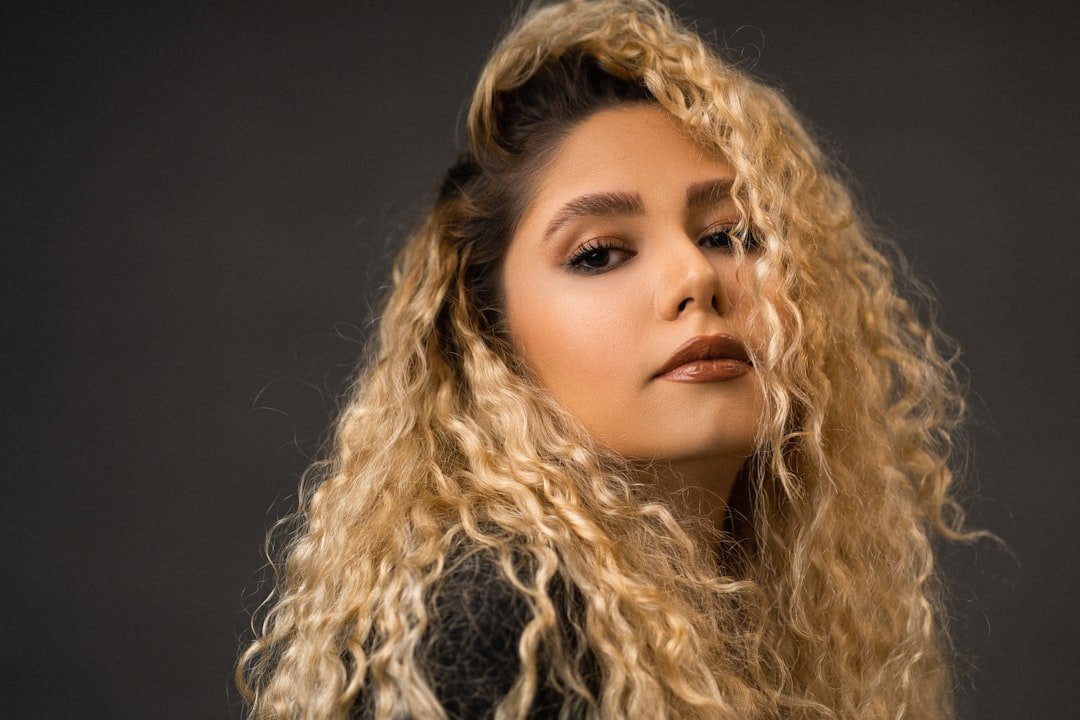
Highlights on curly hair work best when the color follows the shape people actually see when the hair is dry. A perfectly even foil pattern can disappear inside dense curls, while a few strategically placed brighter pieces can make the pattern look more defined without making every section lighter.
A useful highlight plan accounts for curl pattern, density, shrinkage, how the hair is worn and the condition of previously lightened sections.
Dry shape matters more than a flat sectioning map
Curly hair does not fall in straight panels, so color placement should consider where curls sit, separate and frame the face. Brightness that looks balanced on stretched hair can bunch together once the curls spring back.
Ask the colorist to look at the hair in its natural dry shape before deciding where the brightest pieces should go.
Keep contrast where the curl can show it
Face-framing pieces and selected surface curls often create more visible impact than lightening the entire interior. That can also reduce how much previously processed hair is exposed to lightener again.
Density changes how wide highlights should be
Very fine curls may need smaller, softer ribbons so the color does not overwhelm the pattern. Dense or coarse curls can carry wider pieces, especially where curl clumps are larger and more visible.
Our long curly haircut guide explains how shrinkage and weight affect the silhouette; the same shape should inform where highlights are placed.
Face framing should follow the curls that actually fall forward
Instead of automatically brightening both front sections equally, look at which curls naturally sit beside the face. One side may spring higher or separate differently.
Placement that follows the real curl pattern usually looks more integrated than perfectly symmetrical sectioning.
Do not ignore underneath sections
If the hair is often worn up, hidden curls near the nape or sides may become highly visible in a ponytail or bun. Tell your colorist how you usually wear your hair so the brightness still makes sense when the style changes.
Tone should support the base
Caramel, honey and warm beige can create soft contrast on brunette curls. Cooler beige or neutral blonde may work when the base is less warm.
No single highlight tone is universally correct; the contrast needs to look believable against the natural or colored base.
Condition matters as much as placement
Curls can show dryness quickly because the surface is already textured. Repeated lightening on the same sections may weaken definition, so a conservative placement plan can be more valuable than adding more brightness at every appointment.
Previously lightened ends need special attention
If the ends are already much lighter than the roots, repeatedly pulling lightener through them can create unnecessary overlap. A colorist may need to isolate those sections and focus only on new growth or darker areas.
Highlights can change how curl definition is perceived
Lighter and darker sections create visual separation, which can make curls appear more defined even when the texture itself has not changed. That is one reason strategic contrast can be more effective than making the whole head lighter.
Maintenance should match the placement
Very bright pieces close to the scalp show regrowth sooner. Softer ribbons placed away from the root usually grow out more gently.
If low maintenance is important, ask for enough contrast to show the curls without creating a rigid root line.
Photograph the curls in their normal dry state before the appointment
A quick front, side and back photo can help show where the brightest curl clumps naturally sit, especially if the salon consultation begins with stretched, brushed or wet hair. Those photos also make it easier to explain which pieces you notice most when the hair is worn down.
If you regularly change the part or wear the hair up, include one photo of each common style so placement is not planned for only one arrangement.
Root placement and mid-length placement create different effects
Brightness close to the scalp creates a fresher, more obviously highlighted result. Leaving more natural depth at the root softens the grow-out and can make the contrast feel more dimensional through the curl.
Neither approach is automatically better. Choose based on whether you want immediate brightness at the root or a softer transition that asks less of future maintenance.
Different curl zones may need different highlight widths
The curl clumps around the face can be smaller than those through the back, while the underneath sections may form larger, denser groups. Using one highlight width everywhere can make the color look too busy in one area and almost invisible in another.
A placement plan should respond to those differences rather than treating every section as if it behaves the same when dry.
Lightening and curl condition need to be considered together
Repeated lightening can make hair feel drier and more fragile, and curly hair may show that change through reduced definition or more breakage. The American Academy of Dermatology recommends limiting practices that damage the hair and using care suited to curly texture. Its curly-hair care guidance and hair-coloring guidance are useful background references.
If the curls are already fragile or heavily lightened, ask whether more brightness can come from strategic placement rather than increasing the amount of hair processed.
Before placing highlights through curls
- Can you assess the hair in its dry curl pattern first?
- Which curls should be brightest around the face?
- Where is previous lightener already present?
- How much contrast can my current condition handle?
- How will this placement look when I wear the hair up?
Show the curl pattern and explain the placement goal: The StyleVeya Stylist Brief can hold the brightness areas you care about, your color history and your priority to work with the natural pattern.
Well-placed curly highlights make the curl pattern easier to read. Color should move with the hair, not sit on top of it as a separate striped layer. Before leaving the salon, check the result both down and in the upstyle you wear most often so the placement still feels balanced when the curl pattern changes position.