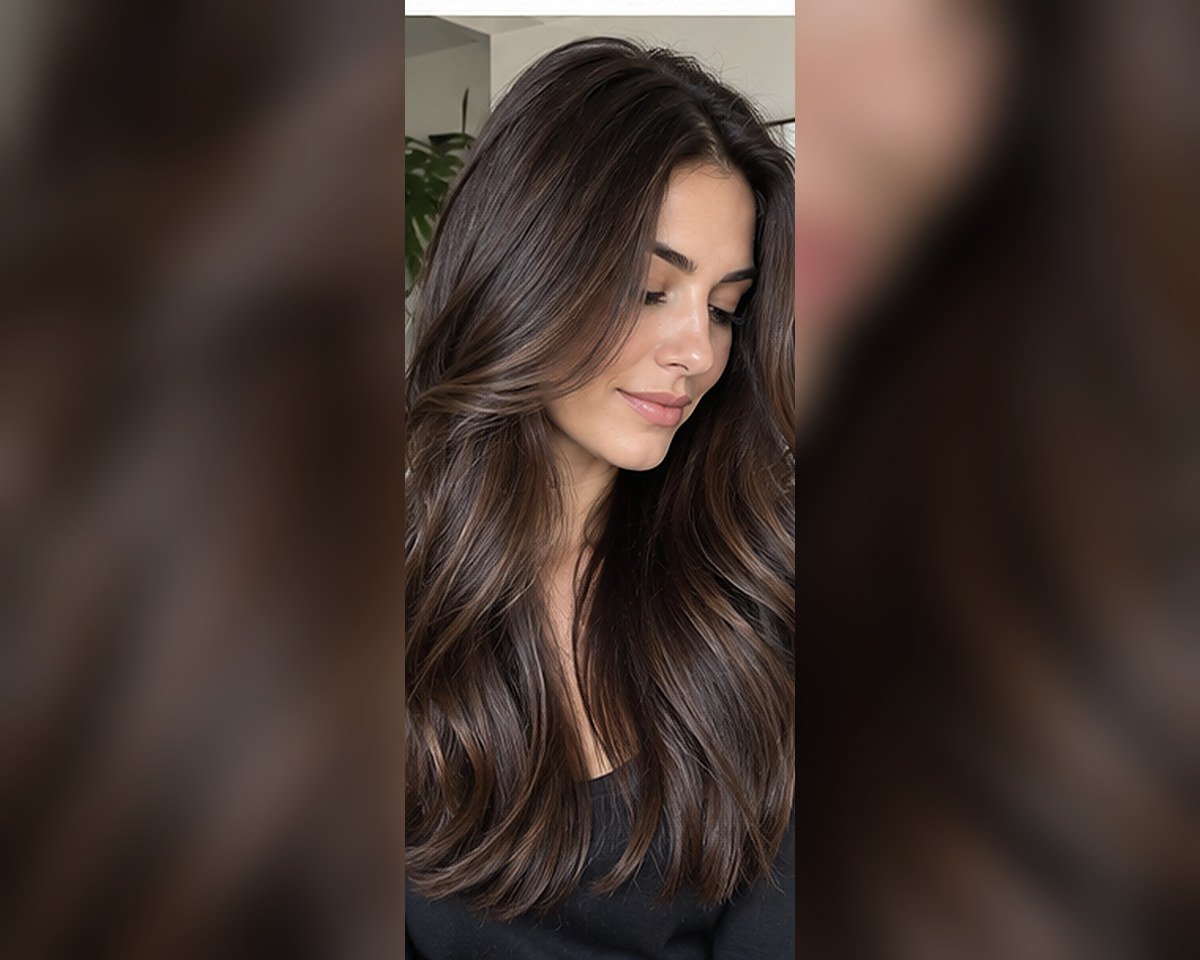
Cool brunette is a shade-selection problem, not a rule about who is “allowed” to wear ashier browns. Once you know you want less visible gold, orange or copper, compare espresso, mocha, mushroom and neutral-chocolate directions by depth, fade and starting shade.
Cool does not have to mean flat or gray. The finished color can still have depth and reflection; the difference is that warmth is controlled rather than used as the main feature.
When you have not yet settled on cool, warm or neutral brown, start with Cool Brown vs Warm Brown Hair. If your main question is how dark to go, use Dark Brunette Hair Color. Personal taste should lead both decisions; skin-tone charts can inform the choice but should not dictate it.
Espresso brown
Espresso is one of the deepest brunette options. It works well when you want richness without visible red. In low light it can look close to black; in brighter light, the brown becomes more obvious.
The challenge is keeping it dimensional. A single dark permanent shade from roots to ends can become very solid, especially on long hair.
Subtle neutral-brown ribbons around the face or through the mid-lengths can keep espresso from looking dense. For deeper options, compare StyleVeya’s dark brunette hair colors.
Cool mocha
Mocha sits in a softer middle range. It feels brown first rather than black, but it does not rely on obvious gold to create shine.
That makes it useful if espresso feels too severe and ash brown feels too muted. Mocha is also easy to combine with highlights. A neutral beige or cool caramel ribbon can create contrast without turning the overall result warm.
Mushroom brown
Mushroom brown is cooler and softer. It often combines taupe, ash and neutral brown tones, creating a subdued finish rather than a high-contrast color.
This can work well on naturally light brown or dark blonde hair because the transition is smaller. On a very dark natural base, reaching a true mushroom tone may require more lightening than the finished photo suggests.
Before choosing any lighter brunette, read StyleVeya’s how to choose hair color guide. Starting shade affects what is realistic in one appointment.
Neutral chocolate
Chocolate brown is often assumed to be warm, but it can be adjusted. A neutral chocolate keeps the richness associated with the shade while reducing obvious red-orange reflection.
It is a useful compromise if pure ash colors make your complexion look washed out. Ask to see swatches rather than relying only on a shade name. “Chocolate” can mean anything from red-brown to neutral espresso depending on the brand and colorist.
Highlights for cool brunette hair
Highlights do not have to be blonde. On a cool brunette base, fine beige-brown highlights can add movement with much less contrast. Babylights around the face can create brightness while keeping the overall effect brunette.
If you want more obvious dimension, StyleVeya’s brown hair highlight ideas show how caramel, beige and cooler ribbons change the result.
For a softer transition between shades, color melting versus balayage explains the difference between placement and blending.
Low-maintenance options
A brunette close to your natural depth usually asks less of the grow-out.
If your natural hair is dark brown, an espresso gloss or neutral chocolate refresh may grow out more quietly than a much lighter mushroom brunette. If your natural hair is medium brown, subtle cool highlights can provide movement without creating a sharp root line.
StyleVeya’s low-maintenance brunette hair color page shows several ways to keep dimension without frequent full-color appointments.
Watch for over-ashing
Cooler is not always better. Too much ash can make brunette hair look dull, greenish or hollow under certain lighting. Hair that is porous may also grab cool pigment more strongly through the ends.
Cool-brunette formulas often keep some neutral balance rather than treating every trace of warmth as something that must be erased.
Cool brunette should still have visible dimension
A color can be cool without being flat. Keeping subtle differences in depth through the mids and ends helps brunette hair reflect light, especially if the overall shade is deep.
If every section is taken to the same dark ash tone, the result can look denser and less dimensional than the reference image.
Previously warm or red hair may not cool evenly in one step
If the hair contains old copper, red or warm permanent color, a cool formula may neutralize some warmth but not erase the underlying history. Porous lengths may also grab ash more strongly than the roots.
When roots, mids and ends have different color histories or porosity, a colorist may use different formulas through those zones rather than one shade everywhere.
Think about the fade before choosing the starting tone
A very cool result may soften toward warmer brown as toner fades. If you know visible warmth bothers you, ask what the expected fade will look like and how often a gloss or tonal refresh is realistic for your routine.
Judge reference photos in more than one kind of light
Cool brunette can look almost black in a dim room and noticeably softer in daylight. Phone processing, salon lighting and strong contrast can also make ash or neutral tones appear cooler than they look in ordinary conditions.
When you save reference photos, compare what you like about the depth separately from what you like about the undertone. A photo may be useful because of its soft root, subtle highlights or low contrast even if the exact brown is not realistic from your current starting shade.
Previous color changes what can happen in one appointment
Natural brunette and brunette that has been repeatedly dyed dark are not the same starting point. Previously lightened ends can also respond differently from newer growth. Tell the colorist about permanent dye, box color, bleach, highlights, henna or any section that has been processed more heavily than the rest.
That history matters because chasing a lighter mushroom or taupe brunette may require additional lightening, while going deeper may be mostly about deposit and tonal balance. The American Academy of Dermatology notes that coloring and especially greater lightening can leave hair drier and more brittle, so condition should be part of the plan rather than an afterthought. See its hair-coloring guidance.
Bring a maintenance preference, not just a shade name
Two cool brunettes can look similar on appointment day and grow out very differently. A result close to your natural depth may need less visible root correction, while a lighter or more neutralized brunette may depend more on tonal refreshes to keep the finish you liked in the reference.
Before the appointment, decide which matters more: keeping the root close to natural, staying visibly cool as the color fades, creating more dimension, or reducing the number of salon visits. That priority gives the colorist something more useful to work with than simply asking for “cool brown.”
Choose the brunette family by depth, warmth and fade
- Choose espresso if you want deep brunette with minimal visible red.
- Choose cool mocha if you want a softer brown that still feels neutral.
- Choose mushroom brown if your starting level is lighter and you prefer muted taupe tones.
- Choose neutral chocolate if pure ash feels too flat but you still want warmth controlled.
Gray hair changes the equation
Natural silver strands can create less visible contrast beside some cooler or neutral brunette tones than beside very warm browns.
If you are beginning to see more gray, you may not need to cover every strand. Strategic highlights, lowlights or gloss can soften the contrast between the natural brunette and silver.
StyleVeya’s gray blending hair color explains several lower-contrast approaches.
Choose depth first, then adjust warmth, dimension and maintenance until the brunette fits your preferred contrast and your routine rather than chasing a shade name alone.