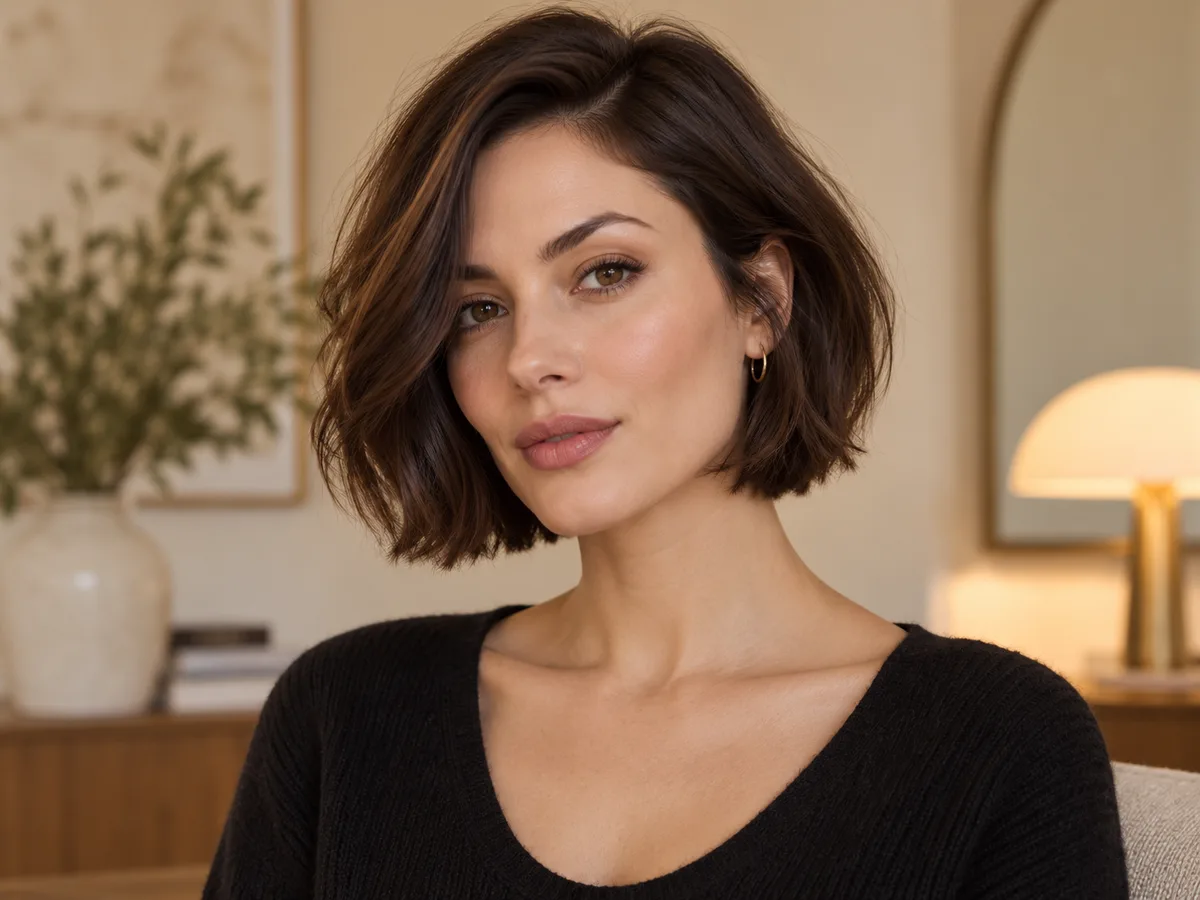
A French bob is less about one exact measurement and more about a compact, deliberate shape. Most versions sit somewhere between the cheekbone and jaw, often with a soft fringe or an easy, slightly undone finish. The appeal is the combination of structure and looseness: the outline is clear, but the styling does not have to look rigid.
If you are still deciding how short you want to go, compare Long Bob Haircuts for more length and Bangs and Fringe Ideas before committing to a fringe.
The classic French bob keeps the perimeter compact
A traditional version usually ends around the jaw or slightly above it. The edge can be blunt, softly point-cut or subtly rounded depending on texture. Because the shape is short, small changes in length are noticeable: a centimeter can shift the whole balance around the mouth and jaw.
For a cleaner, more graphic look, keep the perimeter strong. For something softer, allow a little texture through the ends so the cut moves rather than sitting as one rigid line.
A softly textured French bob feels less formal
Texture through the ends can make a short bob feel more relaxed without turning it into a heavily layered haircut. This works especially well when the hair already has a slight bend or when you prefer a finish that looks good with minimal styling.
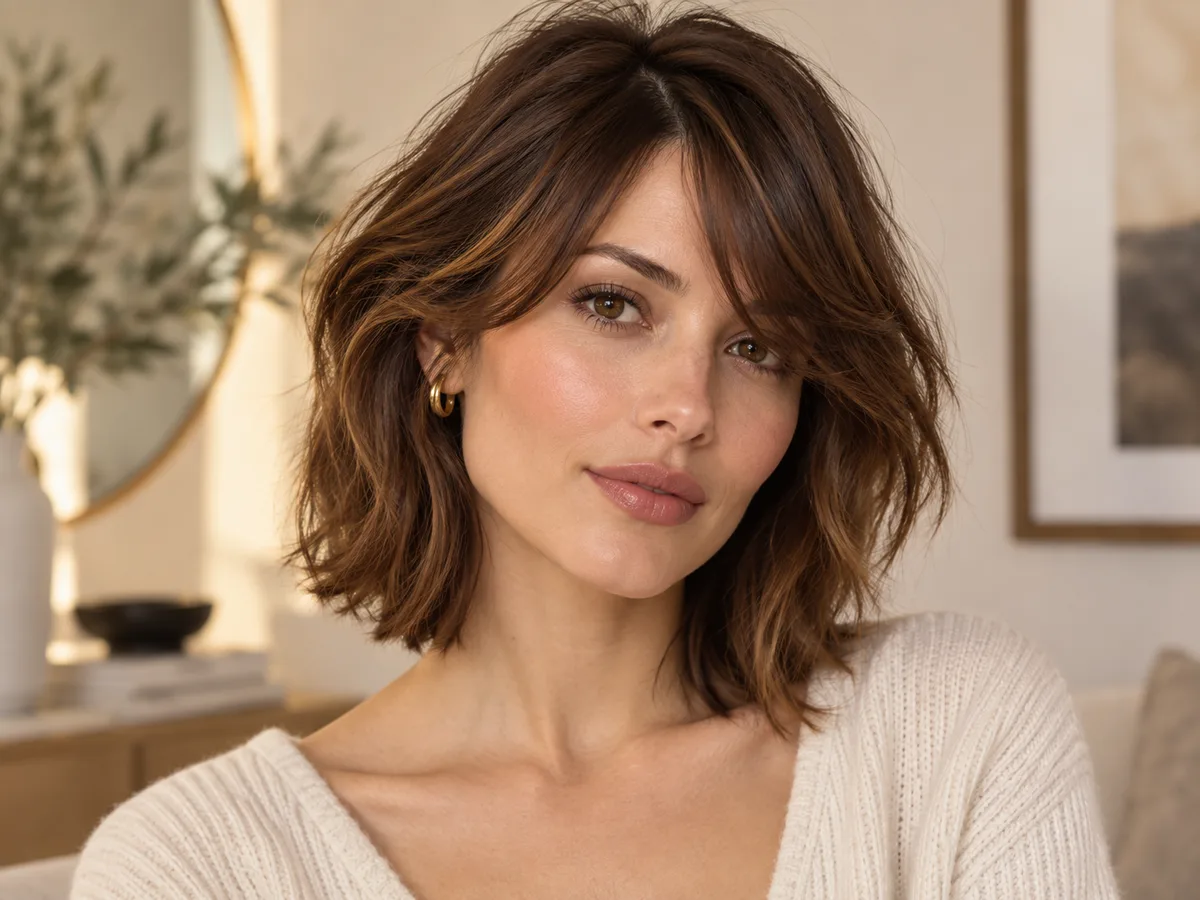
The important distinction is between softening and thinning. Softening the edge changes how the line moves; thinning too aggressively can make the perimeter lose the compact quality that makes the cut recognizable.
Fringe changes the mood of the cut more than the back does
A short airy fringe gives the cut a playful, open feel. A fuller brow-length fringe makes the shape more graphic. Curtain or side-swept pieces create a softer transition if you are not ready for a full fringe.
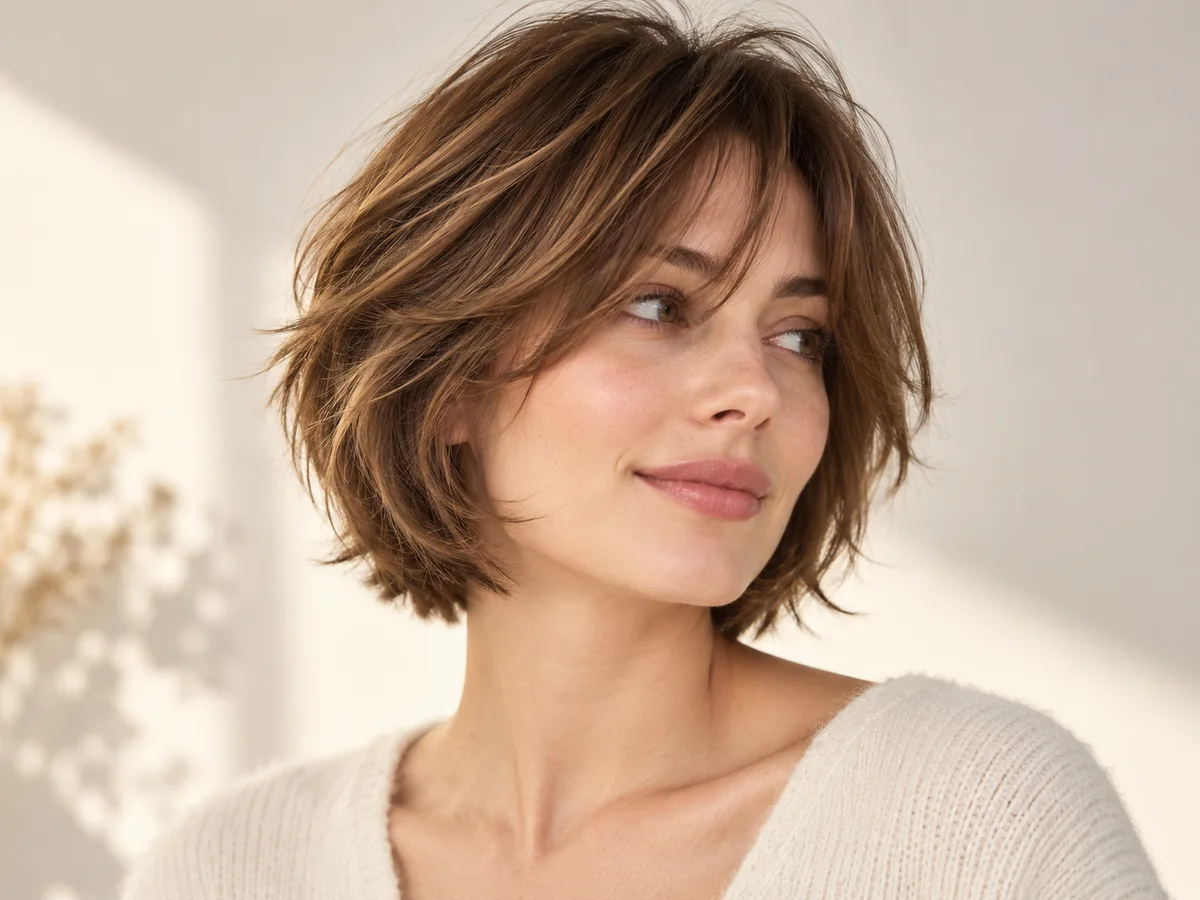
Before cutting bangs, check how your hairline behaves when the hair is dry. Cowlicks, strong growth patterns and humidity can all change where the fringe actually sits.
Wavy texture makes the outline feel softer
A French bob can work beautifully with natural wave because the bends break up the perimeter and make the shape feel less strict. The stylist should account for how much the hair springs upward when dry so the finished cut does not land shorter than you expected.
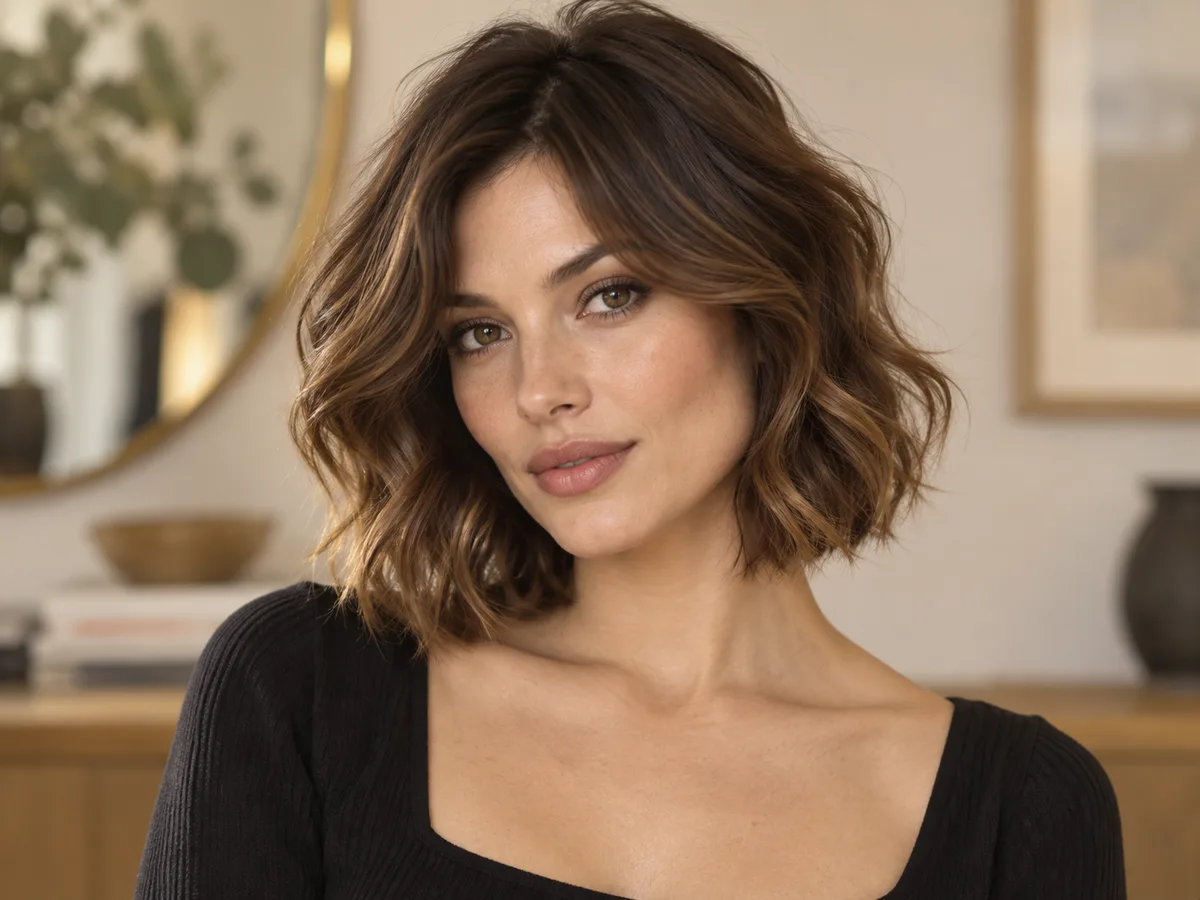
If your wave pattern is strong, you may need fewer layers than a straight-hair version. The texture itself already creates movement.
Fine hair usually benefits from keeping the edge substantial
Fine hair can suit a French bob very well because the shorter length reduces the amount of weight pulling the hair down. A solid perimeter often helps the ends look denser. Keep internal shaping restrained unless the hair is especially thick in certain areas.
For more density-specific options, compare Bob Haircuts for Fine Hair.
Thick hair needs shape inside the bob, not just around it
When thick hair is cut short with no internal control, it can expand into a triangular silhouette. Ask how the stylist plans to remove bulk while preserving the visible outside line. Internal shaping around the occipital area and sides can make the cut sit closer without looking over-layered.
The cut should still look good when it is not perfectly styled
A French bob is most useful when the shape works on an ordinary day. If you prefer air-drying, make sure the stylist sees your natural texture before cutting. If you blow-dry, decide whether you want a polished curve under the ends or a straighter, more modern finish.
A small amount of styling cream or lightweight texture product is often enough for a relaxed finish; the haircut itself should do most of the work.
What to tell your stylist
- Show the exact point where you want the perimeter to land when dry.
- Say whether you want the edge blunt, softened or visibly textured.
- Bring a fringe reference separately from the haircut reference.
- Explain whether you normally air-dry or heat-style.
- Ask how the cut will behave around the ears and nape as it grows.
- If your hair is thick, ask how internal weight will be removed.
- If your hair is fine, say that you want to preserve density through the edge.
Frequently asked questions
How short is a French bob?
Most versions sit between the cheekbone and jaw, but there is no single required length. The key is a compact bob shape with a deliberate perimeter.
Does a French bob have to include bangs?
No. Fringe is common, but a French bob can also be worn with a center part, side part or longer front pieces.
Can wavy hair wear a French bob?
Yes. Natural wave can make the cut look softer and more relaxed. The dry length matters because waves can spring up after cutting.
Is a French bob high maintenance?
The styling can be simple, but the short perimeter shows growth quickly. If you want the shape to stay precise, trims are usually needed more often than with a longer, softer haircut.