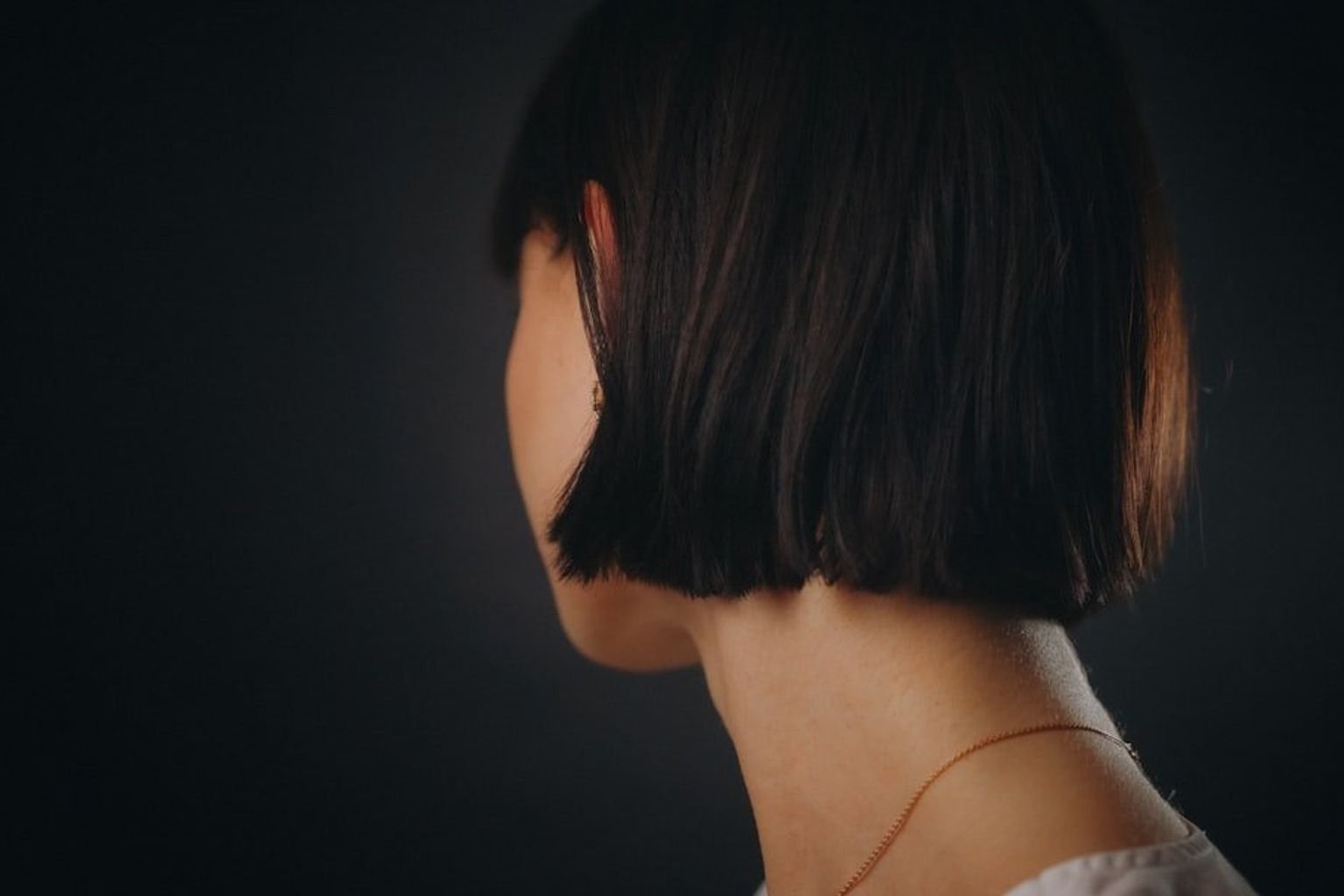
“Clavi-cut” is a useful label for hair that finishes around the collarbone. The focus here is that exact endpoint: how it interacts with the shoulders, how much it can shrink when dry, whether it still ties back and how layering changes the line.
If you only want a general medium-length haircut, the broader Shoulder-Length Haircuts guide is more useful. If you want a bob-family shape with a stronger perimeter, use Long Bob Haircuts. The clavi-cut is most useful as a planning term when the collarbone itself is the length you want to preserve.
The collarbone is the reference point—not a strict measurement
Two people can ask for the same clavi-cut and need different exact lengths because neck length, shoulder width and hair shrinkage change where the ends visually sit.
Bring a reference photo, but also tell your stylist where you want the hair to fall when it is dry. If your hair curls or waves, the wet cutting length may need to be longer than the finished target.
It is not just a long bob
A lob often reads as a bob that has been extended. A clavi-cut can feel softer and less geometric, especially when the ends are lightly layered or the front is shaped around the face.
If you prefer a strong, blunt outline, say so. If you want movement, ask how the interior will be softened without making the ends thin.
Fine hair can benefit from keeping the perimeter fuller
On fine hair, too much layering around collarbone length can make the bottom look sparse. A stronger base with subtle face framing often gives a cleaner result.
Our guide to what low-maintenance hair really means is useful here because the easiest-looking cut is not always the one with the fewest layers.
Dense hair may need weight removed from the inside
Thick hair can create a triangular shape when it ends at the shoulders, particularly if there is a lot of bulk through the bottom half.
Internal layers or careful texturizing can help, but they should be placed with your natural texture in mind. Over-thinning can create frizz and shorter pieces that are harder to control.
The shoulders can change the way the ends behave
Hair that sits directly on the shoulders may flip outward. That is not necessarily a bad result—it can create movement—but it surprises people who expect the ends to stay perfectly tucked in.
If you strongly dislike flipping, discuss whether the length should sit just above or just below the point where your hair hits the shoulders.
Face framing should be decided separately from overall length
The clavi-cut describes the main length, not what must happen around the face. You can pair it with longer curtain pieces, cheekbone layers or almost no face framing at all.
Use our haircut-selection guide to compare density, texture and maintenance before deciding how much shaping you want near the face.
It works well for people who still need a ponytail
One practical advantage is that most clavi-cuts retain enough length to tie back. That can make the transition from long hair feel less dramatic.
Ask whether the shortest face-framing pieces will still reach your ponytail if that matters for work, exercise or daily convenience.
Air-drying may look different from a salon blow-dry
A smooth salon finish can hide bends, cowlicks and shoulder flipping. Before committing, think about how the same length will behave when you use your normal routine.
If you usually air-dry, tell your stylist. If you prefer a polished blowout, our soft blowout guide shows how volume can work at this length without making it stiff.
Grow-out is one of the clavi-cut’s strengths
Because the cut begins between short and long, the grow-out can be less awkward than a chin-length bob. You may still want trims to maintain the outline, but the shape does not disappear immediately.
What to ask before cutting
- Where will the dry ends sit relative to my collarbone?
- Will my shoulders make the ends flip?
- How much interior layering does my density need?
- Will the shortest front pieces still tie back?
- How will the cut look air-dried?
Collarbone length works differently on straight, wavy and curly hair
On straight hair, the perimeter is easy to see and the main question is whether the ends sit cleanly above, on or below the collarbone. On wavy hair, the length may shorten visually as the pattern forms. On curly hair, shrinkage can move the finished shape several centimeters higher.
That is why the dry target matters more than a fixed cutting measurement.
Fine hair usually benefits from a stronger lower edge
If the haircut is intended to make fine hair look fuller, avoid removing more weight than the density can support. Long layers or restrained face framing can create movement while leaving the perimeter visually strong.
StyleVeya’s fine hair at shoulder length guide goes deeper into where layers help and where they start thinning the outline.
Thick hair may need invisible weight removal
Dense collarbone-length hair can widen through the bottom simply because so much hair is ending in the same area. Internal shaping can reduce that bulk without forcing a heavily layered surface.
If the hair is also wavy or curly, the stylist should account for how much the pattern expands after weight is removed.
Your bag, coat and shoulders affect the style
Hair at this exact length interacts with clothing more than shorter or longer hair. Jacket collars, scarves, shoulder bags and even posture can make the ends turn outward.
If you want a very smooth perimeter, think about how often the hair will physically hit clothing during your normal day.
Face framing can make the haircut feel much shorter from the front
A clavi-cut can keep the back at the collarbone while adding shorter pieces around the cheekbones or jaw. That gives a more layered front view without sacrificing the overall length.
If tie-back ability matters, check whether those shortest pieces will still reach your ponytail or clip.
Use the Style Finder to compare nearby lengths before cutting
If you are choosing between a lob, shoulder-length cut and clavi-cut, the StyleVeya Style Finder can help compare those directions against density, texture, tie-back needs and maintenance tolerance.
Frequently asked questions
Is a clavi-cut good for wavy hair?
It can be. Allow for shrinkage and decide whether you want the waves to create width at the shoulder or be shaped with layers.
Is it lower maintenance than a bob?
Often, but not automatically. It usually requires less frequent reshaping than a very short bob, while still needing trims if you want a clean perimeter.
Can I wear it blunt?
Yes. A blunt clavi-cut can look polished, especially on fine or medium-density hair, but dense hair may need hidden weight removal to keep the shape balanced.
Not sure collarbone length is the right stopping point? Compare shoulder-length, lob and layered directions against your texture and tie-back needs in the StyleVeya Style Finder.