
For someone staying in the medium-length range rather than moving into a pixie, bixie or short bob, the practical advantage is enough length for tying back and face framing without the full weight of long hair.
The range is deliberately broad: just below the jaw, shoulder length and collarbone length can all fall into it. If the exact shoulder endpoint is the decision, use Shoulder-Length Haircuts. If visible layering is the main question regardless of exact length, use Layered Haircuts for Women Over 50.
A strong perimeter keeps medium hair looking intentional
If the hair is fine, a clean lower edge can make the cut appear denser. If the hair is thick, the stylist can remove internal weight without making the outside line look thin.
The perimeter does not need to be blunt; it simply needs enough substance that the haircut does not fade into wispy ends.
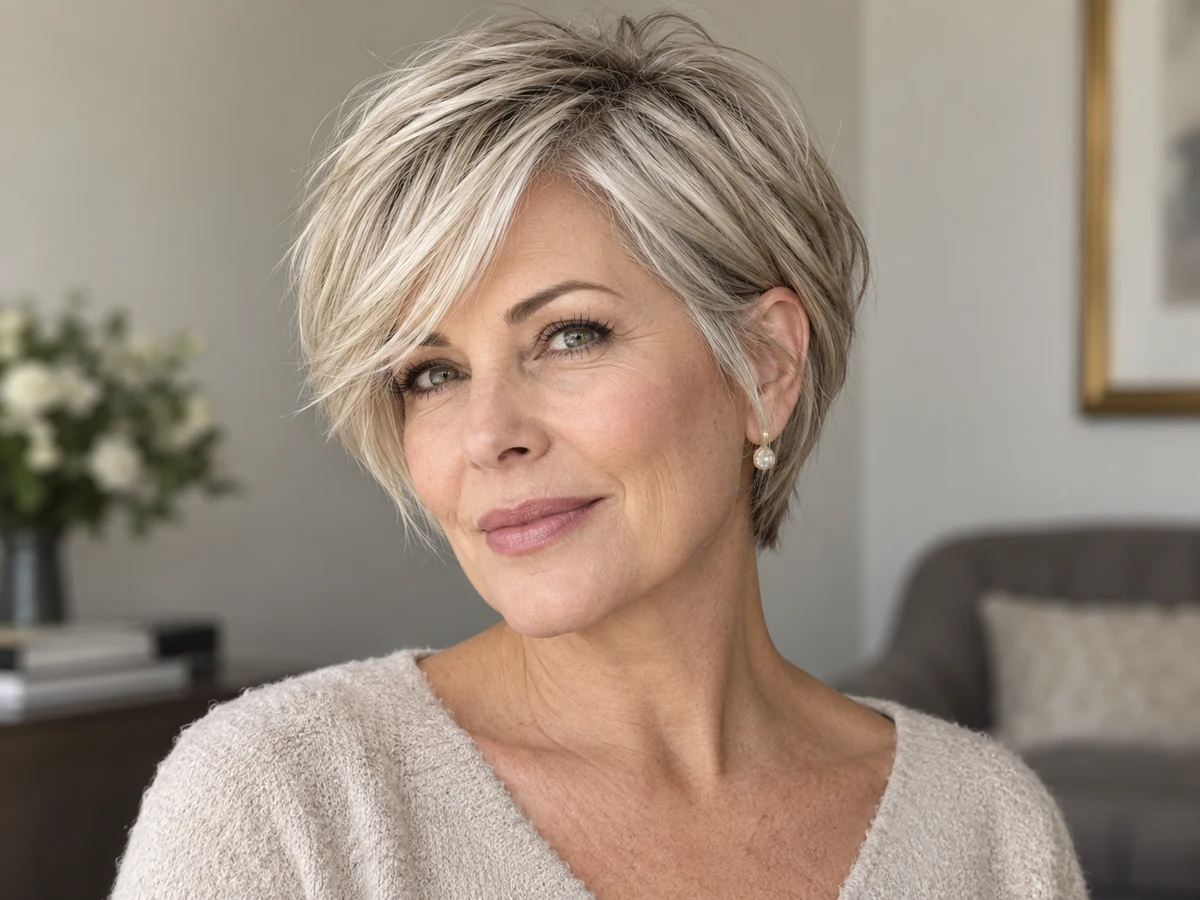
Face framing can do more than adding layers everywhere
A few pieces around the cheekbones, jaw or below the chin can change the front view while leaving the rest of the haircut easy to maintain.
This is especially useful if you like your current length but want a fresher shape without sacrificing ponytail or tuck-behind-the-ear options.
Texture determines whether medium hair feels light or heavy
Straight hair may need subtle layering for movement. Wavy hair often needs less because the bend creates its own shape. Curly hair requires shrinkage-aware length planning.
Styling, maintenance and grow-out
Choose a cut that survives your lowest-effort styling day. Medium hair should still look deliberate when air-dried, brushed out or pulled back, not only after a salon blowout.
Choose the length around the routines you actually use
Shoulder and collarbone lengths are popular partly because they leave options open. If you regularly use a ponytail, clip or low bun, check that the shortest face-framing pieces still reach the way you need them to. If tying back is unimportant, you have more freedom to shorten the front for a stronger shape.
The practical endpoint is the one that works on ordinary days. Hair that repeatedly catches on a collar, flips at the shoulder or falls forward when you bend down can become more annoying than a cut that looked slightly better in the salon mirror.
Parting and fringe can change the haircut without changing the length
A middle part, side part and long curtain fringe can make the same medium cut feel quite different. Before adding more layers, test whether changing the part already creates the lift or face framing you want.
If you wear glasses, check fringe and temple pieces with the frames on before the final detail work. The separate Haircuts for Women Over 50 Who Wear Glasses guide covers that interaction in more detail.
Plan the grow-out around what loses shape first
Medium cuts often grow more forgivingly than precision short shapes, but different details can fail at different times. The fringe may become awkward before the perimeter feels long, or the crown may lose lift while the ends still look healthy.
Use that first problem to decide what the next appointment needs. A front tidy-up, light reshaping or perimeter trim can be more useful than automatically removing length from the whole haircut at every visit.
Define the endpoint, fullness and face frame
- Choose the dry endpoint: jaw, shoulder or collarbone.
- Say whether tying the hair back matters.
- Ask how much fullness will remain at the perimeter.
- Point to the shortest face-framing length you are comfortable with.
- Explain how much daily styling you realistically want.
Age is not the design rule
There is no required haircut length after 50. Density, texture, gray pattern, maintenance tolerance and personal style are more useful than age when deciding the shape.
A medium haircut should work with the hair you have now rather than with an age label.
Work with the texture you have now
Silver and pigmented sections do not always behave identically, and texture can also change over time for many reasons. The useful step is to judge the hair that is actually on your head now rather than assuming every section needs the same layer length or styling approach.
If some areas feel drier, springier or more resistant than others, point that out during the consultation so the cut can be balanced around the real mixed texture.
Fine hair usually needs enough perimeter weight
If density has reduced, too many layers can make the ends look thinner. A strong lower edge with carefully placed face framing often gives more visual fullness than aggressive layering.
Thick hair can support more internal movement
Dense hair may benefit from hidden weight removal so the medium length does not feel bulky. The outside line can stay polished while the interior becomes easier to manage.
Face framing should match your styling tolerance
Cheekbone-length pieces create more movement but may need daily attention. Below-chin or collarbone framing usually gives more flexibility for tucking, clipping and tying back.
Use styling time to decide how much layering you really want
If you prefer to wash, brush and go, keep the structure simple enough that the cut does not depend on curling every section. If you enjoy using a round brush, rollers or hot tools, you can support more visible movement through the front and crown.
Neither approach is more appropriate because of age. The useful distinction is whether the haircut still looks intentional with the amount of styling you are genuinely willing to do most mornings.
Choose the medium shape around density and routine
- Choose a stronger perimeter if you want fuller-looking ends.
- Choose longer layers if you want movement without losing density.
- Use face framing if you want visible change without changing the whole haircut.
- Keep enough length to tie back if convenience matters most.
Frequently asked questions
Can medium hair work well after 50?
Yes. Medium length is flexible and can be adjusted around density, face framing and styling preferences.
Should medium hair over 50 be layered?
Only if layers help the shape. Fine hair may need fewer layers, while dense or wavy hair can benefit from strategic movement.
Is shoulder length hard to maintain?
Usually not. It offers enough length for tying back and tends to grow out more forgivingly than a precision short cut.