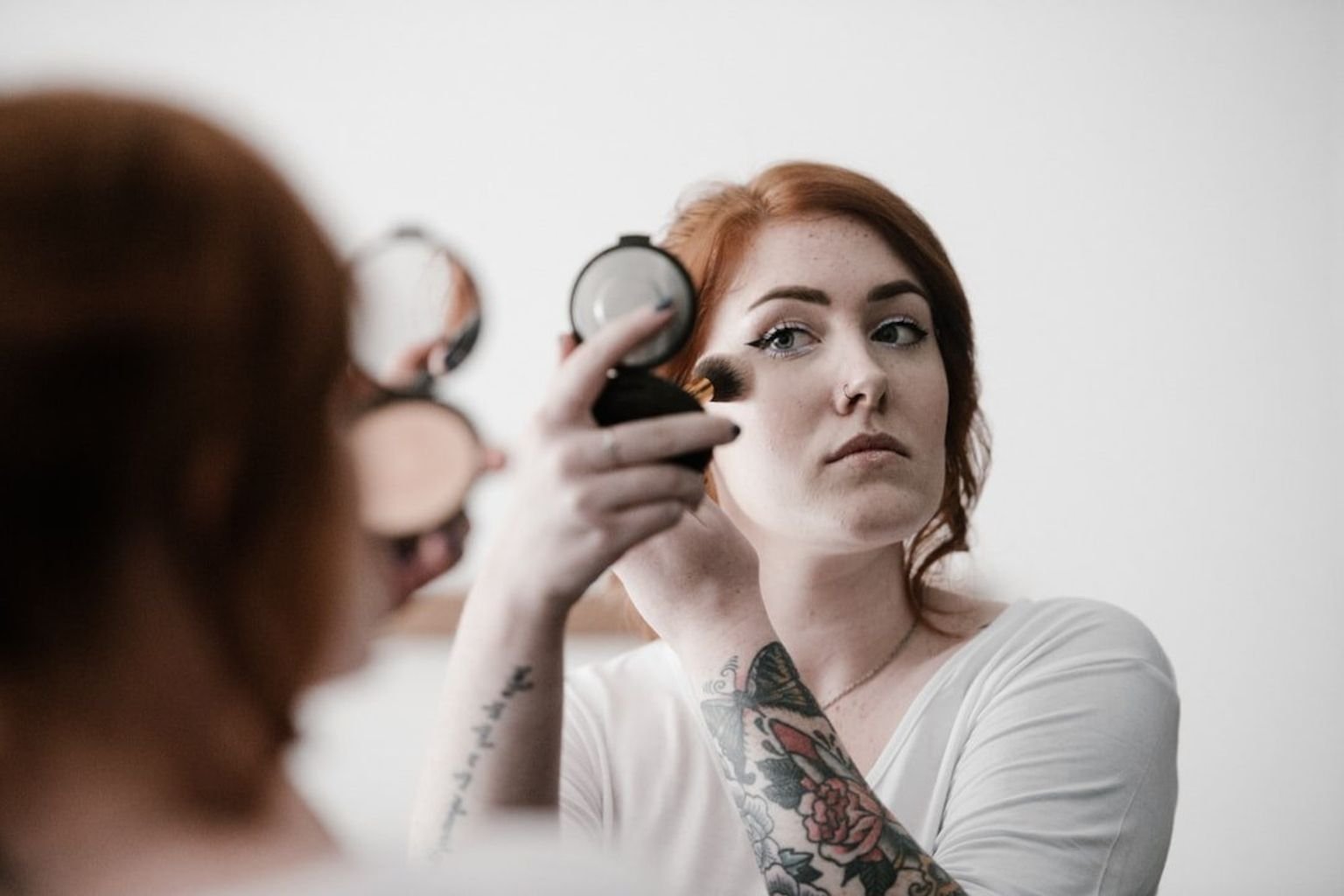
Blush can shape the face without relying on a separate contour step. Placement matters more than the amount: higher and more outward placement can lift the eye, while color kept closer to the apples creates a softer, rounder effect.
Before copying a reference photo, separate the placement idea from the model’s face shape, lighting and base makeup. Before You Copy a Beauty Trend breaks down what is worth translating and what should stay flexible.
Allure’s fall 2026 makeup coverage highlights a shift toward more blush and less hard contour, with color placed higher on the cheeks and diffused outward to create dimension. The practical appeal is that you can add life and shape at the same time without drawing obvious shadow lines.
Blush placement matters as much as blush color
The same rose or terracotta can look completely different depending on where it sits. Color concentrated on the apples feels rounder and more youthful. Color placed higher along the cheekbone feels more lifted and elongated.
Neither is universally better. Decide what you want the blush to do before you start blending.
“Less contour” does not mean “no structure”
Traditional contour uses a shadow-like tone to create the impression of depth. Blush can create structure in a different way: by placing color where you want attention and movement.
The effect is softer because you are not trying to imitate a hollow. You are using color to guide the eye.
Start higher if you want a lifted effect
Place a small amount of blush near the upper cheek and blend toward the temple. Keep most of the pigment on the outer half of the face rather than bringing a strong stripe toward the nose.
This placement can make the cheek look more extended without requiring a separate contour step. Diffuse the blush so there is no hard edge where the color suddenly stops.
Keep some color on the apples if you want freshness
High placement does not mean you must avoid the front of the cheeks. A little color on the apples can keep the makeup from looking overly directional.
You can place the strongest color higher, then use whatever remains on your brush or fingers to soften the center of the cheek. This gives the face warmth without creating two separate blush zones.
Cream blush is useful because it moves easily
A cream formula gives you time to adjust the placement before it sets. You can tap the edges out with fingers, a brush or a sponge and build gradually.
That makes it especially practical when you are learning a new placement. Start with less than you think you need. It is easier to add another thin layer than to erase a large patch of saturated color.
Powder blush can still create the same effect
The trend is about placement, not product category. Powder blush works well when you apply it with a light hand and a brush that lets you diffuse the edge.
If your base is already powdered, a powder blush may actually be easier to blend evenly than a cream placed over a very matte surface.
Berry, rose, nude and terracotta create different kinds of dimension
Berry shades look richer and can connect naturally with fall lip colors. Rose gives a familiar flushed effect. Nude blush can add gentle warmth without announcing itself, while soft terracotta creates an earthier result.
Do not choose a shade only because it is labeled “sculpting.” Choose a color you actually like seeing on your skin, then adjust the intensity.
Your base should still look like skin
Blush tends to look most convincing when it has some natural variation underneath it. If the complexion is completely flat and opaque, the cheek color may sit on top rather than feel integrated.
This is one reason the trend pairs well with bare-looking, selectively covered skin. You can even out the areas that need it without erasing every natural tone first.
You do not need to place blush according to a face-shape chart
Face-shape diagrams can be useful references, but real faces are three-dimensional and do not always fit one label. A placement that looks great on one “round” face may feel wrong on another.
Use a mirror and test small changes. Move the blush higher, lower or slightly farther outward and compare the balance. Your own features are more useful than a rigid template.
Blend the edge, not the color away
Over-blending can make you add more product because the blush keeps disappearing. Focus on softening the perimeter while leaving enough pigment in the center to make the placement visible.
A clean brush or sponge can help blur the outer edge without lifting all the color from the cheek.
Bronzer can stay, but it does not need to compete
If you enjoy bronzer, keep it. The shift is not a rule that says every sculpting product must leave your makeup bag.
Use bronzer where it gives warmth and blush where it gives color. If both are strong in exactly the same area, the cheek can become muddy. Leaving a little visual separation helps each product do its job.
Highlighter becomes optional when the blush has sheen
Some cream and liquid blushes already reflect light. If the cheek has enough glow, an extra stripe of highlighter may not add much.
This fits the broader polished-not-overdone beauty approach: look at what the face already has before automatically adding another step.
Strong eyes or lips may need a quieter cheek
When the smoky eye or lip is the main feature, blush can support the face without becoming another focal point. Use less product or choose a muted tone.
If the rest of the makeup is minimal, you can let the cheeks carry more color. Our soft smoky-eye guide shows the same balancing principle from the opposite direction.
A practical “blush instead of contour” method
- Apply your base only where you want coverage.
- Place a small amount of blush high on the outer cheek.
- Blend upward and outward toward the temple.
- Use the remaining product to soften the apple of the cheek if needed.
- Step back and check both sides before adding more.
- Add bronzer or highlighter only if the face still needs them.
Frequently asked questions
Can blush really replace contour?
It can replace contour when your goal is soft dimension rather than a carved shadow effect. Blush creates structure through color and placement, not by imitating a hollow.
Where should I put blush for a lifted look?
Start on the upper outer cheek and diffuse toward the temple. Adjust the exact height based on what looks balanced on your features.
Is cream blush better than powder?
No. Cream can be easy to move and build, while powder may blend more naturally over a powdered base. Use the formula that works with your routine.
Can I still wear bronzer?
Yes. Use bronzer for warmth and blush for color, and keep the layers controlled so they do not turn into one muddy area.