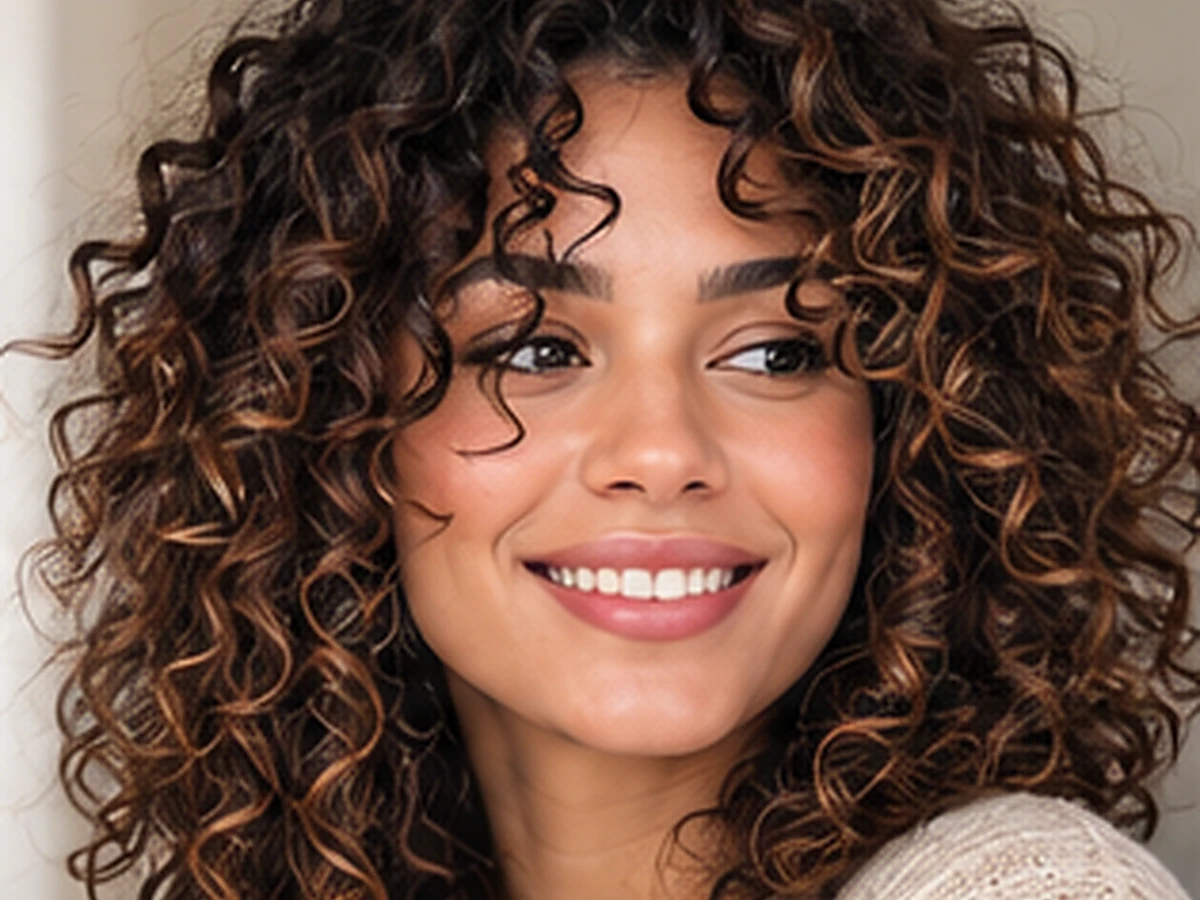
Medium-length curls sit in a useful middle ground: there is enough length for the curl pattern to settle, but not so much weight that every layer disappears into the bottom of the cut. The challenge is that “medium” is not one fixed measurement on curly hair. A cut that reaches the collarbone when wet may spring to the shoulders—or higher—once it dries.
That makes the starting point simple: choose the dry shape you want, then work backward to the length and layering that can create it. Curl pattern, shrinkage, density and how you normally style your hair matter more than copying the exact line of a straight-hair reference photo.
For the wider haircut decision, compare How to Choose a Haircut. If you are deciding between lengths, the existing short curly haircut guide and long curly haircut guide show how the same curl pattern behaves with more or less weight.
Start with where you want the curls to land when dry
Shoulder length and collarbone length can look dramatically different once curls contract. Before cutting, decide whether your target is a shape that sits around the shoulders, clears them, or stretches closer to the collarbone. That dry endpoint affects everything else: how much the sides expand, how the perimeter swings, and whether front pieces fall near the cheekbones or jaw.
People with strong shrinkage often benefit from leaving more length than the finished photo appears to show. Looser curls and waves usually need less allowance. A stylist who works regularly with curly hair should evaluate the pattern in its natural state instead of assuming every section will shrink equally.
The best medium curly shape is usually about weight distribution
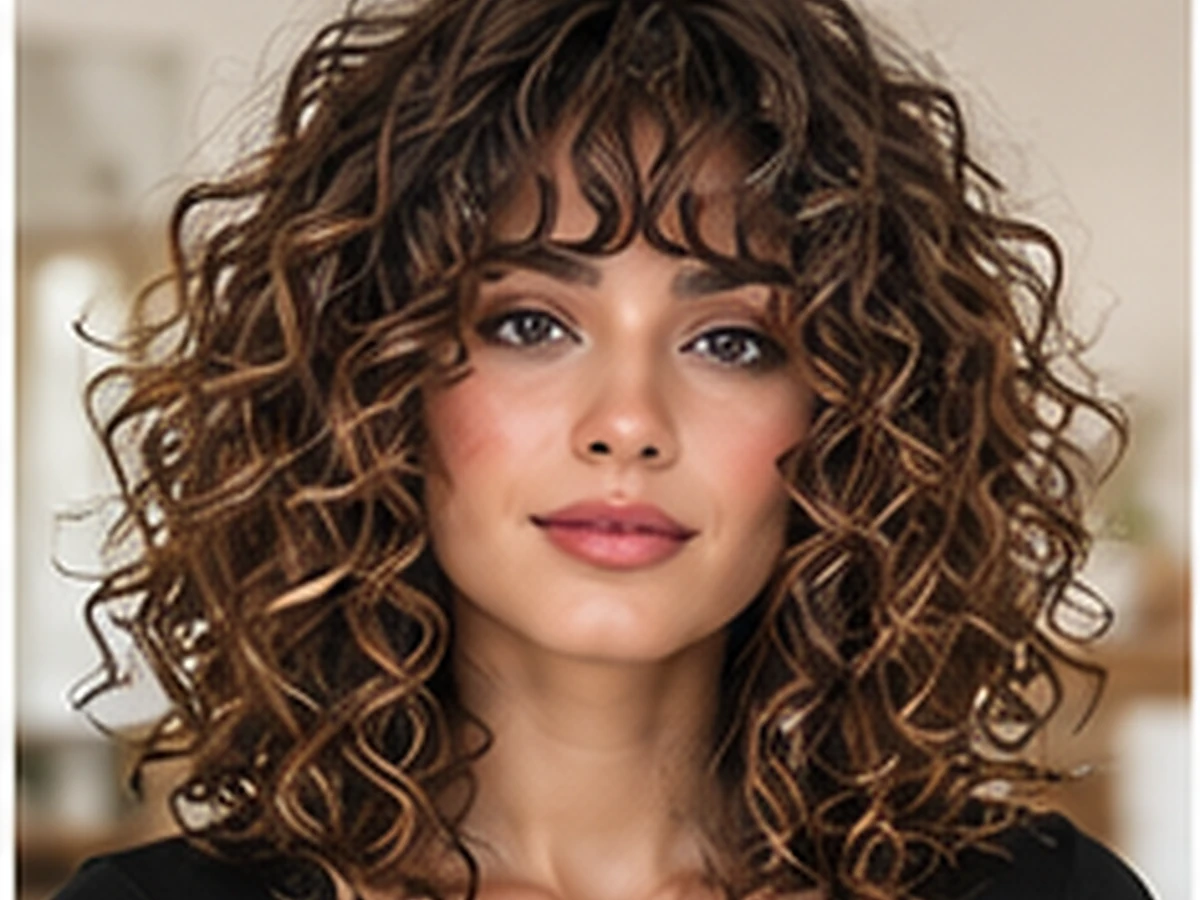
A medium curly cut can be rounded, softly triangular, elongated, shaggy or closer to a curly lob. None of those shapes is automatically better. Choose where you want the fullness to sit before deciding how the layers should be distributed.
- Rounded shape: useful when you want balanced volume from the crown through the sides rather than most of the fullness at the perimeter.
- Elongated shape: keeps more weight through the lower half and can make dense curls feel calmer without flattening the crown completely.
- Curly shag: adds shorter internal and face-framing layers for more movement and a deliberately airy outline.
- Curly lob: keeps a stronger perimeter and usually feels neater when you prefer a more controlled silhouette.
The “triangle effect” happens when too much weight collects at the bottom while the upper part of the cut stays comparatively flat. The answer is not to thin every curl. Better layer placement redistributes weight while preserving enough density for the ends to look healthy.
Layer placement matters more than simply asking for layers
“Add layers” is too vague for curly hair. Layers can begin near the crown, around the cheekbones, below the jaw or only through the lower third. Each placement changes the outline.
Shorter crown layers create lift and separation, but they can also expose more shrinkage. Longer layers keep the shape calmer and preserve weight. If your curls are fine or sparse, a small number of well-placed layers often works better than aggressive graduation throughout the head. Very dense curls may need more internal weight management, but that should still respect the curl groups rather than leaving the surface frizzy and disconnected.
The existing medium layered haircut guide is useful for understanding layer placement generally; for curls, add shrinkage and curl grouping to that decision.
Face-framing pieces and curly fringe should be planned in their natural state
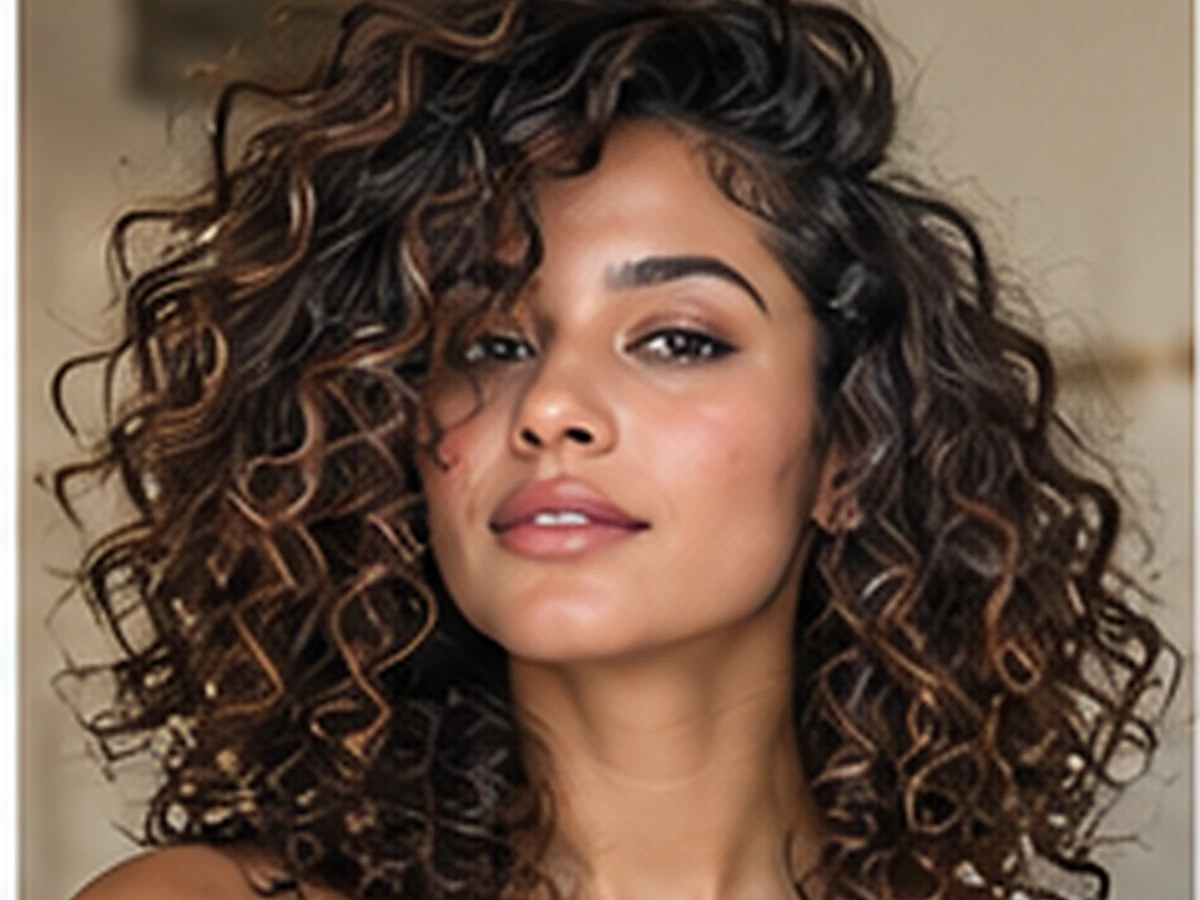
Curly face framing can begin at the cheekbones, jaw or lower, depending on how much movement you want around the front. Shorter pieces can brighten the face and stop a medium cut from feeling heavy, but they also become the first sections you notice when humidity or shrinkage changes the pattern.
A curly fringe can work beautifully when the stylist leaves enough room for the curl to spring. If you wear your hair both curly and stretched, say that before the cut. The same fringe cannot be optimized for every styling method without compromise. For more options, compare Bangs and Fringe Ideas.
Fine, medium and dense curls need different weight strategies
Fine or lower-density curls
Protect the perimeter first. Too many short layers can create movement at the top while making the ends look transparent. Ask for enough graduation to release the curl pattern without sacrificing the visual thickness of the lower edge.
Medium density
This density usually gives the widest range of options. You can keep a stronger lob-like perimeter or use more visible layering, depending on whether your priority is polish or volume.
Very dense curls
Removing weight can improve movement, but indiscriminate thinning can create frizz and short pieces that push outward. Internal layering, careful sectioning and strategic weight removal are more useful than simply “taking bulk out everywhere.”
Parting, crown direction and curl pattern can change the same cut
A center part, side part and natural no-part shape can make identical layers read very differently. If your curls consistently fall to one side, forcing a perfectly centered shape may create more daily work than it solves. Let the stylist see where the hair naturally separates before deciding how much crown length to remove.
Cowlicks and stronger curl at the temples or nape also deserve attention. A section that springs two inches shorter than the rest should not automatically receive the same cutting line. Medium curly hair looks more intentional when the shape is designed around those differences rather than corrected afterward with extra product.
Use reference photos for shape, not as a promise of identical curls
Reference photos are still valuable, but separate the haircut idea from the curl pattern in the photo. You may like the rounded outline, the cheekbone-length front pieces or the amount of crown lift even if your own curls are tighter or looser.
When showing a photo, point to two or three specific features you want copied and one thing you do not want. That gives the stylist enough direction without asking your hair to behave like somebody else’s texture.
Choose a cut that still makes sense on an ordinary wash day
A good medium curly haircut should not depend on a salon blow-dry to show its shape. Your usual styling method—air-drying, diffusing, brush styling, finger coiling or a combination—changes how the layers settle.
For many curl patterns, applying product while the hair is evenly wet helps curls group before drying. The exact product mix is personal: some hair needs a light leave-in and mousse, while denser or drier curls may prefer a cream plus gel. The haircut should reduce the amount of correction you need to do afterward rather than forcing you to rebuild the shape every morning.
When diffusing, moving the hair aggressively before a cast has formed can break up curl clumps and create more surface frizz. If volume is the goal, lift at the root after the shape has begun to set rather than roughing up the lengths from the start.
How medium curls grow out
Curly cuts rarely grow in a perfectly even visual line because different sections contract differently. Face-framing pieces may appear to “grow” faster because they become heavier and stretch sooner; tight curls near the crown may keep looking shorter for longer.
Instead of trimming by a fixed calendar alone, watch the shape. A refresh becomes useful when the crown collapses, the perimeter gets bottom-heavy, or the front no longer connects cleanly to the rest of the cut.
What to tell your stylist
- Show the length you want when dry, not only where the wet hair should be cut.
- Explain how much shrinkage you normally see between wet and dry hair.
- Say where you want the most volume: crown, sides, lower half or evenly distributed.
- Describe your real styling routine, including whether you diffuse, air-dry or sometimes straighten.
- If you dislike a triangular outline, ask how the layer plan will redistribute weight without thinning the ends too much.
- For fringe or face framing, agree on the shortest dry point before cutting.
A reference photo works best when you can explain what you like about it: the rounded outline, the short crown layers, the full perimeter, the face framing, or the amount of volume. That gives the stylist a design target rather than a picture to copy literally.
Frequently asked questions
Is shoulder-length hair a good length for curls?
Yes. It keeps enough length to show the curl pattern while still allowing layers to create movement. The exact result depends on shrinkage and density, so the dry endpoint matters more than the label “shoulder length.”
Do medium curly haircuts need layers?
Not always. A strong perimeter can suit fine or looser curls, while dense curls often benefit from some layering to stop weight collecting at the bottom. The amount and starting point matter more than whether layers are present at all.
How do I avoid a triangle shape?
Ask for weight to be redistributed through deliberate layering rather than aggressive thinning. The top and sides need enough movement to connect with the fuller lower section.
Can I have bangs with medium curly hair?
Yes. Curly bangs can be soft, full or piecey. They should be cut with the natural spring of the curl in mind and with enough length allowance for shrinkage.
Should curly hair be cut wet or dry?
Both approaches can work. A dry assessment shows the natural spring and shape, while wet cutting can give precise sectioning and structure. What matters is that the stylist understands how your curl pattern changes between wet and dry states.