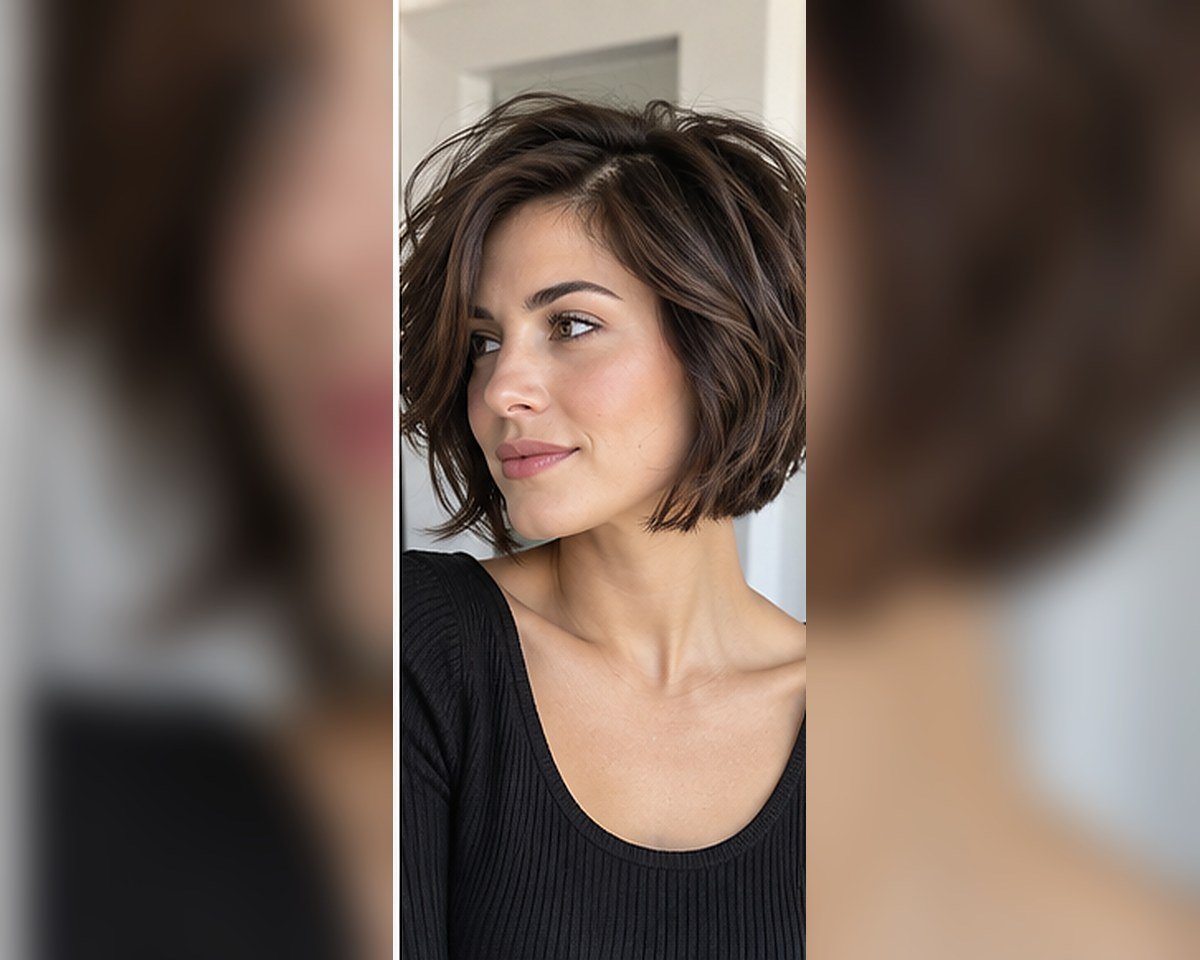
Thick hair gives a bob a beautiful outline. It also gives the stylist a lot of weight to manage.
That is why a short layered bob can look either effortless or unexpectedly wide. The difference is not simply how many layers are cut. It is where bulk is removed and where structure is deliberately kept.
Do not confuse layered with thinned out
Thick hair often benefits from weight removal, but indiscriminate thinning is not the same as shaping.
When too much hair is removed from the ends, thick hair can become frizzy, fluffy or uneven as shorter pieces push against longer ones. The haircut may feel lighter in the salon but become harder to control at home.
Start with StyleVeya’s haircuts for thick hair if you want to understand the broader balance between density and shape.
Choose the length before the layers
A chin-length bob and a neck-length bob behave differently on thick hair. At the chin, the cut feels sharper and more graphic. It can also create width if the hair naturally expands.
A slightly longer bob that clears the jaw gives thick hair more room to fall vertically. That extra inch or two can be the difference between controlled movement and a shape that feels too round.
If you want a shorter cut but are concerned about bulk, compare StyleVeya’s short haircuts for thick hair.
Where layers help most
Thick hair usually needs movement through the middle of the haircut more than at the very bottom.
Soft internal layers can reduce the shelf effect that sometimes develops underneath a bob. Face-framing layers can stop the front from hanging as one solid block. Light crown layering can add shape when the hair is very heavy at the top.
The bottom edge, however, often benefits from staying relatively substantial. That is why many thick-haired clients prefer a layered bob that still has a visible perimeter rather than a cut where every section is highly graduated.
Straight, wavy and curly thick hair need different plans
On straight thick hair, the main challenge is often weight. Internal debulking and carefully placed surface layers can give the cut movement without making it fuzzy.
On wavy hair, the challenge shifts toward expansion. The stylist needs to see where the wave bends before deciding where a layer should end. StyleVeya’s wavy bob haircut ideas show how much the natural bend affects the final shape.
Curly thick hair needs even more respect for shrinkage. A bob can jump significantly higher once dry, so the shape should be judged in its natural state rather than only while wet.
The back of the haircut deserves attention
Many bob photos focus on the front. Thick hair makes the back equally important.
A heavily stacked back can become bulky if too much graduation is packed into a small area. A very blunt back can feel heavy and rigid. The middle ground is usually a softly shaped nape with enough internal removal to let the hair sit closer to the head.
If you like a stronger graduated silhouette, compare it with StyleVeya’s stacked bob haircuts before deciding how much lift you want at the back.
Ask where the bulk will be removed—not just whether the cut will be layered
Two bobs can have the same visible length and still behave very differently if one removes weight through the interior while the other cuts most of the movement into the surface. On thick hair, this distinction matters because the wrong kind of layering can make the cut expand instead of settle.
A useful salon question is: “Which sections are you removing weight from, and which sections are you preserving for shape?” That gives you more information than simply asking for “lots of layers.”
Check the silhouette from the side and back
Thick hair can look controlled from the front while building too much volume at the occipital area or nape. Before the cut is finished, look at the side and back profile as well as the mirror view from the front.
If the back feels too round or stacked, a small amount of internal adjustment may create a cleaner result without shortening the whole bob.
Grow-out can expose hidden weight
A layered bob may feel light immediately after the appointment but become heavier through the sides as shorter internal sections grow. Ask which areas are likely to bulk up first and whether a maintenance trim can target those zones without changing the overall length.
Parting and ear-tucking can change where the bulk sits
Thick hair can look balanced with one part and too wide with another because the weight shifts across the crown and temples. If you change your part often, tell the stylist before the internal shaping is finalized.
Ear-tucking matters too. Hair that is repeatedly pushed behind the ear can spring outward or create a dense pocket at the temple when released. Check the cut both tucked and untucked before the appointment ends.
Humidity changes the behavior of short thick hair
Dense straight or wavy hair may expand more on humid days, especially if the ends have been over-thinned. That does not mean the answer is more thinning. Often the better approach is preserving a stronger outer line while removing weight selectively inside the areas that actually feel bulky.
If your hair changes a lot with weather, mention that before deciding how much surface texture to add.
Daily styling should not be the only thing controlling the shape
A short layered bob can be polished with a brush or heat tool, but the cut should still look coherent when you air-dry or do a quick rough dry. If the sides only sit correctly after repeated smoothing, the internal balance may be working against your natural density.
Ask to see the shape after the hair has been allowed to fall naturally, not only immediately after styling.
Choose the bob structure before asking for more layers
- Keep a strong perimeter if you want the bob to retain a polished outline.
- Remove weight internally if the sides or back feel heavy.
- Keep surface layers controlled if your hair tends to frizz or expand.
- Choose slightly more length if chin level creates too much width.
Styling a thick layered bob
A well-cut bob should not require constant flat-ironing. For straight hair, smoothing the roots and bending the ends slightly is usually enough. For wavy hair, a light curl cream or mousse can help the pattern form without turning the bob into a solid triangle.
For very dense hair, drying in sections matters more than piling on product. Getting the roots fully dry helps prevent the hair from expanding later in the day.
The StyleVeya Stylist Brief can help you turn these preferences into a clearer salon request.
Thick hair is not a problem a haircut has to solve. It is material the haircut should use well. A short layered bob looks strongest when it keeps the richness of thick hair while removing only the weight that gets in the way.