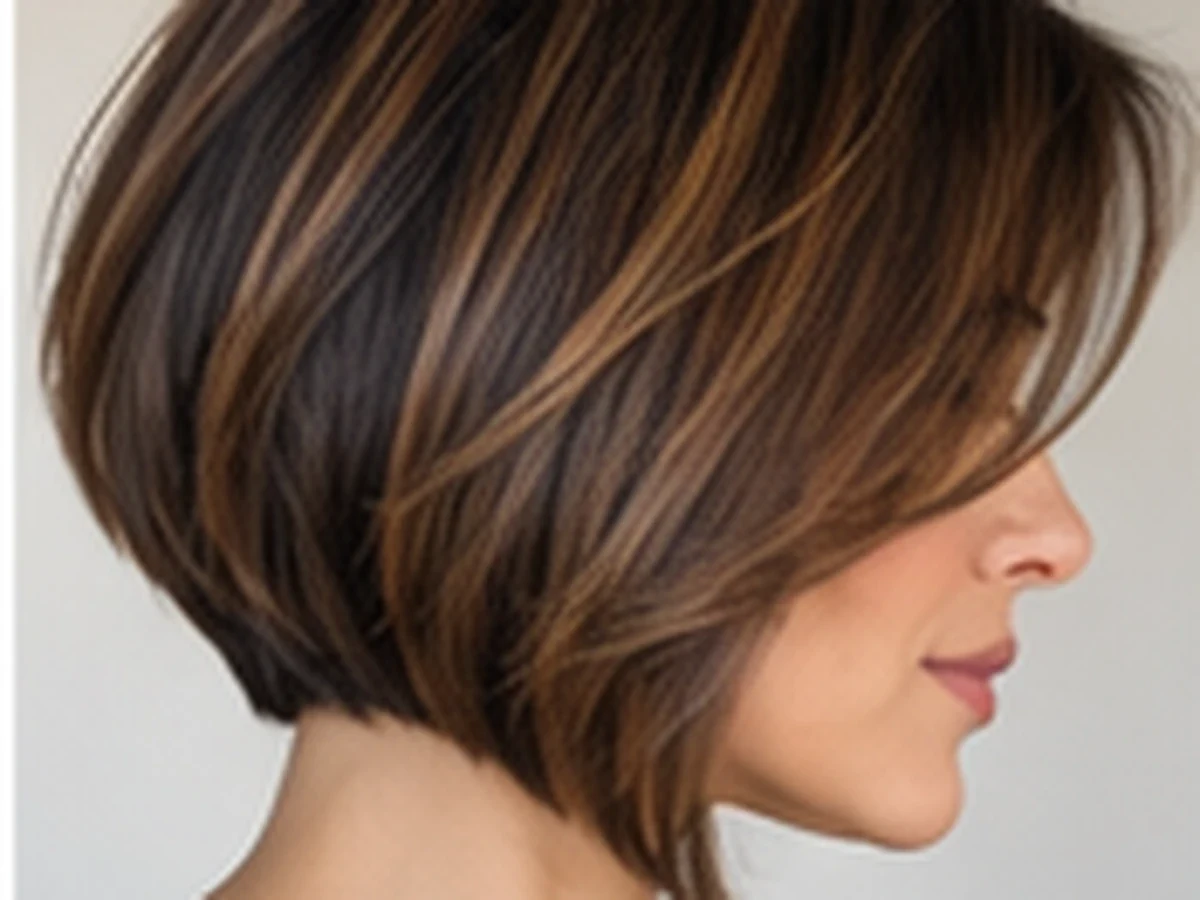
A stacked bob is defined by graduation through the back. The nape sits shorter, weight builds above it and the silhouette gains lift from the rear rather than relying on a straight one-length perimeter.
A restrained stack usually grows out more softly. A steeper stack creates stronger crown lift and a more sculpted back view, but it also needs more regular reshaping. If you want a forward-sloping line without as much graduation, compare Angled Bob Haircuts. If you want a bob without a short nape, use Long Bob Haircuts.
The position of the graduation controls the whole back view
A low stack gives a softer, more understated curve. Raising the graduation creates more lift and a rounder profile, but placing it too high can make the crown feel bulky or overly sculpted. The best position depends on head shape, density and how much volume your hair creates on its own.
Ask to see where the fullest part of the back will sit. That is often easier to understand than asking for a certain number of layers.

The nape can be clean without being severe
A stacked bob does not have to expose the neck dramatically. The back edge can be tapered close, left slightly longer or softened so the grow-out is less obvious. A very short nape makes the haircut look sharper but also reveals natural growth patterns sooner.
If you have strong cowlicks or hair that flips at the neckline, mention them before the back is cut too short. Leaving a little more length can sometimes make the shape easier to manage.
Front length should balance the rounded back instead of feeling disconnected
The front of a stacked bob can sit near the jaw, below the chin or slightly longer. A shorter front makes the haircut feel more compact; longer front pieces create a smoother transition from the lifted back and give you more room to tuck or soften the face frame.
Decide how you normally part the hair before the front is finalized. A side part shifts more weight to one side, while a center part makes the front lengths read more evenly. If you add fringe, keep it deliberate so the front does not become visually busier than the graduation at the back. Bangs and fringe ideas can help you compare those options separately.
Fine hair and thick hair need opposite kinds of control
Fine hair can benefit from a subtle stack because the shorter back supports the layers above it and can create lift without relying on heavy styling. The outer perimeter still needs enough weight, however; too much texturizing can cancel out the fullness the cut is meant to create.
Thick hair may need internal weight removal so the rounded back does not expand into a bulky wedge. That work should happen selectively rather than through aggressive thinning of the visible surface. If density is the deciding factor, the thick-hair guide and fine-hair guide explain those differences in more detail.
Straight, wavy and curly textures show the stack differently
Straight hair makes the graduation easiest to see, so the back can look very polished but also more obviously constructed. Wavy hair softens the stacked layers and can make the shape feel less sculpted.
Curly hair can wear a stacked bob, but the graduation needs to be planned around dry shrinkage and natural width. A high stack on curls can create much more crown roundness than expected, while too much internal removal can weaken the lower shape. For curl-specific decisions, compare curly bob haircuts before choosing how pronounced the stack should be.
A modern stacked bob usually looks less engineered
Very rigid graduation, excessive crown height and an overly rounded back can make the cut feel dated if that is not the look you want. Softer graduation, a more natural perimeter and movement through the front keep the shape recognizable without making every layer visible.
Texture also changes the mood. A little natural bend can make the stack feel softer without removing the back lift completely.
The more precise the stack, the sooner growth changes it
Because the nape and graduation are central to the haircut, even modest growth can shift the balance of the back. A softer stack is more forgiving; a short, sculpted version will usually need reshaping sooner if you want to keep the original profile.
Think about styling honestly. If you do not like blow-drying, avoid a shape that depends on strong round-brush lift at the crown. The cut should still sit well on the days when you do less.
If you prefer longer gaps between appointments, keep the nape a little softer and the graduation lower. That usually allows the haircut to grow toward a regular bob more gracefully instead of losing its balance abruptly.
What to discuss before cutting the back
- How exposed should the nape be?
- Where should the fullest point of the graduation sit?
- Should the back look rounded, softly tapered or more angular?
- Where should the front finish when the hair is dry?
- How much internal weight needs to be removed for your density?
- Do you normally air-dry, diffuse or blow-dry smooth?
- How forgiving do you want the grow-out to be?
If you are deciding between a stack and a stronger front-to-back angle, compare inverted bob haircuts. For the bigger haircut decision, use the haircut planning guide.
Frequently asked questions
Is a stacked bob the same as an inverted bob?
They can overlap, but the emphasis differs. A stacked bob is defined mainly by graduation and lift through the back; an inverted bob is defined more by the shorter-back, longer-front direction.
Does a stacked bob work for fine hair?
Yes, especially when the graduation is restrained and the perimeter keeps enough weight. Heavy thinning can make fine hair look less full.
Can curly hair wear a stacked bob?
Yes, but the graduation should be judged in the dry curl pattern. A lower, softer stack is often easier to control than a very high, heavily sculpted one because curls create their own lift and width.
Is a stacked bob low maintenance?
A soft stack can be manageable, but a very precise nape and pronounced graduation show growth sooner than a simpler bob. The maintenance level depends on how sharply you want the back shape to stay defined.