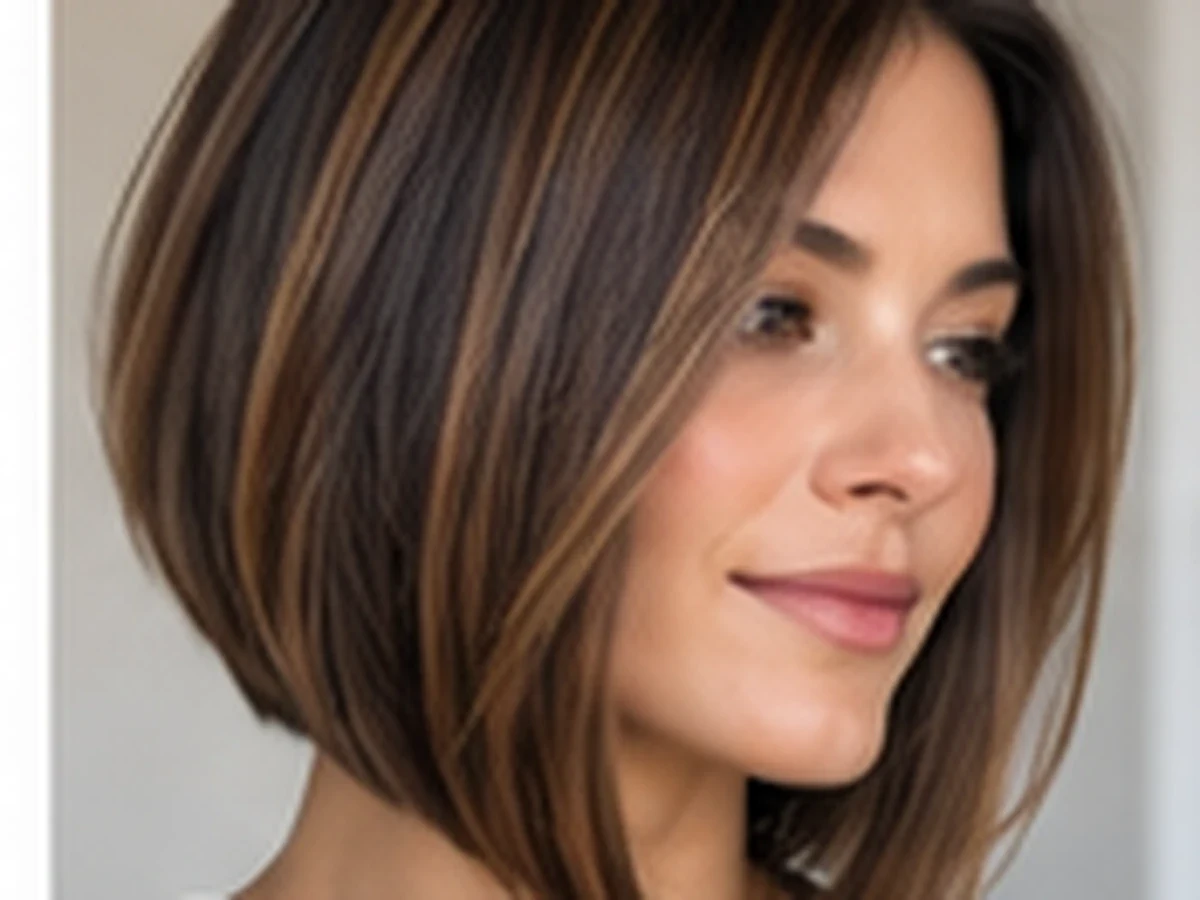
An angled bob is defined less by one exact length than by the line you see from the side. The back sits shorter, the front is left longer, and the transition can be almost invisible or intentionally sharp. That range matters because a soft angle behaves very differently from a dramatic one once you start styling it and letting it grow.
Salon language overlaps here: “angled” and “inverted” are sometimes used for the same short-back, longer-front family. On StyleVeya, this page covers the broader spectrum from a barely visible forward line to a moderate angle. For a clearly shorter back, stronger front extension and more obvious inversion, use Inverted Bob Haircuts. If you are still comparing bob families, start with the main Bob Haircuts guide.
A useful angle should still make sense when the hair is not freshly styled
A steep diagonal can look striking in a polished salon photo, but the shape should also work when your hair is air-dried, tucked behind an ear or slightly grown out. A softer angle usually gives you more room for those everyday variations. A stronger angle places more visual emphasis on the side profile and on the contrast between the nape and front pieces.
Before the cut starts, look at the reference from the side rather than only from the front. The same bob can look surprisingly different when the forward line is visible.

Choose the front and back as two separate decisions
The front does not have to stop at the jaw. It can sit at the chin, below it or closer to the shoulders, and each option changes how much you can tuck, wave or tie back. The back then needs to be short enough to create direction without becoming disconnected from the front.
This is also where neck shape, cowlicks and the natural fall of the hair matter. A very short nape can expose growth patterns that were hidden at longer lengths, so ask your stylist how the back is likely to sit without daily smoothing.
Straight, wavy, curly, fine and thick hair show the angle differently
Straight hair makes the geometry obvious, which means small inconsistencies in the perimeter are easier to see. Wavy hair softens the diagonal and can make a moderate angle feel more relaxed. Fine hair often benefits from keeping the outer line fairly solid, while thick hair may need internal weight removed so the back does not feel bulky.
Curly hair can wear an angled bob too, but the angle should be judged in the dry curl pattern rather than from stretched length. Tighter sections may spring higher than looser ones, so a perfectly straight wet guideline may not create an even visual angle once the curls settle. If curls are the main concern, compare curly bob haircuts for more detail on shrinkage and volume placement.
If density is a bigger concern than the angle itself, bob haircuts for fine hair goes deeper into preserving fullness through the perimeter.
Face framing should support the line, not compete with it
The longer front pieces already create framing around the jaw and lower face. Heavy short layers at the front can weaken the diagonal that makes the haircut distinctive. If you want softness, a light fringe or a few longer pieces can add movement without turning the front into a separate haircut.
For an angled bob, decide where you want the front to end and whether that endpoint should draw attention to the jaw, chin or collarbone area. Face shape can inform the choice, but it should not act as a fixed rule.
Parting and tucking can change how symmetrical the angle looks
A center part usually makes the front lengths easier to compare side by side. A side part shifts more hair to one side, which can make a soft angle appear stronger on one side than the other even when the perimeter is technically balanced.
If you regularly tuck one side behind your ear, mention it during the consultation. The tucked side exposes the jaw and side profile differently, and you may prefer a front length that still looks intentional in that everyday position.
Think about how the shape will look after several weeks, not only on day one
A moderate angle tends to become a softer bob as it grows. A very short back changes more quickly because the nape gains length while the front still feels long. If you prefer longer gaps between salon visits, keep some softness in the back and avoid making the angle more extreme than your routine supports.
For styling, start with what your hair already does. A smooth finish makes the line more graphic; loose bends make it less severe. You should not need to fight your natural texture every morning just to make the haircut readable.
What to settle before your stylist starts cutting
- Choose where the front should sit when the hair is dry.
- Bring at least one side-view reference so the angle is clear.
- Decide whether the back should feel soft, tapered or sharply defined.
- Explain how often you normally heat-style or air-dry.
- Show how you usually part the hair and whether you tuck either side behind the ear.
- Ask how much internal weight can be removed without weakening the perimeter.
- Discuss what the shape is likely to become as it grows.
To judge whether an angled bob fits your routine, the haircut planning guide can help you compare texture, density and maintenance before you commit to a specific shape.
Frequently asked questions
Is an angled bob the same as an A-line bob?
The terms are often used for closely related cuts: both move from shorter in the back to longer in the front. Salon terminology varies, so the reference photo and the amount of graduation matter more than the label alone.
Can an angled bob be subtle?
Yes. A small forward line can add direction without looking sharply geometric, and it usually gives you a more forgiving grow-out.
Does an angled bob need straight hair?
No. Waves and curls can wear the shape well; natural texture simply makes the diagonal look softer and means the dry pattern should guide the final line.
Will a side part ruin the angle?
No. It can make the two sides look less visually identical because more hair sits on one side. Plan the front length around the part you actually wear most often.