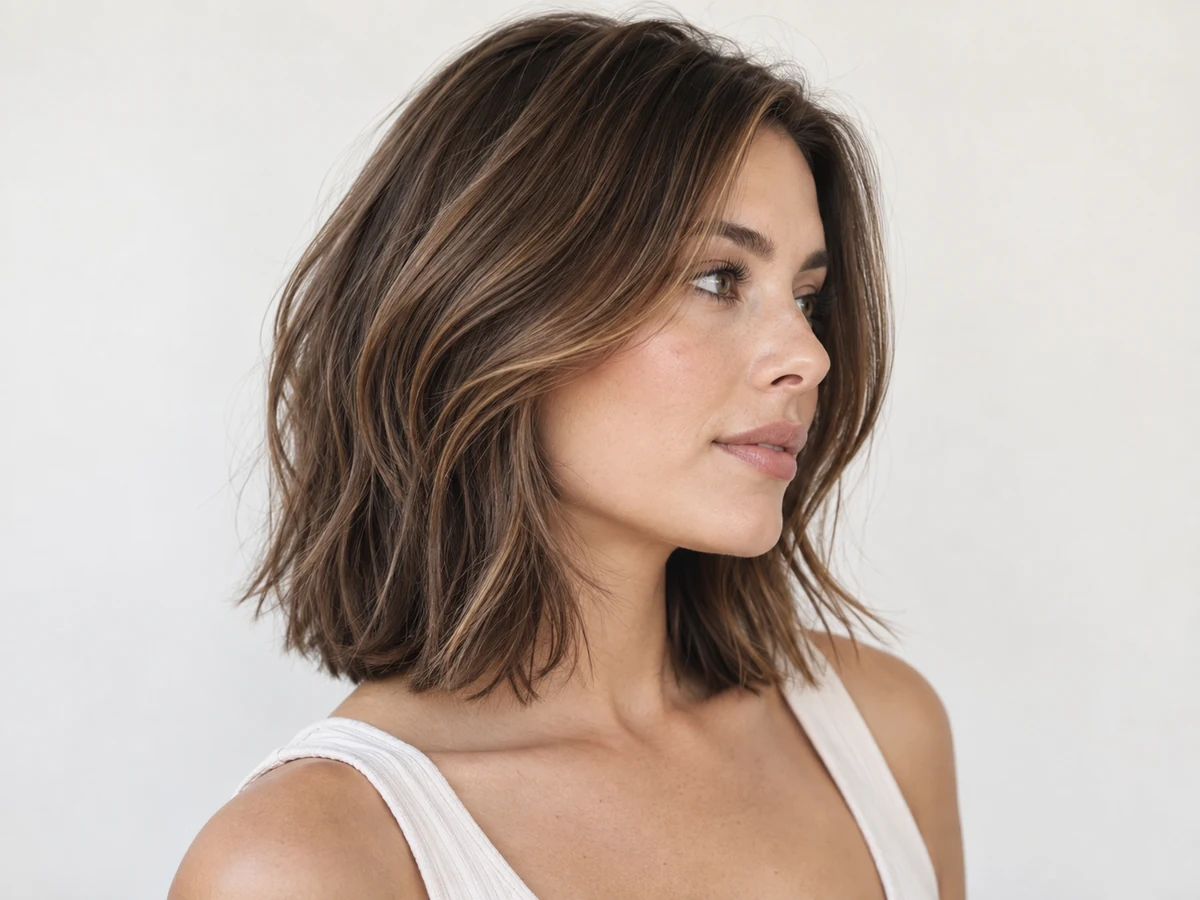
An inverted bob is built around direction: shorter through the back, longer toward the front. The defining choice is not simply “short in back, long in front,” but how strong you want that transition to look once the hair is dry and moving naturally.
Haircut terminology is not perfectly standardized, and some salons use “angled” and “inverted” interchangeably. Here, inverted bob means the stronger end of that family: a clearly shorter back, visibly longer front and a side profile where the front-to-back direction is part of the design. For a gentler forward line, see Angled Bob Haircuts. A Stacked Bob is different again because its main feature is graduation and lift through the back.
Choose the front length before deciding how aggressive the back should be
The front can stop at the jaw, below the chin or closer to the collarbone. Longer front pieces create more contrast and preserve more styling flexibility, but they also make the angle more obvious. If you want a softer result, keep the difference between front and back smaller.
The dry endpoint matters more than the wet measurement. Hair with bend, wave or natural lift may finish higher than expected, so the front should be planned around how you actually wear it.

The nape determines how polished or demanding the shape feels
A very short back gives the haircut more lift and makes the angle easier to see, but it also exposes growth patterns and changes quickly as the hair grows. A softer, slightly longer nape is more forgiving and usually needs less frequent reshaping.
Ask whether the back will be tapered, softly graduated or left with a fuller edge. Those details affect both the silhouette and how much daily smoothing you may need. If you have a strong nape cowlick or hair that flips at the neckline, show it before the back is shortened so the cut can work with the growth pattern rather than against it.
Fine, thick, straight, wavy and curly hair need different internal structure
Fine hair usually benefits from a stronger outer line and restrained layering so the ends keep visible density. Thick hair can support more internal weight removal through the back, but removing too much from the surface can make the cut look disconnected.
Wavy hair softens the geometry and can make a sharp inversion look more relaxed. Very straight hair shows the angle clearly, which makes precision at the perimeter more important.
Curly hair can wear an inverted shape, but the front-to-back difference should be assessed in the dry curl pattern. Shrinkage can reduce or exaggerate the visual angle from one section to another, so the stylist may need to leave tighter curls longer to preserve the intended silhouette. For curl-specific planning, compare curly bob haircuts.
If density is your main concern, the haircut planning guide helps you weigh strand thickness, density and maintenance together.
Parting and face framing can change how dramatic the front looks
A center part makes the longer front pieces read more evenly on both sides. A side part shifts more hair to one side and can make the angle feel stronger or softer depending on where the heavier side lands.
If you regularly tuck one side behind the ear, test the front length in that position before cutting. Tucking exposes more of the jaw and neck, so a front section that looks balanced when loose may feel noticeably shorter once it is moved back.
Heavy short face-framing layers can interrupt the clean front-to-back line. If you want softness, longer face-framing pieces or a restrained fringe usually preserve the inverted shape better. Bangs and fringe ideas can help you compare those front options separately.
Inverted, angled and stacked bobs overlap, but the emphasis is different
Salon labels are not perfectly standardized, which is why reference photos are more useful than terminology alone. An inverted bob generally emphasizes the shorter-back, longer-front relationship. An angled bob can use a similar line with less graduation, while a stacked bob relies more heavily on graduation through the back to build lift.
If you like all three, compare the side and back views of your references. The back shape often reveals the real difference faster than the front view does.
A sharper angle usually asks for more maintenance
The shorter the back and the stronger the diagonal, the sooner growth changes the intended silhouette. A gentle inversion tends to grow toward a regular bob and is easier to live with between appointments. A dramatic version keeps its identity only if the back stays controlled.
Styling should match the finish you actually want. Smooth styling makes the line look crisp; loose bends make it softer. If you mostly air-dry, the haircut should still look intentional without depending on a flat iron or round brush every morning.
Think one appointment ahead as well. If you want longer gaps between trims, a softer nape and a moderate front-to-back difference will usually age more gracefully than a very short back with a steep diagonal.
What to settle in the consultation
- Choose the front length when the hair is dry.
- Show a side-view reference that clearly shows the amount of angle.
- Ask how short the nape will be and how it will be finished.
- Discuss whether the outside line should stay blunt or be softened.
- Show your usual part and whether you tuck either side behind the ear.
- Explain how you usually dry and style your hair.
- Ask how the shape will change as it grows.
For a wider comparison of related shapes, see the main bob haircut guide.
Frequently asked questions
Can an inverted bob work with different face shapes?
The cut is adaptable because the front length and angle can be changed. A more useful question is where you want the front to end and how much attention you want the line to place on the jaw, chin or neck area.
Can wavy hair wear an inverted bob?
Yes. Natural wave softens the geometry, so the stylist should plan the angle around the hair’s dry movement rather than expecting a perfectly straight line.
Can curly hair wear an inverted bob?
Yes, but the angle should be judged when the curls are dry. Different shrinkage through the front and back can change the apparent slope, so the cut may need to be adjusted section by section.
Is an inverted bob high maintenance?
A subtle version can be quite manageable. A very short back with a strong angle usually needs more regular reshaping because growth changes the silhouette quickly.