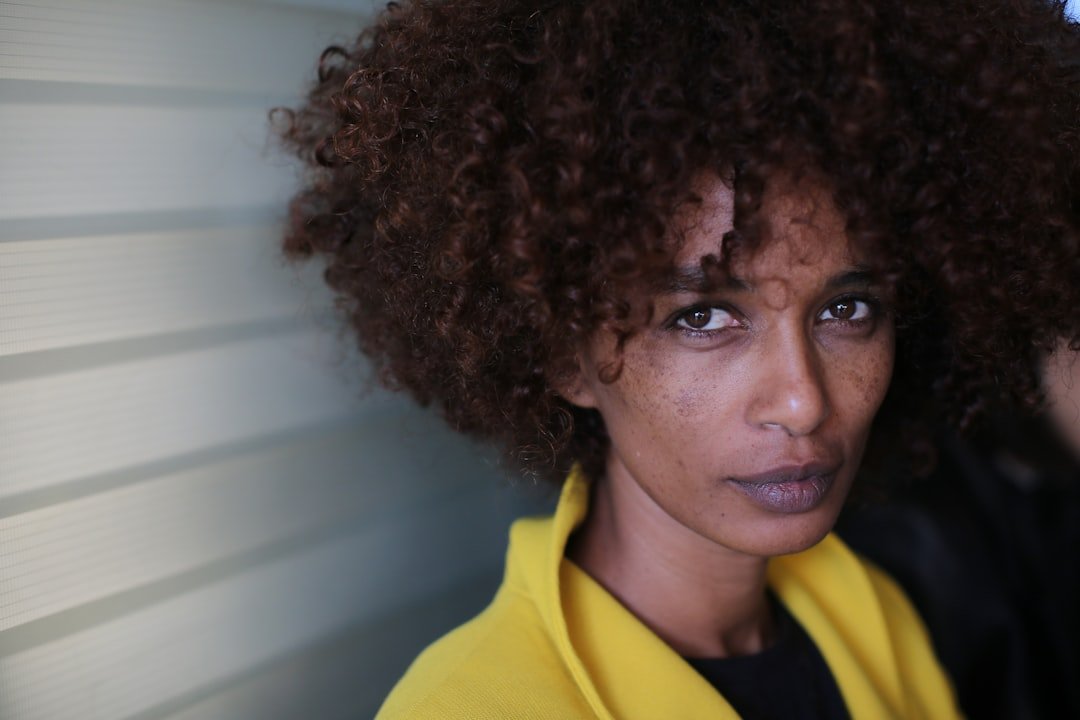
Hair that lands directly on the shoulders has a habit of changing direction. Ends can flip outward, one side can kick more than the other, and a smooth salon finish can turn into a bend as soon as the hair meets a jacket collar.
That is not always poor cutting. The shoulder is a physical surface, and the haircut needs to account for it.
This article is about shoulder contact and flip behavior. If your hair is both fine and naturally wavy, the more specific guide to shoulder-length haircuts for fine wavy hair covers perimeter density, wave placement and face framing.
The awkward zone is real
Lengths that finish just above the shoulder can swing freely. Lengths clearly below it have enough weight to fall past the contact point. Hair that sits exactly on top may be pushed outward by movement and clothing.
This is why a one-inch difference can matter more than adding another styling product.
Layers can amplify the flip
Shorter layers may spring outward while the heavier underlayer stays closer to the neck. If you like movement, that can be attractive. If you want a quiet perimeter, the layer placement may need to stay longer.
Compare different medium shapes in the shoulder-length haircut guide.
Texture decides whether the bend looks intentional
Straight hair may show one clean kick. Wavy hair can turn the shoulder contact into a soft bend. Curly hair may shrink above the contact point entirely. The same nominal length can behave very differently.
Bring your natural texture to the consultation instead of arriving with the hair straightened if you usually wear it air-dried.
Choose where you want the perimeter to live
If the flip bothers you, ask whether moving the perimeter slightly higher or lower would be more practical than fighting the current length. The Style Finder can help you compare shoulder, bob/lob and longer options against maintenance.
Sometimes the fix for flipping ends is not a new brush. It is choosing a length that does not spend all day colliding with your shoulders.
Clothing can change the flip during the day
A hoodie, coat collar or scarf can push shoulder-length ends outward even if the hair dried smoothly in the morning. If the flip appears mainly in colder months, consider whether clothing contact is part of the pattern before changing the haircut.
A small trim can move the contact point
Sometimes taking the perimeter slightly shorter moves it above the shoulder; sometimes preserving length lets it fall below. Which direction is better depends on texture, density and how much length you want to keep.
Ask the stylist to show you where the finished perimeter will sit against your shoulders while you are upright, not only while the hair is combed straight down.
The shoulder is a moving surface, not a fixed shelf
Hair may sit smoothly while you are standing still and then flip as soon as you turn your head, put on a jacket or move the straps of a bag. That means the cut should be judged through normal movement, not only in a salon pose.
If the flip bothers you, moving the perimeter clearly above or below that contact point is often more predictable than repeatedly trying to style against it.
Consider the wardrobe you actually wear
High collars, scarves and hooded jackets can push a shoulder-length cut outward for months of the year. If that is your daily reality, tell the stylist. A slightly different finished length or a more controlled internal layer can make the shape behave better with clothing.
Our shoulder-length haircut guide is useful for comparing blunt, layered and softly textured versions before choosing where the perimeter should sit.
Do not chase a single flipped section with home scissors
One piece turning outward may reflect its natural growth direction rather than excess length. Trimming that section shorter can make it spring more strongly. If the overall haircut works, first try changing the drying direction or moving the part slightly before removing more hair.
Parting can make one shoulder take more weight
A deep side part moves more hair toward one shoulder, which can increase contact and make that side flip more visibly. A center part distributes the ends more evenly but may reveal a natural difference in wave or growth direction.
Before changing the cut, check whether your usual part is contributing to the imbalance.
Tie-back needs can decide whether you go shorter or longer
If you need a low ponytail, moving the perimeter above the shoulder may remove that option even though it solves the flip. Letting the hair grow slightly below the shoulder may preserve tie-back while also clearing the contact point.
Choose the direction that solves the maintenance problem without creating a new one.
Second-day hair shows whether the flip is structural
If the ends flip only after sleeping, the issue may be compression rather than shoulder contact. If they turn outward every time the hair touches clothing, length is more likely to be part of the pattern.
Notice when the bend appears before assuming the haircut needs more layering.
Ask for the perimeter to be checked with the hair moving
Turn your head, let the hair fall forward and back, and put on the jacket or collar you wear often if practical. A shoulder-length cut should be assessed in motion because that is when the contact point actually affects the shape.
Grow-out can solve the problem naturally
If the hair is already close to clearing the shoulder, preserving length for a few more weeks may be easier than repeatedly trimming it back into the same contact zone. Ask whether the current shape can simply be maintained while the perimeter moves below the shoulder.
That can reduce styling work without changing the haircut family. If you are unsure, compare one photo with the hair tucked behind the shoulders and one with it resting naturally on them before choosing the next trim length.
Featured image: Photo by Ferhat M. Zupcevic on Unsplash.