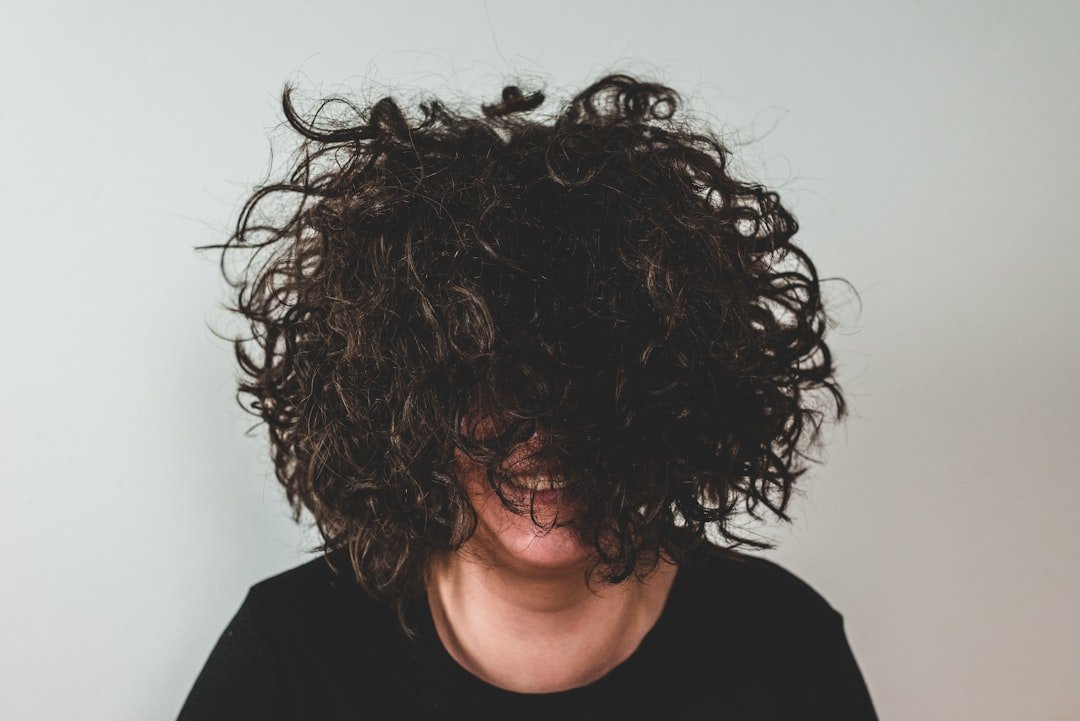
Wavy hair rarely behaves like a mirrored diagram. One side may form a strong S-bend while the other falls flatter; the front can curl away from the face on one side and toward it on the other.
Trying to force both sides into identical behavior can create more styling work. A good haircut aims for visual balance, not necessarily identical cutting on every section.
Growth direction can overpower the haircut
Natural parting, cowlicks and the direction the hair leaves the scalp all affect the first bend. If one side always collapses near the temple, removing more weight there may make the difference more obvious rather than fixing it.
Show your stylist the hair dry and unstraightened before the consultation begins.
Length changes wave formation
A wave can appear or disappear when a section is shortened by only a small amount. Shoulder contact can also make one side flip more strongly depending on posture and how the hair sits.
The wavy-hair hub covers how natural bend changes the way layers and perimeters read.
Ask for balance in the finished shape
Instead of asking for both sides to be cut exactly the same, describe the outcome: similar width around the cheeks, an even-looking perimeter, or enough movement without one side becoming bulky.
Your stylist can decide whether that requires slightly different weight removal or simply different styling at the end.
Style both sides according to what they need
One side may need a little more water, product or finger direction after washing. That is not a failure of the haircut; it can be the simplest way to work with an asymmetric natural pattern.
If you are comparing new shapes, use the Style Finder with your real texture and styling time in mind.
The goal is not to make wavy hair perfectly symmetrical. It is to make the overall haircut look balanced without asking you to fight one side every morning.
Sleep and habitual tucking can change one side
Wavy hair can flatten on the side you sleep on or the side you regularly tuck behind the ear. Before deciding that the haircut is uneven, wash and style both sides with the same routine and observe the pattern over more than one day.
If one side still behaves differently, treat that as useful information rather than a flaw.
Do not chase symmetry with repeated home trimming
Cutting the “longer-looking” wave at home can create a real length difference because stretched and contracted waves are not equal measurements. If the visual imbalance persists, let the stylist assess it dry.
Compare the sides after they dry naturally
When one side forms a stronger wave, the difference may disappear under a salon blowout. That is why reference photos of your own air-dried hair can be so valuable. They show where one side collapses, flips outward or shrinks more strongly after the styling tension is gone.
If possible, arrive with your hair in a familiar state rather than freshly flat-ironed. The stylist can still wash and style it, but seeing the natural asymmetry first gives useful information about the shape that needs to be balanced.
Equal lengths do not always create equal visual weight
A stronger wave can make one side look shorter even when both sides measure exactly the same. Cutting the longer-looking side to match may create a real length difference once the hair is stretched or blown smooth. The target should be visual balance in the finish you wear most, not ruler-perfect symmetry.
The wavy-hair hub has more examples of how layer placement and perimeter weight interact with natural bend.
Give the haircut a margin for day-to-day variation
Humidity, sleep position and wash-day timing can all change how waves form. A good cut should still look intentional when the stronger side is a little more active one day and calmer the next. That usually means avoiding corrections so extreme that they only work under one styling condition.
Parting can move the imbalance to a different place
A side part places more hair on one side and can make unequal wave strength look more obvious around the crown or temple. A center part distributes the weight more evenly but may expose differences in root direction.
Test the part you wear most before asking for corrective cutting. Sometimes a small parting adjustment solves more than removing another section of hair.
Shoulder contact can make only one side flip
If one shoulder sits slightly higher, if you carry a bag on one side or if the hair falls differently around a collar, the ends may turn outward on only one side. That is not always a cutting error.
Notice whether the flip disappears when the hair is lifted away from clothing before changing the perimeter.
Use photographs from several ordinary days
One photo can capture an unusually good or bad wave day. Bring two or three images showing the hair after normal air-drying so the stylist can see which asymmetry is consistent and which changes from day to day.
That makes it easier to correct a real pattern without overreacting to temporary variation.
Different styling on each side can be the simplest solution
If one side needs a little more water, diffuser time or finger shaping, that does not mean the haircut has failed. Natural asymmetry sometimes responds better to a small routine difference than to removing more hair.
Keep the adjustment minimal enough that the routine still feels practical.
Ask for a dry final check
After the haircut is styled, let the hair settle and compare both sides in your usual part. If one side still looks wider or shorter, a small dry adjustment can be more precise than guessing while the hair is wet.
The goal is a balanced finished silhouette, not mathematically identical sections. If you usually wear the hair tucked behind one ear, check that position too; it can change the apparent width and make a natural asymmetry look stronger than it does when both sides are down.
Featured image: Photo by Tamas Pap on Unsplash.