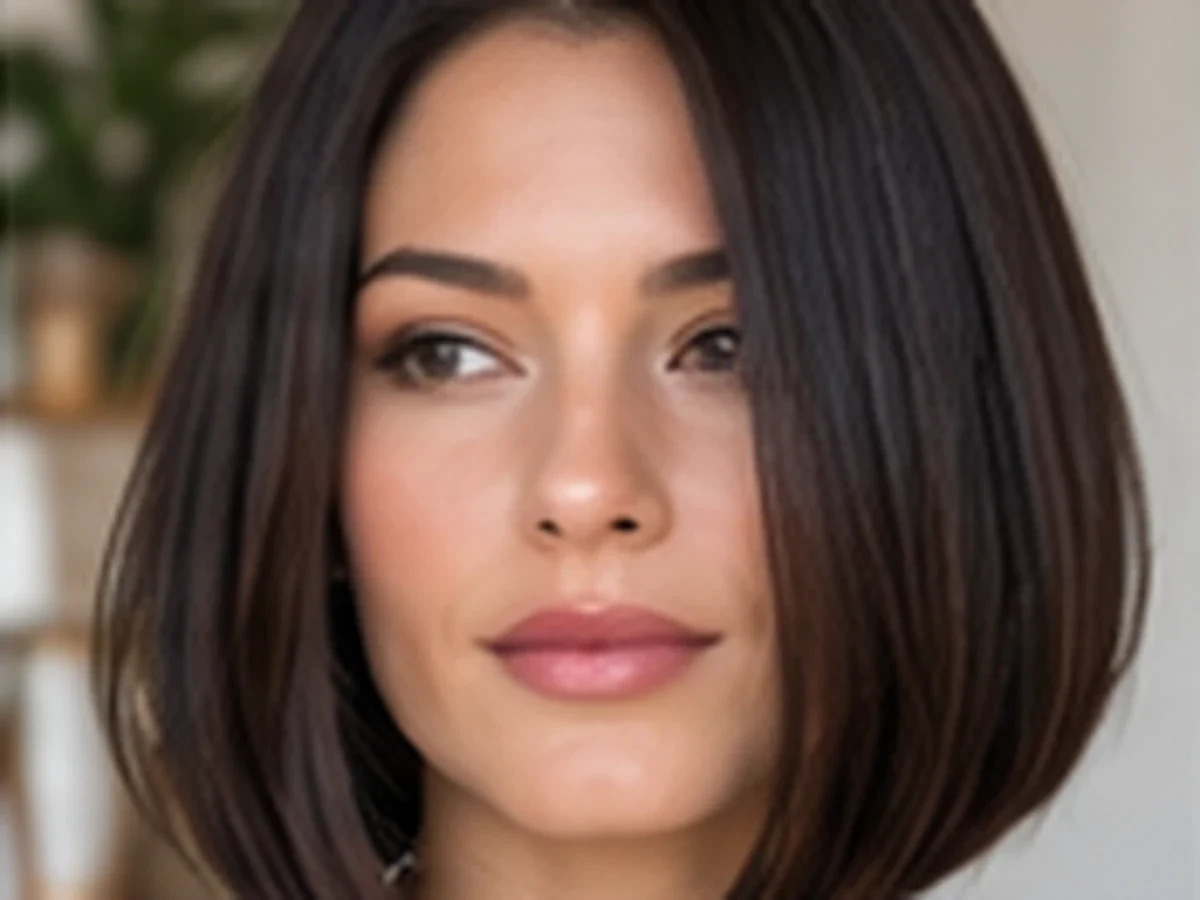
A blunt bob is defined by its outside line rather than by one exact length or mood. The ends stay visually dense instead of breaking into obvious layers, although some internal weight can still be removed without changing the blunt appearance.
Decide where that line should sit when the hair is dry. Jaw length feels compact and graphic, chin-to-neck length gives more room to tuck, and a longer blunt bob keeps the same full-end effect with more styling flexibility. If you want a specifically short, relaxed French silhouette, compare French Bob Haircuts. If fullness is the main concern, use Bob Haircuts for Fine Hair before adding texture.
The endpoint changes the haircut more than a styling trend does
A jaw-length blunt bob exposes the neck and makes the outline easy to see. A slightly longer version can feel softer and gives you more options for tucking, bending the ends or wearing a small half-up style. Once the hair starts touching the shoulders, however, clothing and natural movement can make the ends kick outward.
Choose the dry endpoint before discussing texture. It is much easier to decide how solid or soft the perimeter should be once you know where the hair will actually land.
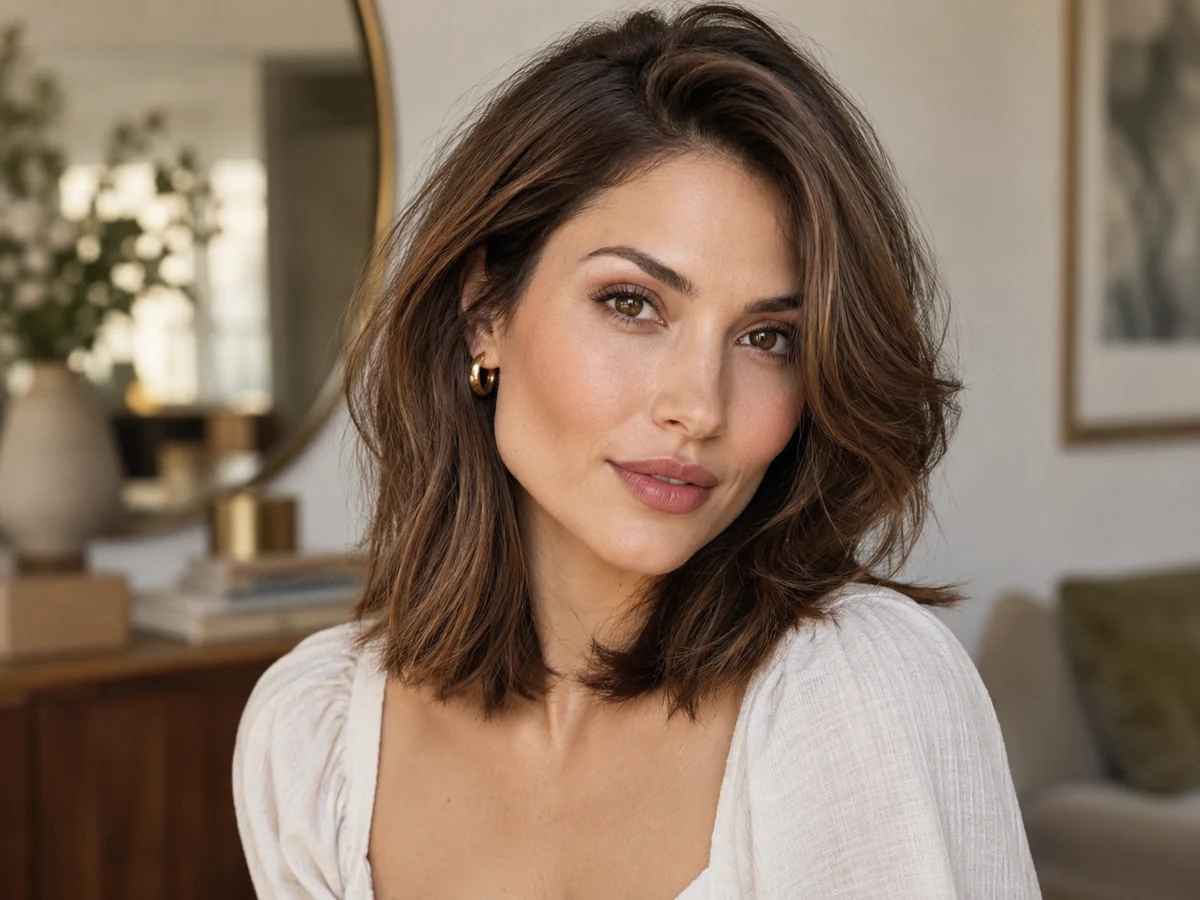
Blunt does not have to mean rigid
The outline can be crisp without looking severe. Point cutting, very light texturizing or hidden internal work can keep the bob from feeling heavy while the visible edge still reads as full. The mistake is removing so much from the outside that the cut stops looking intentional and starts looking thinned.
If you want face framing, decide whether it should be a small detail or a major feature. Long, restrained pieces usually preserve the bob shape better than short layers that interrupt the front edge.
Fine, thick, straight, wavy and curly hair need different versions of the same idea
Fine hair often benefits from the blunt perimeter because keeping the ends together creates more visible density. Thick hair can wear the same outside line, but it may need internal weight control so the shape does not become boxy. Straight hair shows every detail of the edge, while wavy hair makes the outline softer and less exact.
Curly hair can wear a blunt-inspired bob, but the word “blunt” should describe the visual weight at the perimeter rather than a ruler-straight wet line. Shrinkage can make different sections finish at different heights, so the edge should be checked in the dry curl pattern. If curl behavior is the main concern, curly bob haircuts goes deeper into shrinkage and volume placement.
For thicker textures, the goal is usually not to thin everything evenly. It is to remove weight selectively where the cut expands too much while keeping the outer edge strong. The thick-hair haircut hub explains why placement matters more than simply taking out more hair.
A full perimeter can still bend, wave and move
A blunt bob does not have to be worn pin-straight. Soft bends, loose waves and natural texture can all work as long as the cut retains enough weight through the ends. If you regularly wear waves or curls, tell your stylist; the finished dry length may sit higher than it does when the hair is smooth.
Think about the amount of daily styling you actually enjoy. A haircut that only looks right after a careful blow-dry may not feel low-maintenance if you normally air-dry.
Fringe and parting can soften or sharpen the clean perimeter
A center part makes a blunt edge feel more symmetrical and graphic. A side part shifts weight to one side and can make the outline feel less strict, especially when the front is tucked behind one ear.
If you add fringe, treat it as a separate maintenance decision. A short, dense fringe makes the whole haircut feel more precise, while longer curtain or side-swept pieces create a softer transition into the blunt perimeter. Compare bangs and fringe ideas before committing to a front shape that requires more upkeep than the bob itself.
Decide whether you want precision or a softer grow-out
A razor-clean perimeter shows growth sooner because the exact line is part of the design. A slightly softened edge is more forgiving as the hair gains length. Neither approach is better; the useful choice depends on how often you want to return to the salon and how exact you want the outline to remain.
As the bob grows, watch the relationship between the ends and your shoulders. That point often changes the way the hair flips or bends, so a length that is easy at first can become more styling-dependent later.
Useful questions before committing to the cut
- Where should the perimeter sit when the hair is fully dry?
- Should the edge be very crisp or softly refined?
- How will bulk be removed without weakening the outside line?
- Do you want any face framing, and how much can be added without changing the silhouette?
- Will you mostly wear the hair straight, naturally wavy, curly or alternate between finishes?
- How do you usually part and tuck the front?
- How will the chosen length behave when it reaches the shoulders?
If you are comparing several bob shapes rather than one specific finish, start with the broader bob haircut guide or use the haircut planning guide to weigh density, texture and upkeep together.
Frequently asked questions
Does a blunt bob have layers?
It can have subtle internal shaping or limited face framing. What defines the look is the strong visible perimeter, not the complete absence of any internal work.
Is a blunt bob good for fine hair?
Often, yes. Keeping the ends together can make fine hair look more substantial than a heavily layered cut, although the exact result still depends on density and natural texture.
Can wavy hair wear a blunt bob?
Yes. Waves soften the clean edge, so the bob reads less geometric, but the full perimeter can still give the haircut structure.
Can curly hair wear a blunt bob?
Yes, but the perimeter should be judged in the dry curl pattern. Judge the blunt edge by how full it looks when dry rather than forcing every curl to finish on one perfectly straight wet line.