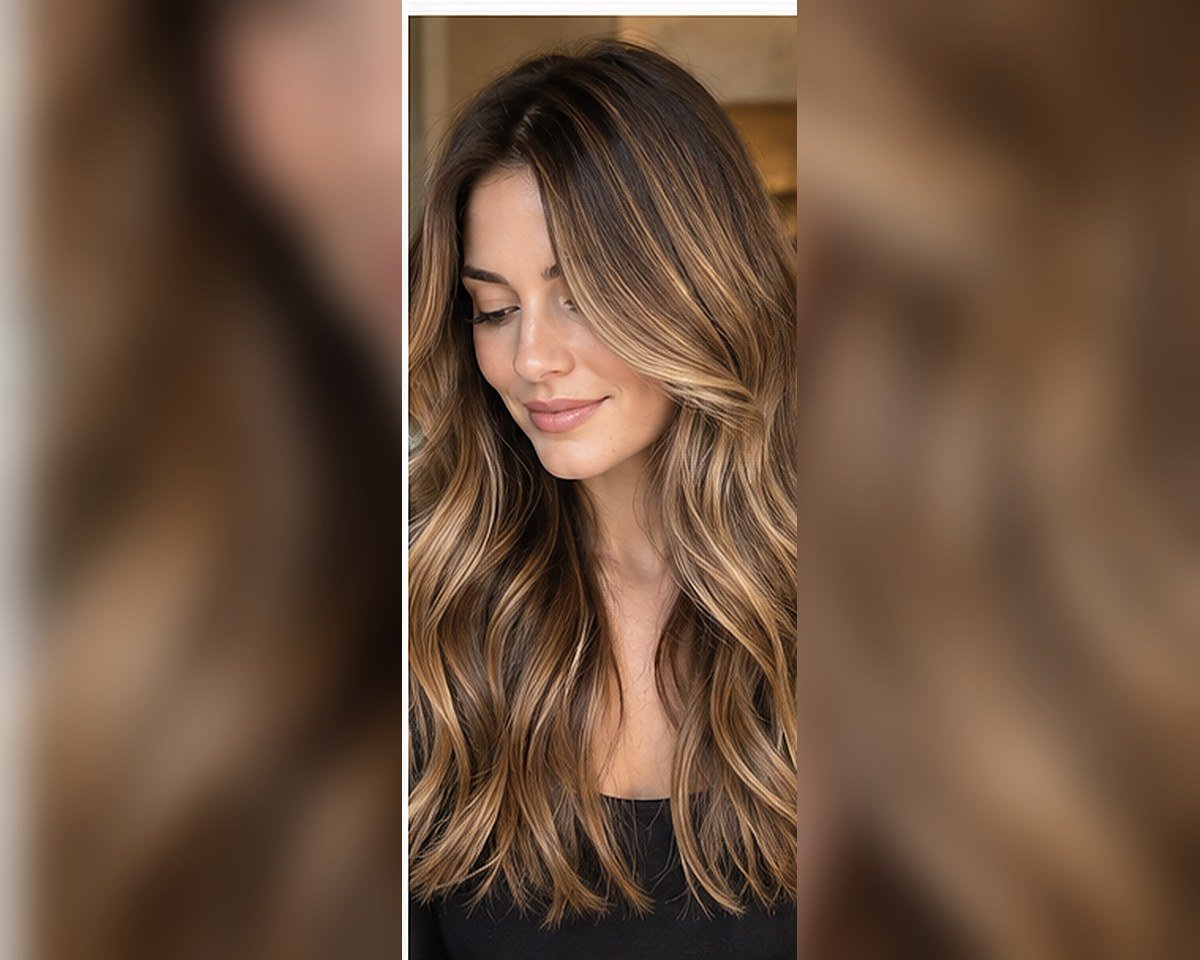
Honey brown sits in the comfortable space between deep brunette and obvious blonde.
It is warm, but it does not need to be orange. It is dimensional, but it can still read as brown. And because the base remains brunette, the grow-out can be softer than a full blonde transformation.
The color works best when the warmth looks intentional rather than evenly painted from roots to ends.
What makes a brunette honey brown?
Honey brown usually combines a brown base with golden, beige-gold or soft caramel reflection.
The exact depth can vary. On dark brunette hair, honey may appear as ribbons of light around the face and through the ends. On medium brown hair, the entire color can feel warmer and brighter without needing dramatic highlights.
Keep some depth at the roots
A natural or slightly deeper root makes honey brown look more dimensional. It also improves grow-out.
If the lightest pieces begin directly at the scalp across the entire head, regrowth becomes obvious quickly. Keeping depth at the root and moving the lighter ribbons lower creates a softer transition.
StyleVeya’s low-maintenance brunette hair color ideas show why rooted dimension is often easier to maintain than an all-over lighter shade.
Honey brown versus caramel balayage
The terms overlap, but they are not identical.
Honey brown describes the overall color impression. Balayage describes a highlighting technique.
You can wear honey brown as an all-over brunette with subtle warmth, as traditional foil highlights or as hand-painted balayage.
If you like the softer painted look, compare StyleVeya’s caramel balayage hair color. For a more technical comparison of highlighting methods, the hair highlights guide explains balayage, foilayage, babylights, lowlights and color melting.
Where to place the brightest pieces
Face framing changes the whole color.
A few brighter honey pieces around the front can make a brunette look much lighter without requiring highlights everywhere.
If you want a more natural effect, keep those front pieces only one or two levels lighter than the base. If you want more contrast, the money piece can be brighter—but it will also need more maintenance when the root grows.
Dark brunette hair needs realistic expectations
A deep brunette base may need significant lightening before a clear honey tone appears.
If the hair has previous dark permanent color, the process may take longer than it would on natural hair. That does not mean the look is impossible. It means the healthiest version may happen in stages.
Do not judge the process only by the finished reference image. Ask what must happen to your current hair to reach that level.
StyleVeya’s how to choose hair color guide explains why starting shade and condition matter before any color plan.
Medium brown hair is the easiest starting point
Natural medium brown often transitions beautifully into honey because the required lift is smaller.
A colorist can keep the root close to natural, brighten selected sections and use a warm gloss to tie everything together. This creates a brunette result that catches more light without looking dramatically different at the scalp.
Honey brown on curly and wavy hair
Texture naturally separates highlighted pieces, making dimension more visible.
On curls, placing brightness on the surface and around the face can make the shape look more defined. On wavy hair, softer ribbons can emphasize movement without creating stripes.
How to prevent brassiness without removing all warmth
Honey brown is supposed to be warm. Using overly aggressive blue or purple toning products can flatten the exact golden quality that makes the shade attractive.
Honey brown should keep balanced warmth rather than being neutralized until it loses the golden quality that defines it. If the color starts turning orange rather than honey-gold, a salon gloss can often restore the intended tone more precisely than constantly using corrective shampoo.
Honey brown can look very different at different depths
On deep brunette hair, honey usually appears as contrast: lighter ribbons against a darker base. On medium brown hair, the whole result can feel warmer and brighter even with less visible highlighting.
Before choosing a reference photo, compare the base depth as well as the highlight tone. A honey effect built on dark espresso will not read the same as honey on medium brown.
Porosity can make the ends look brighter or warmer
Previously lightened ends may absorb gloss differently from healthier roots. They can appear more golden, more orange or sometimes duller depending on the condition of the hair.
If the lengths are porous, the colorist may need to tone them separately rather than applying one formula from roots to ends.
Grow-out should influence placement
If you want fewer appointments, keep the brightest pieces away from a hard line at the scalp. A rooted placement, soft balayage or selective face framing usually grows more gently than dense highlights starting everywhere at the root.
Choose how much honey contrast you actually want
- Choose subtle honey ribbons if you want to remain clearly brunette.
- Choose brighter face framing if you want more visible lightness around the face.
- Keep deeper roots if lower-maintenance grow-out is important.
- Use staged lightening if the hair is very dark or previously colored.
When highlights make more sense than all-over color
If your natural brunette already suits you, highlights may be the simplest route.
They preserve your base, reduce the visible root line and allow you to adjust the amount of warmth over time. StyleVeya’s brown hair highlights page is useful for comparing soft caramel, beige and more defined contrast.
Judge the shade after the gloss has softened
Honey brown can look richer and more saturated immediately after a salon gloss than it will two or three weeks later. If you prefer the slightly softened version, show that stage to your colorist rather than asking for the just-finished result every time.
That can help refine how warm or deep the next formula needs to be and may reduce the urge to keep pushing the color brighter.
Honey brown works because it does not force brunette hair to become something else. It adds light where it matters, keeps enough depth for richness and gives you room to choose how warm, bright or low-maintenance you want the result to be.