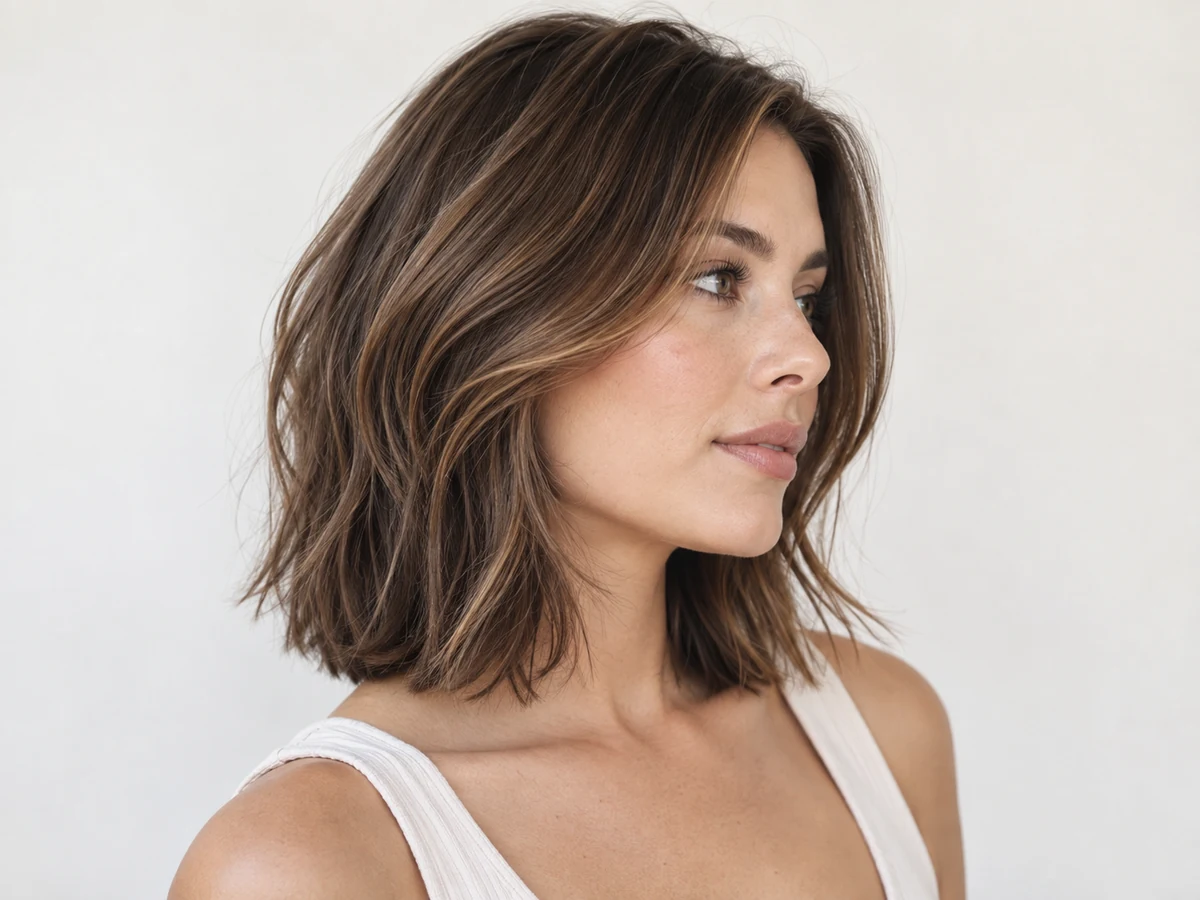
An inverted bob creates its identity through direction: shorter through the back, gradually longer toward the front. The angle can be barely noticeable or deliberately sharp, and that choice changes both the styling time and the grow-out.
A subtle inversion is easier to live with than a dramatic one because the front still tucks and the back does not need constant reshaping. If you are comparing bob families, Stacked Bob Haircuts focuses more on back graduation, while this cut focuses on the front-to-back line.
Choose the front length before deciding how short the back should be
The front can land at the jaw, below the chin or near the collarbone. Longer front pieces make the angle more obvious and preserve some styling flexibility.
Once the front is decided, the back can be shortened enough to create direction without making the transition feel disconnected.
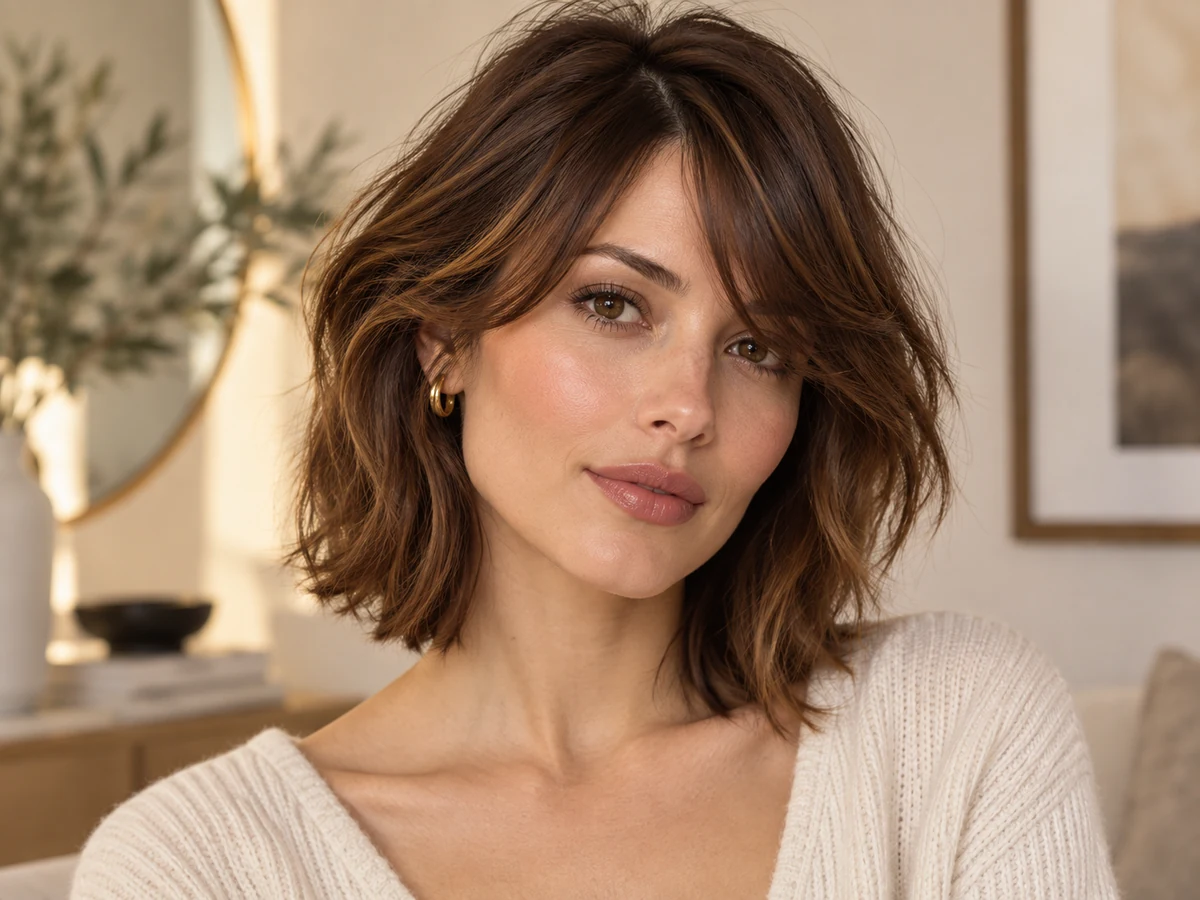
A clean angle does not require a severe finish
Straight hair shows the geometry clearly, but a softly textured edge can keep the haircut from feeling rigid. Natural wave can make the angle less graphic while still preserving the longer-front silhouette.
If the front pieces are heavily layered, the cut can lose the crisp inverted line, so face framing should be added carefully.
Fine and thick hair need different internal structure
Fine hair usually benefits from a stronger outer line and restrained layering. Thick hair may need internal bulk removal through the back so the shorter section does not expand too widely.
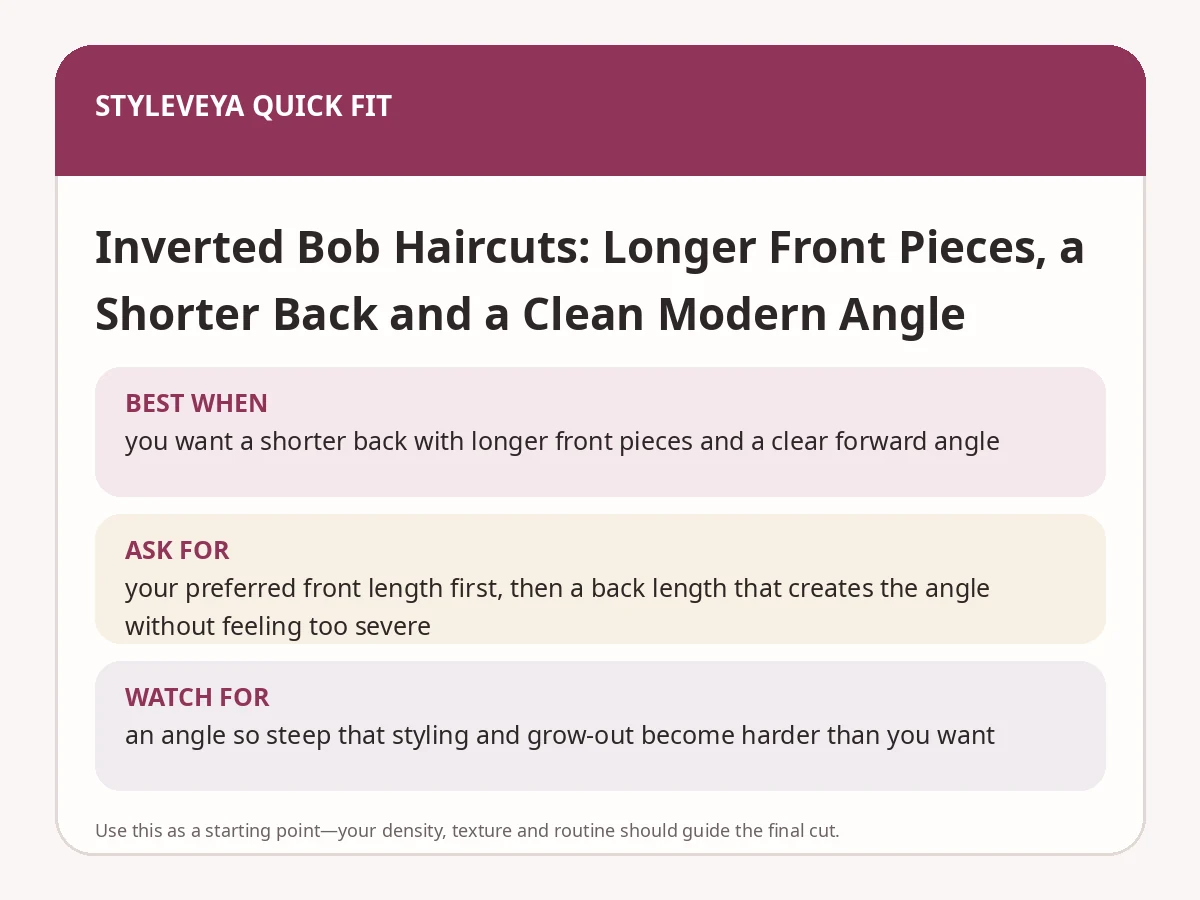
Styling, maintenance and grow-out
The shorter the back and sharper the angle, the more often the haircut needs reshaping. A gentle inverted bob grows out more like a regular bob and is easier to maintain between salon visits.
What to ask your stylist
- Choose the dry front length first.
- Show how much angle you want from side view.
- Ask how short the nape will be and whether it will be tapered.
- Say whether you want the perimeter blunt or softened.
- Ask how the angle will change as the cut grows.
Frequently asked questions
Is an inverted bob flattering on every face shape?
It can be adapted widely because the front length and angle are adjustable. The best version depends more on where the front ends and how the hair falls naturally.
Can wavy hair wear an inverted bob?
Yes. Wave softens the geometric line, so the stylist should cut with the dry movement in mind.
Is an inverted bob high maintenance?
A subtle version is manageable. A very short back with a sharp angle needs more frequent trims to keep the intended silhouette.